
Introduction
Central Asia has long occupied an important position in regional and intercontinental trade. Cities connected to caravan routes, oasis agriculture, and craft production became centers where merchants exchanged goods from distant regions. Markets were essential to urban life, but commercial activity did not always occur in open courtyards or above-ground streets.
Subterranean market halls present a fascinating architectural possibility because underground spaces could provide protection from extreme temperatures, wind, dust, and other environmental conditions. Their study may help explain how urban communities adapted commercial architecture to the climate and economic demands of Central Asia.
Environmental and Urban Context
Central Asian cities often experience extreme seasonal temperature changes. Summers may be intensely hot, while winters can be cold and dry. In such environments, underground spaces can provide relatively stable temperatures.
Subterranean commercial structures might have been used for:
Storage of food and trade goods.
Workshops producing textiles, metalwork, or ceramics.
Seasonal commercial activity.
Protected spaces for valuable merchandise.
Connected market passages between urban structures.
The existence of underground rooms alone, however, does not establish that they were markets. Archaeological interpretation must consider architecture, access routes, storage features, artifacts, and historical records.
Architectural Characteristics
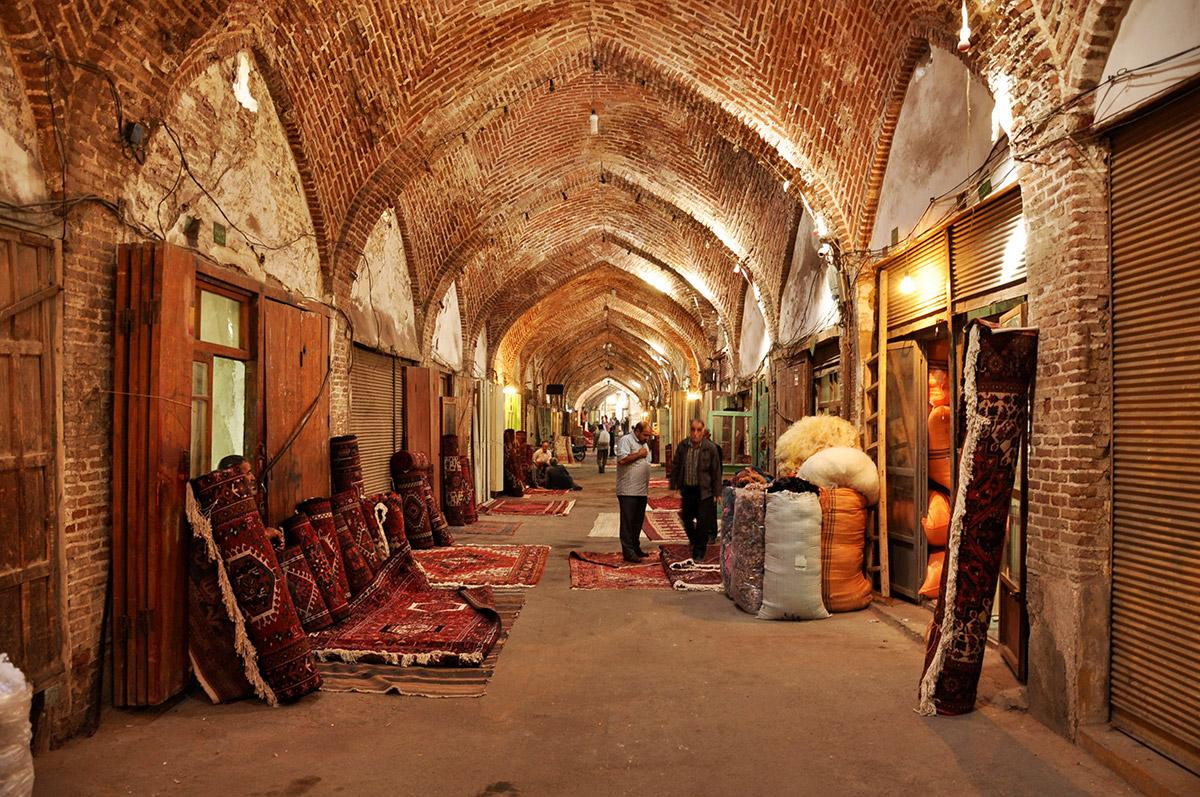
Possible subterranean market halls could have been constructed using brick, stone, compacted earth, or combinations of materials.
Common architectural features might include vaulted ceilings, narrow stairways, ventilation shafts, drainage channels, and adjoining storage chambers.
Vaulting would be particularly useful because it distributes structural weight and allows large interior spaces without extensive timber roofing.
A network of underground rooms may have developed gradually as buildings were expanded, repaired, or connected to neighboring properties.
Trade and Material Culture
Market halls are important archaeological spaces because they may contain evidence of commercial activity. Excavated materials could include weights, coins, seals, storage vessels, textile fragments, metalworking debris, and imported ceramics.
The presence of materials from distant regions would help reconstruct trading networks. However, imported objects do not necessarily prove that the room in which they were discovered functioned as a marketplace. They may have arrived through household exchange, storage, workshops, or later occupation.
A strong market interpretation would require multiple forms of evidence, including commercial equipment, repeated occupation patterns, and spatial organization suited to exchange.
Climate Adaptation and Urban Planning
Underground markets could represent a form of climate-sensitive architecture. By placing commercial spaces below ground level, builders may have reduced exposure to direct sunlight and temperature extremes.
These structures could also have provided security for goods. Limited entrances, thick walls, and enclosed passages might have helped protect merchandise from theft or environmental damage.
The underground environment would nevertheless present challenges, particularly drainage, ventilation, structural stability, and lighting.
Conclusion
Subterranean market halls are a valuable subject for investigating Central Asian urban development, trade, and environmental adaptation. Their identification requires more than underground architecture: archaeologists must demonstrate commercial use through contextual evidence.





