
Introduction
Quarries are important archaeological landscapes because they reveal how prehistoric communities obtained raw materials for tools, monuments, buildings, and other objects.
In Neolithic Europe, the extraction and movement of stone could involve considerable labor, technical knowledge, and social organization.
The concept of hidden quarry shrines presents an interesting research theme concerning the possible relationship between stone extraction, ritual activity, and sacred landscapes.
The specific quarry shrines described in this title are not verified as particular archaeological discoveries. The article explores how quarry sites may be investigated for evidence of practical activity and ritual significance.
Neolithic Stone Extraction
The Neolithic period saw substantial changes in the use of stone materials across Europe.
Communities selected particular rocks for tools, monuments, construction, and other purposes.
The suitability of a stone depended on its properties, including hardness, fracture characteristics, grain structure, durability, and ease of shaping.
Quarrying could involve removing blocks, extracting nodules, splitting rock, shaping blanks, and transporting materials.
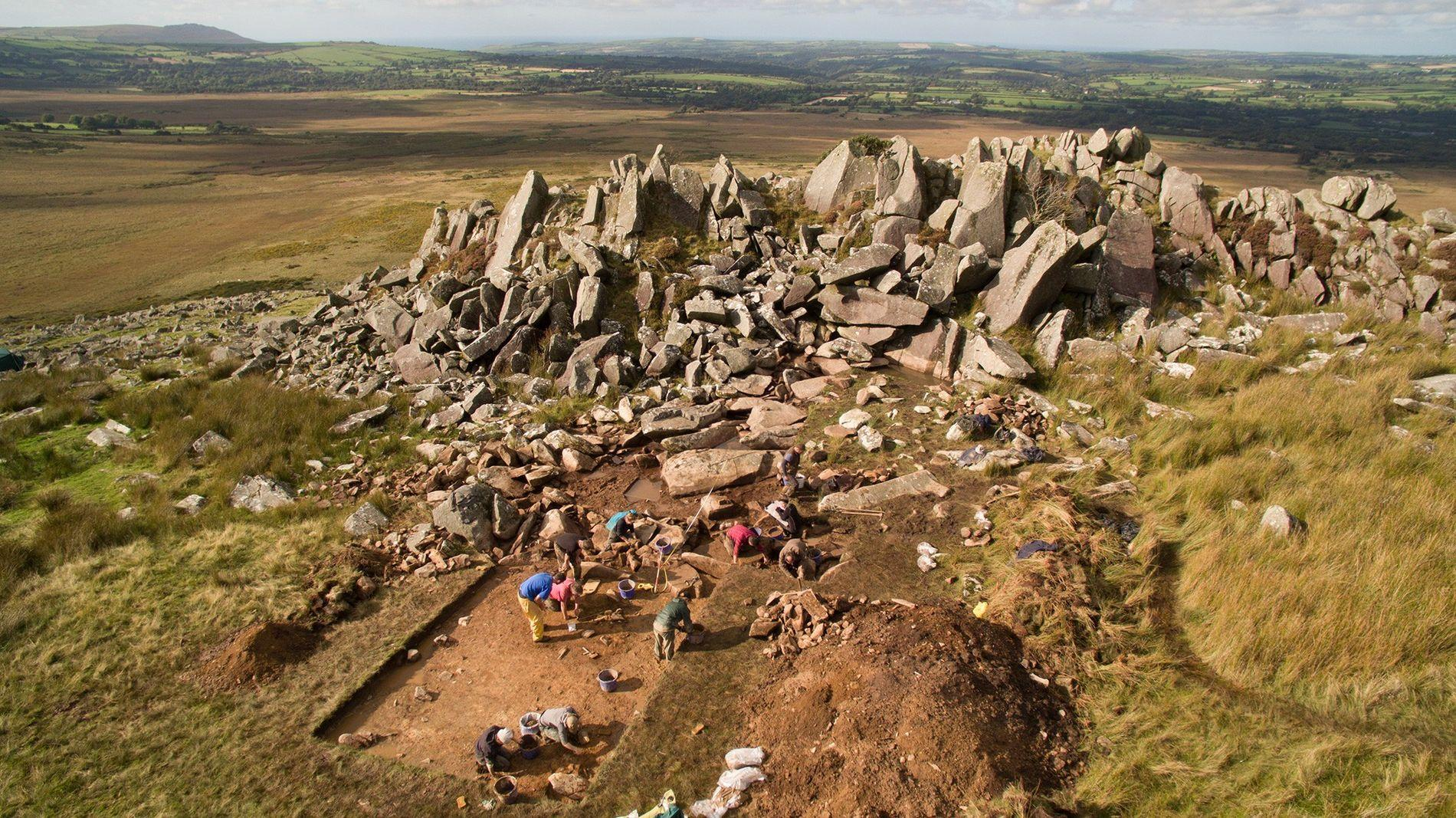
Archaeological evidence may include extraction scars, abandoned blocks, quarry pits, hammerstones, wedges, working surfaces, and debris.
The identification of a quarry requires careful examination because natural fractures and weathering can resemble extraction features.
Quarry Landscapes and Archaeological Context
Quarries were often situated within broader landscapes that included settlements, transportation routes, water sources, and other resource areas.
The location of a quarry may reflect geological availability as well as cultural choices.
Some quarries may have been exploited intensively, while others may have been used intermittently or for specific materials.
Researchers can investigate quarry landscapes through geological mapping, archaeological survey, surface collection, excavation, and spatial analysis.
The distribution of extracted materials may help identify relationships between quarry locations and settlements or monuments.
The Possibility of Ritual Activity
The term shrine suggests that a quarry may have had a ritual or ceremonial function in addition to its practical purpose.
Some archaeological landscapes contain evidence of ritual activities associated with natural features, rock formations, caves, springs, monuments, or places where materials were obtained.
Stone may have held symbolic importance because of its durability, color, texture, origin, or association with particular landscapes.
Quarrying itself may have involved social practices or beliefs that archaeologists cannot easily reconstruct.
However, the identification of a shrine requires evidence beyond the unusual appearance of a quarry or the presence of extracted stone.
Possible evidence may include deposits of objects, structured offerings, repeated ceremonial activity, unusual spatial arrangements, or clear relationships with nearby ritual monuments.
Stone Extraction and Social Organization
Quarrying could require coordinated labor.
The extraction of large stones may involve planning, tool preparation, knowledge of geological properties, and the movement of materials across difficult terrain.
Researchers may investigate whether quarries were operated by individual households, specialized craftspeople, communal groups, or more organized labor systems.
The scale of extraction, the distribution of working areas, and the relationship between quarries and settlements may provide clues about the organization of production.
The movement of stone over long distances may also reveal exchange networks, social relationships, and the importance of particular materials.
Ritual and Material Meaning
Stone extraction may have carried cultural meaning beyond the production of practical objects.
Communities could have associated particular rocks or geological formations with ancestors, deities, territorial identity, or ceremonial practices.
The transformation of stone from a natural outcrop into an object used in a monument may have involved both practical and symbolic processes.
Nevertheless, symbolic interpretations must remain grounded in evidence.
A quarry should not be labeled sacred simply because it is visually impressive or located in an unusual landscape.
Archaeologists may investigate the relationship between quarrying activity, nearby monuments, deposits, and settlement patterns to evaluate possible ritual significance.
Archaeological Methods
The investigation of hidden quarry shrines may involve several complementary methods.
Researchers could use:
Geological mapping.
Quarry-face recording.
Three-dimensional scanning.
Photogrammetry.
Excavation.
Tool-mark analysis.
Material provenance studies.
GIS landscape analysis.
Environmental reconstruction.
Tool marks may help identify extraction techniques.
Material provenance analysis may compare quarry stone with artifacts or monuments found elsewhere.
Spatial analysis may investigate whether quarry locations were connected to settlement routes, ceremonial landscapes, or other archaeological features.
Conservation and Landscape Protection
Quarries may be vulnerable to modern development, erosion, vegetation growth, and unauthorized extraction.
Their archaeological significance may be overlooked because they lack monumental architecture or visible artifacts.
Digital recording and landscape documentation can help preserve information about quarrying activities.
Conservation may involve protecting extraction surfaces, working areas, associated deposits, and the surrounding landscape rather than focusing only on individual artifacts.
Conclusion
Hidden quarry shrines in Neolithic Europe offer a compelling research theme connecting resource extraction, craftsmanship, landscape use, social organization, and ritual activity.
The archaeological investigation of quarry sites can reveal how communities selected materials, organized labor, developed technologies, and interacted with geological landscapes.
Where evidence supports ritual interpretations, quarries may also provide insight into the symbolic relationships between people, stone, and place.
The challenge is to distinguish practical extraction activities from ceremonial behavior while recognizing that both may have coexisted within the same landscape.





