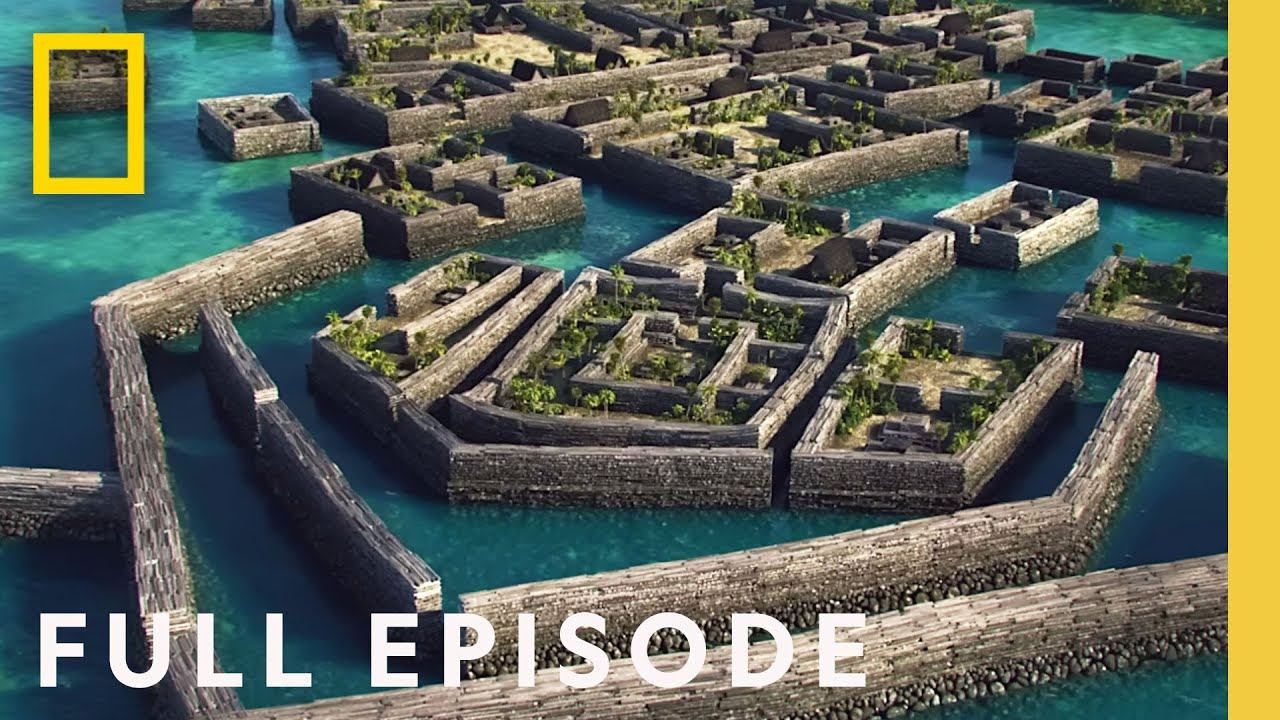
National Geographic Explorer Albert Lin journeys deep into Micronesia, at the heart of the Pacific Ocean, to investigate one of the most enigmatic ancient sites on Earth: Nan Madol. Often called the “Venice of the Pacific,” this extraordinary island city is built from massive basalt columns stacked atop coral reefs, forming a complex network of artificial islets, canals, and stone walls.
Nan Madol’s scale and construction raise profound questions. How were these enormous stones transported across open water? Who organized the labor to build an entire city on the ocean? And why was it ultimately abandoned? With little written history to rely on, the site remains one of archaeology’s greatest puzzles.
Through cutting-edge technology and exploration, Albert Lin seeks clues hidden in the landscape, using modern tools to uncover how ancient island societies may have engineered this monumental city. The investigation reveals that Nan Madol was not a myth or legend, but a real political and ceremonial center—one that challenges assumptions about what ancient Pacific civilizations were capable of achieving.
As with many lost cities, Nan Madol reminds us that human ingenuity has flourished in places far from the traditional centers of history. Its ruins stand as silent proof that complex societies once thrived in the middle of the ocean, leaving behind stone structures that still defy explanation.
🎥 Watch the video below to join Albert Lin and National Geographic as they uncover the secrets of Nan Madol, the ancient island city hidden in the Pacific: