
Introduction
The Mekong Delta is an environment shaped by rivers, wetlands, seasonal flooding, agriculture, and maritime transportation. Communities living in such landscapes have historically depended on boats, fishing equipment, agricultural tools, and other technologies that require strong and flexible fibers.
Rope production is an important craft that can be difficult to identify archaeologically because the finished products are organic and rarely survive in tropical environments.
The study of ancient rope-making yards in the Mekong Delta would therefore provide a valuable opportunity to investigate fiber technology, production organization, and the relationship between local industries and river-based transportation.
Raw Materials
Rope can be made from a variety of plant fibers, including bark, leaves, grasses, and other fibrous materials.
Potential fiber sources in tropical environments include:
Coconut husk fibers.
Palm fibers.
Bark fibers.
Grass fibers.
Other locally available plant materials.
Different fibers vary in flexibility, strength, resistance to moisture, and durability.
Archaeobotanical research could help identify which materials were used and whether rope production relied on local plants or imported fibers.
Rope-Making Techniques
Traditional rope production generally involves several stages.
Fibers are first collected and processed. They may be stripped, soaked, dried, beaten, or separated into smaller strands.
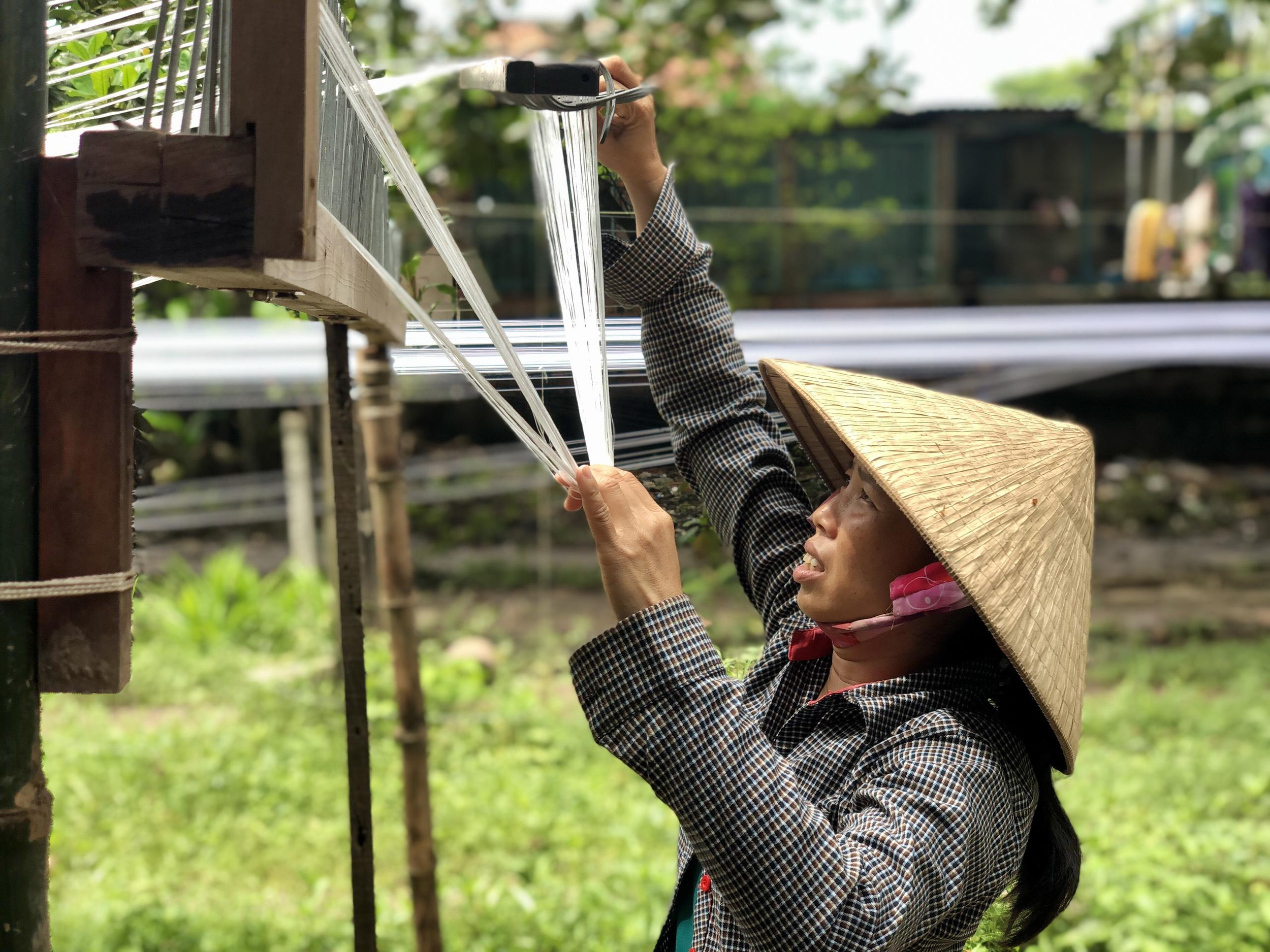
The strands are then twisted together to create yarns. Multiple yarns can be combined through additional twisting to produce stronger rope.
The process requires tension and space. A rope-making yard may therefore have contained long working areas where fibers could be stretched and twisted.
Archaeological Identification
A rope-making yard may not contain preserved ropes. Instead, researchers might identify production through indirect evidence.
Possible indicators include:
Fiber-processing debris.
Repeated postholes.
Long narrow working surfaces.
Tools associated with fiber preparation.
Residues preserved in wet sediment.
Concentrations of plant remains.
Specialized structures connected with textile or cordage production.
The interpretation must be compared with other activities, since similar spaces could have been used for net-making, textile production, or general craft work.
Economic and Maritime Importance
Rope would have been essential for boats, fishing nets, cargo handling, construction, and agricultural activities.
The production of cordage could therefore support multiple industries at once.
Rope-making workshops might have served local fishing communities while also supplying merchants, boat builders, and transport networks.
If specialized yards were identified, their size and organization could help researchers understand whether production was household-based or undertaken by dedicated craft groups.
Conclusion
Ancient rope-making yards in the Mekong Delta represent a promising research topic for studying organic craft technologies.
Although direct evidence may be difficult to preserve, production debris, workshop structures, plant remains, and tools could help reconstruct how communities manufactured cordage and supported river-based economies.





