Braes of Verwick: Stronsay's Neolithic Farm
Moving from Eday to neighboring Stronsay, the archaeological landscape continues to reveal evidence for prehistoric agriculture and settlement.
The Braes of Verwick represents the importance of early farming sites in understanding how Neolithic communities transformed the Northern Isles.
The Neolithic Farmer
Neolithic farmers were not simply primitive versions of modern agriculturalists.
They possessed sophisticated knowledge of:
Soil
Seasons
Animal husbandry
Crop cultivation
Stone technology
Food storage
Landscape management
Farming required long-term planning.
Crops had to be planted and harvested at appropriate times, while animals required year-round management.
Mixed Economy
Neolithic Orkney was never purely agricultural.
The sea remained essential.
A household could combine:
Cereal cultivation
Cattle keeping
Sheep and goat husbandry
Fishing
Shellfish gathering
Bird hunting
Marine-resource exploitation
This mixed economy was especially logical for island communities.
Farm Buildings
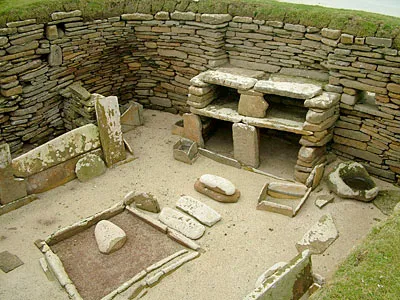
Neolithic houses in Orkney are often substantial stone structures.
Their thick walls could provide insulation against the harsh northern climate.
Internal arrangements could include hearths, platforms, storage spaces, and working areas.
The architecture reflects both environmental adaptation and social organization.
The Wider Landscape
A farm should never be considered alone.
Fields, paths, grazing areas, water sources, nearby monuments, and coastal resources all contributed to settlement decisions.
The Braes of Verwick therefore helps illustrate how Neolithic communities integrated agriculture into a broader landscape.