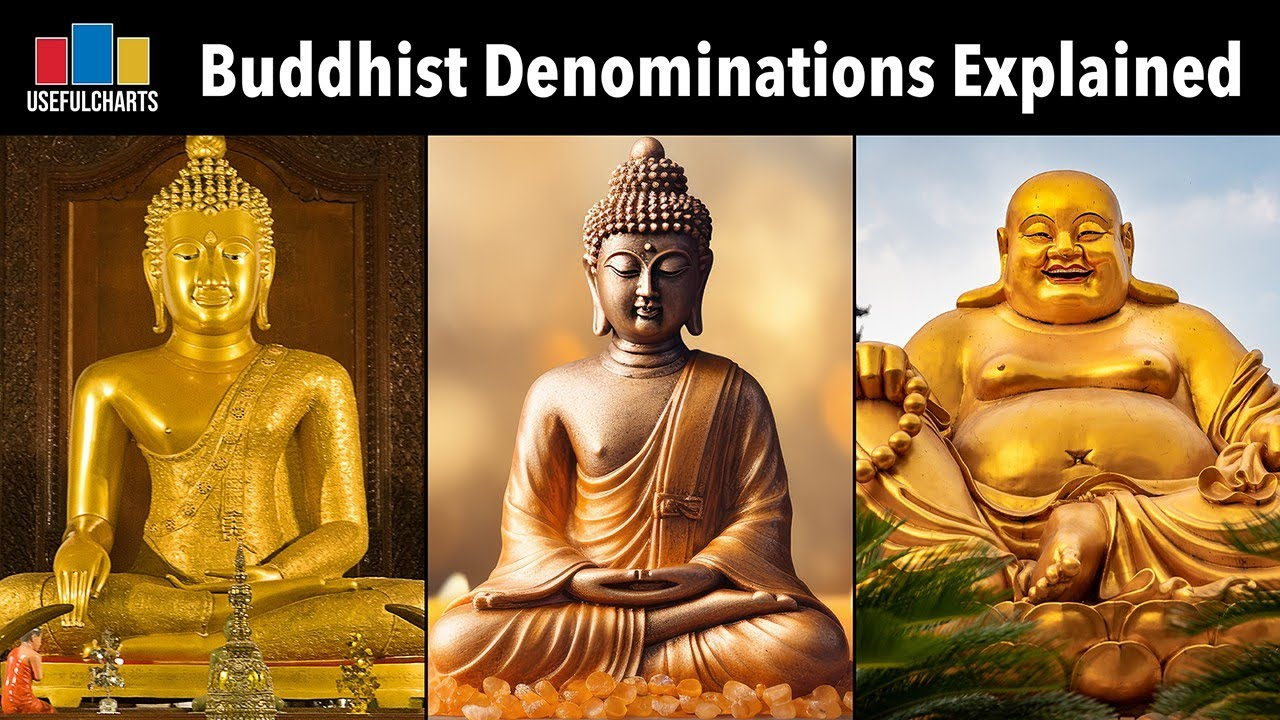
Buddhist Denominations Explained: Theravada vs. Mahayana
Buddhism is often spoken of as a single religion, but in reality, it contains diverse traditions with distinct philosophies, practices, and interpretations of the teachings of Gautama Buddha.
In this video, we explore the two largest branches of Buddhism — Theravada and Mahayana — and unpack what makes them similar, and what sets them apart.
Theravada: The “Teaching of the Elders”
Theravada is the oldest surviving branch of Buddhism and is often described as the most conservative in preserving early teachings. It is dominant in countries such as Sri Lanka, Thailand, Myanmar, Laos, and Cambodia.
Theravada emphasizes:
Strict adherence to the Pali Canon (the earliest recorded Buddhist scriptures)
Monastic discipline
Personal enlightenment through meditation and ethical living
The ideal of the Arhat — one who achieves Nirvana through their own effort
In this tradition, liberation is a personal journey. The focus is on understanding suffering, impermanence, and non-self through direct experience and disciplined practice.
Mahayana: The “Great Vehicle”
Mahayana Buddhism developed several centuries later and expanded across China, Korea, Japan, and Vietnam.
Key characteristics include:
Additional scriptures (such as the Lotus Sutra and Heart Sutra)
The ideal of the Bodhisattva — one who seeks enlightenment not just for themselves, but for all beings
A broader, more inclusive interpretation of the path to liberation
Greater emphasis on compassion and universal salvation
While Theravada centers on individual liberation, Mahayana emphasizes collective awakening — the idea that enlightenment is something we help each other achieve.
Shared Foundations
Despite their differences, both traditions:
Follow the Four Noble Truths
Practice the Eightfold Path
Seek liberation from suffering (Dukkha)
Trace their teachings back to Gautama Buddha
The distinctions are philosophical and interpretive — not oppositional. Both traditions aim at awakening, just through slightly different lenses.
Why Understanding the Difference Matters
Learning the distinctions between Theravada and Mahayana helps clarify how Buddhism evolved as it spread across Asia. It shows how a single teaching tradition can adapt to new cultures while preserving its core insights.
Rather than viewing them as competing systems, it’s more accurate to see them as different expressions of the same spiritual foundation.
🎥 Watch the full video to dive deeper into the history, philosophy, and key differences between Theravada and Mahayana Buddhism — and discover how these traditions continue to shape spiritual practice around the world.