
Introduction
Fermented beverages have played important roles in human societies for thousands of years. The production of beer and other fermented drinks may have involved household activities, communal gatherings, ritual practices, food preparation, and social exchange.
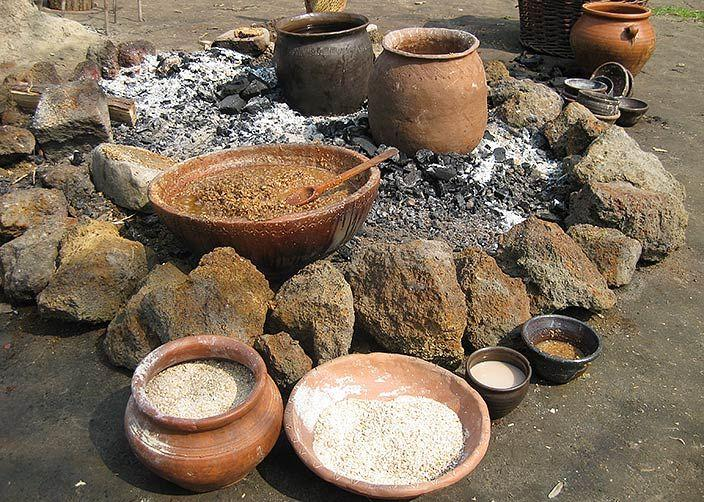
The title Early Beer Kitchens focuses on the possible use of fermentation vessels in Neolithic households. It raises questions about the origins of brewing, the archaeological identification of fermented beverages, and the relationship between food production and social life.
The specific early beer kitchens described in this title are not verified as a particular archaeological discovery. The article explores the archaeological methods and broader research themes associated with prehistoric fermentation.
Fermentation and Neolithic Food Systems
The Neolithic period is associated with significant changes in food production, settlement organization, plant cultivation, animal domestication, and material culture in many regions.
The development of agricultural systems provided new opportunities for processing grains and other plant resources.
Fermentation is a biological process in which microorganisms transform sugars into other substances, including alcohol and organic acids.
Beer production generally involves a combination of ingredients, processing steps, and conditions that allow fermentation to occur.
In prehistoric contexts, researchers must consider the possibility that fermented beverages were produced using different grains, plants, and techniques from those used in modern brewing.
Fermentation Vessels
Ceramic vessels are important archaeological evidence for food and beverage preparation.
Vessel size, shape, fabric, surface treatment, and thermal characteristics may provide clues about their use.
Some vessels may have been designed for cooking, storage, fermentation, serving, or transport.
The identification of a vessel as a fermentation container requires more than its shape. Researchers may examine residues, associated artifacts, vessel placement, and the archaeological context.
Potential evidence for brewing activity may include specialized containers, processing tools, grinding equipment, plant remains, and residues associated with fermentation.
Archaeological Evidence for Ancient Beer
The study of ancient beer relies on multiple forms of evidence.
Researchers may investigate:
Grain remains.
Malted plant materials.
Brewing-related residues.
Ceramic vessels.
Grinding equipment.
Storage facilities.
Processing areas.
Chemical traces.
Residue analysis may identify compounds associated with fermented beverages, but interpretation can be difficult.
Organic materials may degrade over time, and some compounds may occur in multiple types of food or plant processing.
Researchers therefore compare chemical results with archaeological context, plant remains, and experimental studies.
Household Brewing and Social Activity
If fermentation took place within Neolithic households, brewing may have been integrated into everyday food preparation.
Household production could involve the processing of grains, preparation of ingredients, vessel cleaning, fermentation, storage, and consumption.
However, brewing may not have been limited to domestic settings.
Some fermented beverages could have been produced for communal gatherings, ceremonies, seasonal celebrations, or exchange.
The scale of production may vary depending on the purpose of the beverage.
Large vessel capacities, multiple containers, and associated processing equipment could provide clues about production volume, although these features are not conclusive on their own.
Brewing, Labor, and Community Organization
Fermentation requires knowledge of materials, timing, environmental conditions, and preparation techniques.
The production of beverages may have involved cooperation among household members or larger groups.
The relationship between brewing and social organization could be investigated through the distribution of vessels, processing equipment, storage areas, and production residues.
Researchers may also examine whether brewing activities were associated with particular settlement spaces.
However, the interpretation of household activities must avoid assuming that all production was organized in the same way across different Neolithic societies.
Experimental Archaeology
Experimental archaeology may help investigate prehistoric brewing processes.
Researchers could use reconstructed vessels, ancient grain varieties where available, and proposed preparation techniques to explore whether fermentation is physically plausible under particular conditions.
Experiments may investigate:
Grain processing.
Malting.
Grinding.
Heating.
Fermentation.
Vessel performance.
Residue formation.
The results may provide useful comparisons with archaeological evidence.
However, experimental brewing does not establish that prehistoric communities used exactly the same methods.
Different ingredients, microorganisms, vessel designs, and environmental conditions may have produced different beverages.
Beer and the Social History of Food
Fermented beverages may have had significance beyond nutrition.
In some societies, alcohol-related products could be associated with communal meals, hospitality, ritual, social relationships, and exchange.
The production and consumption of fermented beverages may have contributed to the formation of social bonds.
Nevertheless, the presence of fermentation does not automatically indicate ceremonial use. Ordinary household consumption, food preservation, or other practical purposes may also have been important.
The social interpretation of prehistoric beer must therefore be based on archaeological evidence rather than assumptions about modern drinking culture.
Conclusion
Early beer kitchens and fermentation vessels in Neolithic households represent an important research theme connecting food archaeology, plant processing, technology, and social life.
Through residue analysis, archaeobotany, vessel studies, and experimental archaeology, researchers may investigate the origins and development of fermentation practices.
The study of prehistoric beer offers a broader perspective on how food technologies contributed to human adaptation, household organization, communal activity, and cultural development.





