Across the Nile: Egypt’s Origins at Nekheb and Nekhen
Travel with us to two of Egypt’s most revealing archaeological sites — facing one another across the Nile.
On one bank stands El Kab, known in antiquity as Nekheb.
Across the water lies Hierakonpolis, the ancient city of Nekhen.
Together, these sites offer something extraordinary: a glimpse into the birth of Egyptian civilization itself.
Nekheb (El Kab): History in the First Person
At El Kab, history is not abstract.
It is personal.
Rock-cut tombs carved into desert cliffs preserve autobiographical inscriptions from officials who lived and served in the early dynastic and New Kingdom periods. These texts speak in the first person — recounting military campaigns, royal service, loyalty, and ambition.
We don’t just learn what happened.
We hear how individuals wanted to be remembered.
El Kab was a powerful religious center dedicated to the goddess Nekhbet, protector of Upper Egypt. Its temples, city walls, and tomb inscriptions reveal a thriving provincial hub deeply connected to royal power.
Here, Egypt’s story is told by its own people.
Nekhen (Hierakonpolis): Where Kingship Began
Across the Nile lies Hierakonpolis — one of the most important early settlements in Egyptian history.
Normally off-limits, access to this site is rare. But within its desert expanse lies something monumental: the ceremonial heart of predynastic Egypt.
Hierakonpolis is the findspot of the legendary Narmer Palette, one of the most iconic objects in Egyptian archaeology. The palette depicts King Narmer, often associated with the unification of Upper and Lower Egypt — a foundational moment in the creation of the pharaonic state.
But the site offers even more.
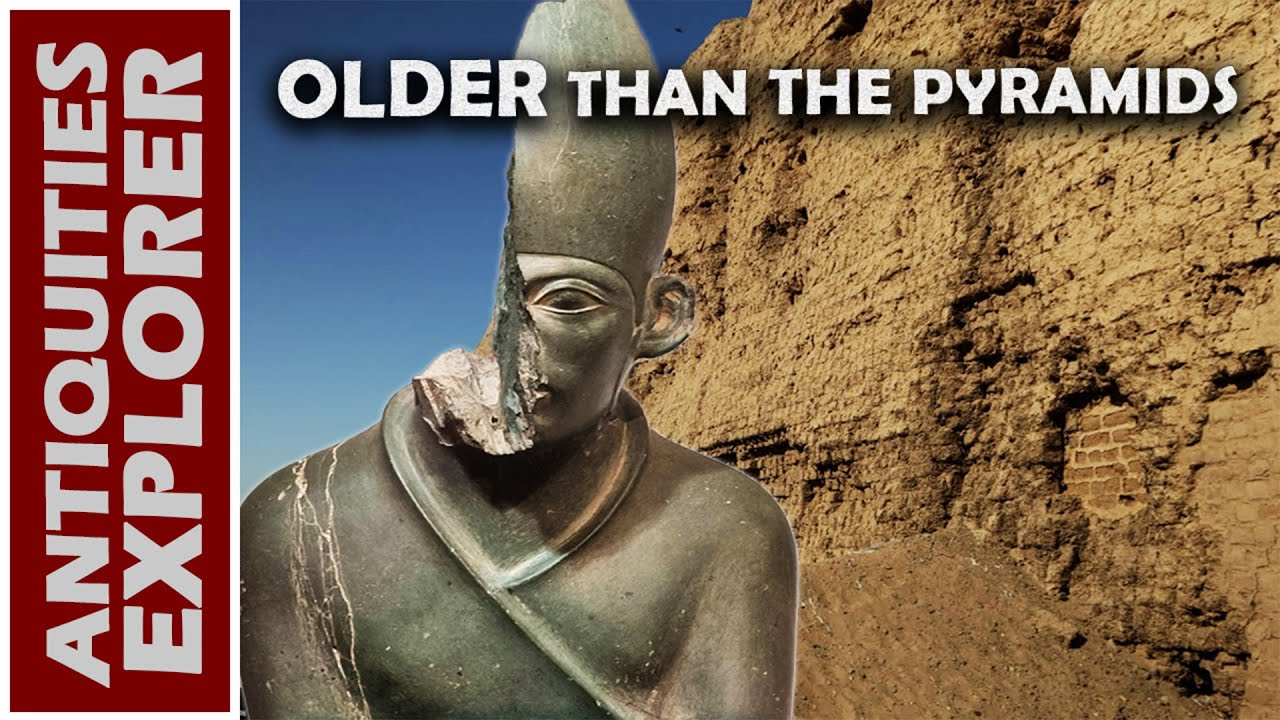
Archaeologists uncovered a massive early ceremonial structure here — sometimes referred to as one of the first monumental constructions in Egypt. Long before pyramids pierced the skyline, monumental architecture was already taking shape at Hierakonpolis.
This was not just a settlement.
It was a political and ritual powerhouse at the dawn of dynastic Egypt.
Two Cities, One Origin Story
Standing on opposite banks of the Nile, Nekheb and Nekhen represent two sides of the same transformation:
The rise of centralized kingship
The emergence of monumental architecture
The blending of religion and royal authority
The formation of one of the world’s first great civilizations
Together, they reveal how local communities evolved into a unified state — how symbols became power, and how ritual became governance.
The Nile was not a boundary.
It was a lifeline connecting the birthplaces of Egyptian identity.
These sites don’t just tell us about ancient Egypt.
They show us the moment it began.
🎥 Watch the video below to explore Nekheb (El Kab) and Hierakonpolis, and step into the origins of ancient Egyptian civilization at the very place kingship was born: