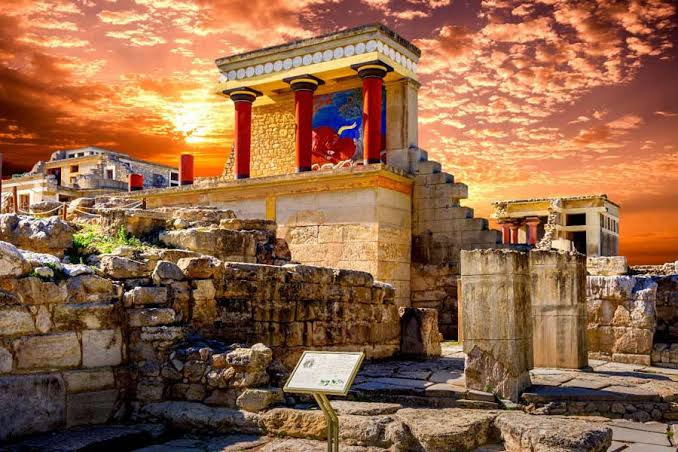
Minoan architecture provides important evidence for the development of domestic construction in Bronze Age Crete. Houses, palaces, workshops, and storage buildings often included multiple levels, courtyards, staircases, and carefully constructed roof systems. Although Minoan buildings are frequently represented as having flat roofs, archaeological and architectural research suggests that roofing arrangements were more varied than this simplified image implies.
Roof construction depended on locally available materials. Timber beams could support layers of branches or reeds, which were covered with clay and other waterproofing materials. Some buildings may also have incorporated sloping roof sections and drainage arrangements. Archaeological evidence for roofs is difficult to preserve because wood, reeds, and other organic materials decay, while roof surfaces often collapse and become mixed with later deposits. A study by Valeria Lenuzza specifically reassesses the evidence for Bronze Age Cretan roofs and roof drainage, challenging the assumption that all Minoan roofs were flat.
The reference to a Heraklion monastery raises an interesting question about architectural reuse. Monasteries and other later buildings in Crete sometimes incorporate older stones, columns, and construction materials. Such reuse can obscure the original function and date of individual architectural elements. A stone block found in a monastery wall, for example, may have originated in an earlier building without having belonged to its roof.
A proper investigation would begin with the monastery's construction history. Researchers would document roof beams, stone courses, drainage channels, reused masonry, and any fragments that might preserve evidence of earlier building techniques. They would then compare the architectural details with securely dated Minoan structures.
It would be premature to describe surviving monastery rooftops as Minoan without scientific dating or a clear archaeological context. The stronger research subject is the possible survival or reuse of ancient architectural materials within later religious buildings. This approach would connect prehistoric construction techniques with the long history of building and rebuilding in Crete.