
Introduction
The Arctic is one of the world's most challenging environments for archaeological research.
Extreme cold, seasonal darkness, difficult access, and rapidly changing environmental conditions complicate excavation.
Yet these same conditions can preserve organic materials that would normally disappear elsewhere.
Wooden boats are among the most remarkable examples.
In permanently or seasonally frozen environments, watercraft can survive for centuries or even millennia under exceptional conditions.
The discovery of preserved logboats provides a rare opportunity to study transportation, fishing, hunting, settlement, and technological adaptation in northern environments.
What Is a Logboat?
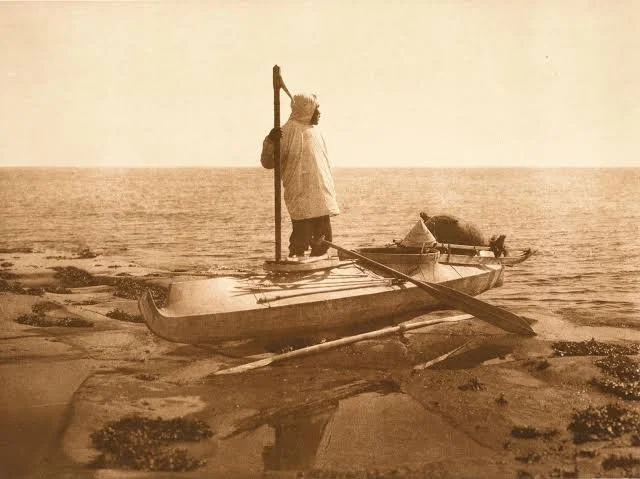
A logboat, often called a dugout canoe, is made by hollowing out a large tree trunk.
The basic technology is ancient and occurs in many parts of the world.
Despite its apparently simple construction, producing a stable watercraft requires considerable knowledge of wood properties, buoyancy, balance, and shaping techniques.
Why Wood Survives in Permafrost
Wood usually decomposes through microbial activity.
Low temperatures slow biological processes.
If an object becomes buried in permanently frozen sediment, microbial decomposition can be dramatically reduced.
Waterlogged environments can provide additional protection because oxygen availability is limited.
Together, cold and water saturation can create exceptional preservation conditions.
Arctic Water Transport
Waterways were essential transportation corridors in many northern societies.
Rivers, lakes, coastal channels, and seasonal waterways connected settlements that were difficult to reach over land.
Boats could transport people, food, hunting equipment, fuel, and raw materials.
For communities dependent on fishing and aquatic hunting, watercraft were fundamental technologies.
What Archaeologists Can Learn From Boats
A preserved boat can reveal much more than its shape.
Researchers can study:
wood species
tree age
construction technique
tool marks
repair history
use-wear
pitch or waterproofing
cargo traces
biological residues
Dendrochronology may sometimes provide information about when the tree was cut.
Radiocarbon dating can provide additional chronological evidence.
Tool Technology
Tool marks on a logboat can reveal how it was manufactured.
Cutting and scraping patterns may indicate the use of axes, adzes, chisels, or other woodworking tools.
The sequence of manufacturing marks can sometimes reconstruct the production process.
This is particularly valuable because wooden tools themselves may not survive.
Climate Change and Permafrost Archaeology
Modern warming presents a serious paradox.
Climate change can reveal previously inaccessible archaeological materials as frozen ground thaws.
At the same time, thawing can destroy them.
Once organic materials become exposed to warmer, oxygen-rich environments, decomposition can accelerate dramatically.
Archaeological sites may therefore experience a short window between discovery and irreversible deterioration.
Indigenous Knowledge
Archaeological interpretation should be connected with Indigenous knowledge wherever possible.
Arctic Indigenous communities possess extensive knowledge of waterways, seasonal movement, boat construction, animal behavior, and environmental change.
This knowledge can help researchers interpret archaeological landscapes while also ensuring that research respects living cultural traditions.
Conservation After Discovery
Recovering a frozen wooden boat is only the beginning.
If the wood dries without controlled treatment, it can shrink, crack, and collapse.
Conservators may need to stabilize the material gradually and control humidity.
Large waterlogged wooden artifacts can require years of conservation.
Conclusion
Permafrost-preserved logboats offer extraordinary windows into Arctic technological history.
They reveal how northern communities adapted to waterways and transformed available timber into sophisticated transportation technology.
At the same time, their vulnerability to climate change demonstrates the urgency of documenting Arctic archaeological landscapes before preservation conditions disappear.





