
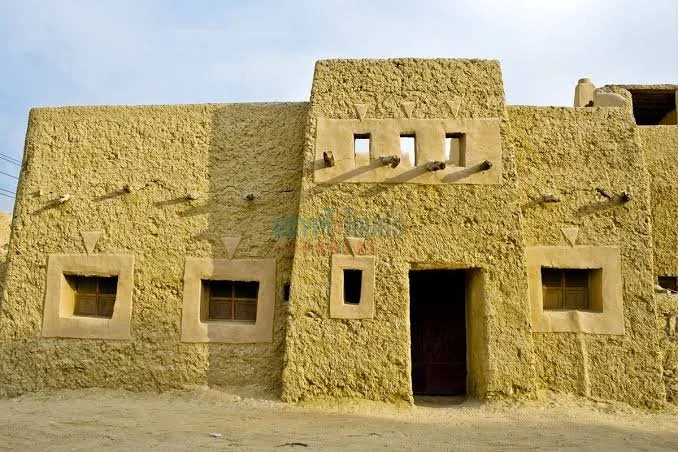
How microscopic analysis of earth-based building materials can reveal construction knowledge, resource choices, and technological traditions across ancient societies.
Introduction: The Science Hidden Inside Mudbrick
Mudbrick is one of the oldest and most widespread building materials in human history. Produced from earth mixed with varying amounts of water and sometimes organic or mineral additives, it has been used for houses, storage facilities, defensive structures, temples, and monumental architecture.
Its apparent simplicity can be misleading. Mudbrick construction requires decisions about soil selection, water content, mixing, molding, drying, and the placement of bricks within a building. Builders may have adjusted these choices according to local materials, climate, the intended function of a structure, and inherited construction traditions.
Many mudbrick buildings have deteriorated through erosion, flooding, abandonment, or later rebuilding. Even where walls survive, the original construction process may not be immediately visible. Microscopic analysis provides a way to investigate the composition and internal structure of the material.
By examining mineral grains, pores, plant fibers, clay particles, and other microscopic features, researchers can begin reconstructing how ancient builders prepared their materials. Such analysis can reveal technical choices, but it must be interpreted carefully: similar materials do not necessarily indicate shared cultural origins, and differences do not always represent different traditions.
What Is a Mudbrick Microstructure?
A mudbrick is a composite material. Its properties depend on the proportions and characteristics of its constituents, including clay, silt, sand, gravel, water, and any added organic matter.
At a microscopic scale, these components form a complex arrangement. Grain size and shape affect how particles fit together, while clay minerals influence plasticity and cohesion. Pores and voids affect the movement of water and the material's resistance to stress.
Organic inclusions may include straw, grasses, chaff, or other plant material. Depending on the construction method, these may help manage shrinkage, alter the brick's texture, or change its mechanical behavior. Their function should be tested rather than assumed, because the effects depend on the type and quantity of the additive.
Microscopic examination can identify patterns that are difficult to observe with the naked eye. Researchers may distinguish natural inclusions in the source soil from materials deliberately added during manufacture. However, this distinction is not always straightforward, especially when the local soil naturally contains plant fragments or diverse mineral grains.
Sampling and Laboratory Analysis
The first stage of a study is to select samples that represent the structure's different construction phases and locations. A single brick may not capture the full range of materials used throughout a building, particularly if repairs or rebuilding occurred over time.
Researchers may use optical microscopy to examine thin sections of the brick. In a thin section, the material is sliced sufficiently thin for transmitted light to reveal its mineral composition and internal organization.
Additional methods can answer more specific questions. Scanning electron microscopy can reveal fine surface features, while X-ray diffraction may help identify clay and other crystalline minerals. Elemental analysis can characterize chemical composition, although chemical similarities do not automatically identify a specific source.
Particle-size analysis can help characterize the sediment used in construction. Porosity measurements and other material tests may clarify how the brick was formed and how it has responded to moisture and weathering.
All these methods have limitations. Conservation treatments, burial conditions, salt accumulation, and contamination can alter the sample. Researchers must document the object's history and compare results with local geological materials before making claims about the original building recipe.
Reconstructing the Building Recipe
A building recipe refers to the combination of raw materials and preparation choices used to create a construction material. Archaeologists may infer aspects of this recipe by comparing the proportions of clay, sand, plant matter, and other inclusions across bricks.
If bricks contain unusually consistent mixtures, this may suggest a standardized preparation process. Yet consistency can also result from a naturally uniform clay deposit. To demonstrate deliberate standardization, researchers should compare the bricks with available raw materials and investigate whether the observed composition exceeds what the local geology would predict.
Differences between bricks may indicate separate production batches, repairs, distinct workshops, or changes in construction practice. Such interpretations become stronger when compositional variation corresponds with architectural phases or other independent evidence.
Experimental archaeology can also contribute. Researchers may reproduce bricks using plausible local materials and vary the proportions of clay, sand, water, and organic additives. By comparing the resulting microstructures and performance with archaeological specimens, they can test whether a proposed manufacturing method is feasible.
Experimental success does not prove that ancient builders used exactly the same recipe. Several combinations of materials can produce similar structures, so the results should be treated as evidence of plausibility rather than a unique reconstruction.
Local Resources and Long-Distance Connections
Mudbrick is usually associated with locally available earth, but the materials and techniques used to produce it can still reflect wider connections. Builders may have adopted construction methods from neighboring communities, employed specialists, or used materials transported from elsewhere.
Distinguishing local production from imported material requires geological comparison. Mineral composition, grain characteristics, and chemical signatures may help identify whether a brick resembles nearby soil sources. However, common geological materials can occur across broad regions, and compositional similarity alone may not establish a precise origin.
Construction techniques can also spread without the movement of raw materials. A community might adopt a method for mixing or molding earth after contact with neighboring builders while continuing to use local clay and sand.
Conversely, buildings that look similar may have been constructed independently because the same materials and environmental conditions favored similar solutions. Researchers should therefore avoid treating architectural resemblance as proof of cultural identity or direct contact.
The most convincing evidence of technological exchange combines material analysis with chronology, architectural comparison, and independent indicators of interaction.
Climate, Durability, and Building Performance
The composition of mudbrick influences how it responds to environmental conditions. Water is particularly important because prolonged moisture can weaken earth-based materials, encourage erosion, and damage the surfaces of walls.
Clay content, particle size, porosity, and organic inclusions all affect performance, but the relationships are complex. A material that works well in one climate may perform poorly in another. Local construction traditions may therefore reflect generations of experience with rainfall, seasonal humidity, wind, and available building resources.
Researchers can investigate these relationships by examining weathering patterns and comparing the composition of surviving bricks with the surrounding environment. Experimental tests may evaluate strength, water absorption, drying behavior, and resistance to erosion.
However, present-day performance does not fully reproduce ancient conditions. Soil chemistry may have changed during burial, while salts, vegetation, and later repairs can affect preservation. A brick's current condition should not be treated as a direct measure of its original properties.
Standardization, Labor, and Social Organization
Building a mudbrick structure requires more than raw materials. Someone must gather earth, prepare mixtures, shape bricks, dry them, transport them, and place them within the building. The scale and consistency of this work can provide clues about labor organization.
Large construction projects may have required coordinated labor and substantial preparation, while small domestic buildings could have been produced by households or local work groups. Yet the number of bricks alone does not reveal whether workers were paid, conscripted, or participating in communal activity.
Standardized brick dimensions and composition may suggest shared working procedures. If these patterns appear across multiple buildings, they may indicate the existence of common technical conventions or organized production. Archaeologists still need to determine whether the similarity reflects centralized oversight, local custom, or practical constraints.
Microstructural analysis contributes by showing how construction materials were prepared. When combined with architectural scale, tool evidence, settlement organization, and historical documentation, it can help investigate the labor and knowledge systems behind ancient buildings.
Conservation and the Preservation of Earthen Architecture
Mudbrick structures are often vulnerable to water, wind, salt crystallization, and uncontrolled vegetation. Conservation efforts must balance the need to protect the material with the importance of retaining its original composition and appearance.
Understanding microstructure can help conservators choose suitable interventions. A repair material that is too hard or impermeable may damage the original fabric, while an incompatible mixture can accelerate deterioration. Conservation materials should therefore be tested for compatibility with the existing brick and its environmental conditions.
Documentation is essential before intervention. Researchers record the composition, condition, and distribution of different materials so that future changes can be monitored. Where possible, minimally invasive methods help preserve original material for future study.
The broader lesson is that mudbrick should not be dismissed as an inferior or temporary building material. Its survival depends on environmental conditions and maintenance, and many earthen structures represent sophisticated adaptations to local resources and construction needs.
Conclusion: Reconstructing Ancient Technology from Earth
The microscopic study of mudbrick opens a window into the technical decisions behind ancient architecture. Mineral grains, pores, clay particles, and organic inclusions can reveal how builders selected and prepared materials, adapted to environmental conditions, and maintained construction traditions.
These features do not automatically identify a cultural group or prove contact between distant societies. Similar recipes can emerge independently, while a single building may contain several construction phases and material sources.
By combining microstructural analysis with geological comparison, architectural recording, experimental research, and secure chronology, archaeologists can move beyond the appearance of ancient walls to investigate the knowledge embedded within them.
Mudbrick may be made from ordinary earth, but its microstructure preserves traces of deliberate human choices. Those choices connect geology, labor, environmental adaptation, and cultural transmission—demonstrating how even the most familiar building materials can preserve a sophisticated technological history.




