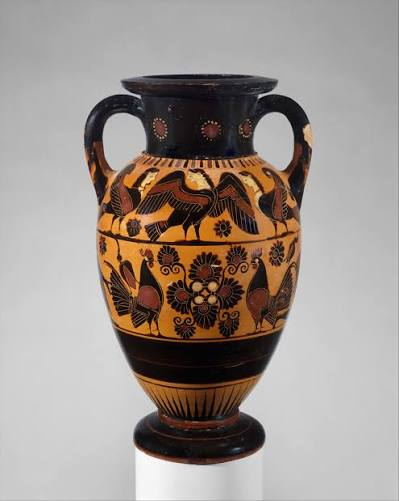
Amphorae were among the most important transport containers in the ancient Mediterranean. They were used to store and move liquids and other commodities, including wine, olive oil, fish products, and agricultural goods. Their shape, handles, fabric, and manufacturing techniques often reflect the needs of particular production regions and markets.
The study of amphorae is especially valuable in maritime archaeology because these vessels can provide evidence of trade and transport. Their forms and fabrics may help researchers identify production centers and estimate the movement of goods between settlements.
Chalkis, located on the island of Euboea, occupied an important position in regional maritime networks. Its location near the Euripus Strait connected the northern and southern Aegean and provided access to inland and coastal settlements. Harbor activity would have been important throughout many periods of the city's history.
The title proposes obscure amphorae discovered in a harbor trench at Chalkis. The specific assemblage cannot be confirmed without excavation records. Amphora fragments found in a harbor may have been associated with cargo, storage, shipwrecks, port construction, refuse disposal, or later disturbance.
A study would begin by recording the vessel fragments, including rims, handles, bases, body shapes, and fabrics. Researchers would compare the material with amphora typologies and examine whether the vessels represent local production or imports. Residue analysis, when appropriate, might provide evidence of the commodities once contained in the vessels.
The trench's stratigraphy would be essential. Securely dated deposits could establish the period of harbor activity and the relationship between the amphorae and maritime commerce.
The subject is significant because amphorae can connect a local harbor to wider economic networks. They help researchers reconstruct the movement of goods, the organization of trade, and the role of coastal settlements in ancient Mediterranean commerce.