
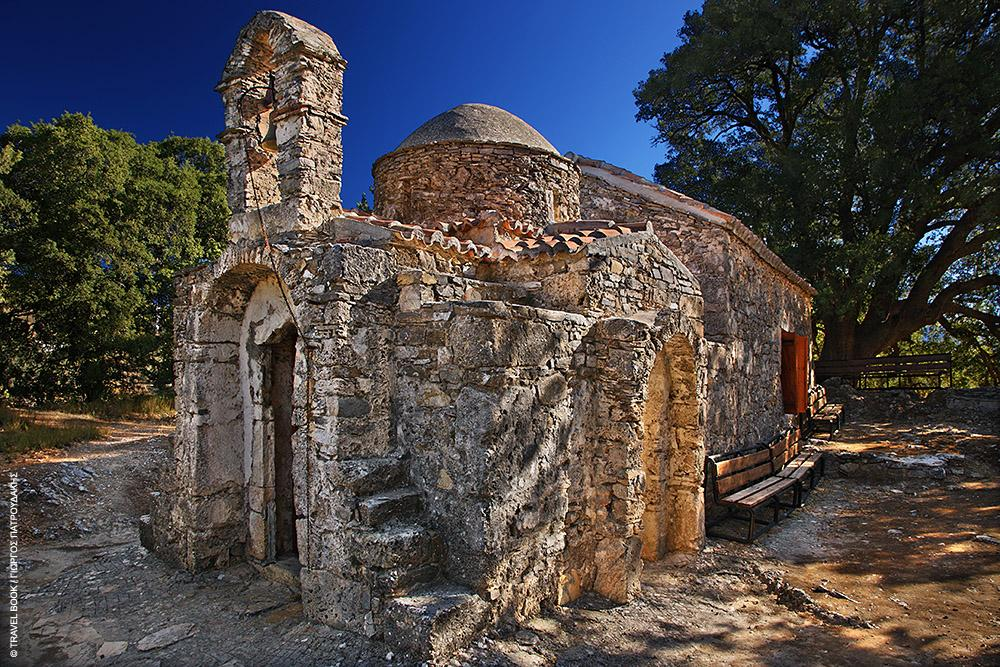
Photogrammetry and the Digital Preservation of Religious Architecture
Crete contains numerous historic chapels, churches, monasteries, and religious structures that preserve important examples of Byzantine and post-Byzantine architecture, painting, and local devotional traditions.
Many small chapels are situated in rural areas, mountain settlements, agricultural landscapes, or locations far from major urban centers. Their modest size does not diminish their historical significance. They may preserve architectural features, inscriptions, paintings, religious objects, and evidence of community history.
Photogrammetry galleries could provide digital records of these buildings and make their architectural and artistic features accessible to researchers and visitors. The specific galleries described in this title are not verified as an existing collection.
Photogrammetry as a Documentation Method
Photogrammetry reconstructs three-dimensional objects or spaces from overlapping photographs. By identifying common features across multiple images, specialized software estimates camera positions and creates a digital model.
For a Cretan chapel, photographs could be taken of the exterior walls, roof, entrance, interior surfaces, architectural details, and decorative elements.
The process may produce:
Three-dimensional architectural models.
Orthophotographs of walls and ceilings.
Digital elevation and surface information.
Detailed records of frescoes.
Models of architectural features.
Virtual tours.
These records could be useful even when the chapel is small, difficult to access, or vulnerable to environmental damage.
Documenting Byzantine and Post-Byzantine Art
Some chapels contain frescoes and painted decoration that are important for understanding religious art and regional artistic traditions.
Photogrammetry can help record the placement of paintings, the geometry of walls, and the relationship between decorative elements and architectural spaces.
Detailed digital images may support the study of:
Iconographic programs.
Saints and religious figures.
Biblical scenes.
Decorative borders.
Inscriptions.
Painting techniques.
Visible deterioration.
However, photogrammetry does not necessarily reveal the full condition of a painting. Specialized imaging techniques may be needed to investigate pigment composition, hidden layers, or underlying drawings.
Conservation and Condition Monitoring
A chapel may be affected by moisture, temperature fluctuations, salt crystallization, biological growth, structural movement, and human activity.
Digital models could provide baseline documentation for conservation work. Future surveys could be compared with earlier records to identify changes in wall surfaces, roof structures, paintings, or architectural details.
This may help conservators determine whether deterioration is progressing and identify areas requiring attention.
Photogrammetry can also reduce the need for repeated physical access to fragile spaces, although conservation specialists must still inspect the original structures.
Virtual Galleries and Public Access
A photogrammetry gallery could allow visitors to explore a chapel digitally.
Virtual presentations may include panoramic views, interactive architectural models, historical information, translations of inscriptions, and explanations of religious paintings.
For people unable to travel to remote chapels, virtual access could provide an opportunity to learn about regional religious heritage.
Such galleries could also support educational programs involving Byzantine art, Greek architecture, historical geography, and conservation.
Limitations and Responsible Documentation
Photogrammetry depends on image quality, lighting conditions, camera coverage, and the characteristics of the photographed surfaces.
Reflective surfaces, dark interiors, narrow spaces, and repetitive patterns may complicate reconstruction. Some architectural details may remain difficult to capture accurately.
Digital models also require storage, backup, software maintenance, and continued accessibility.
Most importantly, the creation of a digital model should not interfere with religious activities or community use. Researchers should coordinate with chapel custodians, local communities, and relevant heritage authorities before documenting religious spaces.
Conclusion
Photogrammetry galleries of Cretan chapels could provide valuable records of historic religious architecture and artistic heritage. Through digital documentation, conservation monitoring, virtual interpretation, and public access, small chapels could receive greater attention while remaining protected as physical cultural heritage.





