
Introduction
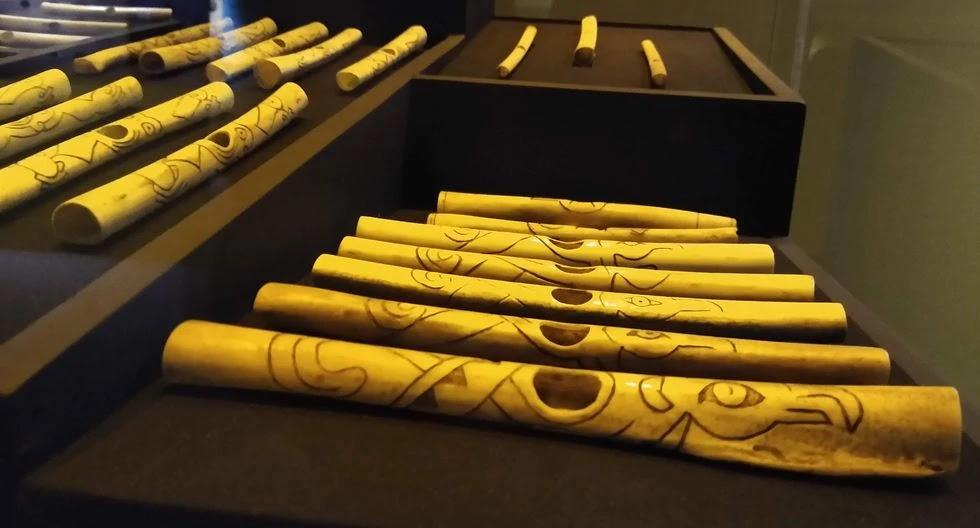
Musical instruments provide important evidence for the cultural, social, and symbolic lives of ancient communities. Bone flutes are particularly significant because they can preserve physical evidence of sound-making technology in archaeological contexts.
In the Amazon, archaeological investigations have contributed to broader understanding of ancient settlement, material culture, ritual practices, and human interaction with forest environments. Portable bone flutes would represent an interesting subject for examining the relationship between musical technology, animal resources, social life, and sound.
The specific new finds described in this title are not verified. The article therefore explores the archaeological and ethnomusicological significance of portable bone flutes as a research subject.
Bone as a Musical Material
Bone is a durable organic material that can be shaped into tools, ornaments, and musical instruments.
Its properties make it suitable for producing hollow structures capable of generating sound. Depending on the design, a bone flute may contain one or more openings that allow the player to alter airflow and pitch.
The manufacture of a bone flute may involve selecting an appropriate bone, removing unwanted material, shaping the instrument, drilling openings, smoothing surfaces, and modifying the structure to improve sound production.
The type of bone used may provide clues about animal exploitation and manufacturing choices. However, identifying an instrument's original animal species requires careful examination and, where possible, zooarchaeological analysis.
Archaeological Identification of Flutes
Identifying a bone object as a musical instrument is not always straightforward.
Some hollow bones may have been used as containers, tubes, ornaments, tools, or components of other objects. The presence of drilled holes may suggest musical use, but it is not sufficient evidence by itself.
Archaeologists may examine:
The position and spacing of openings.
The shape and dimensions of the object.
Surface wear.
Manufacturing marks.
Modification patterns.
Breakage and repair.
Archaeological context.
Microscopic analysis may reveal traces of cutting, scraping, drilling, polishing, or use-related wear.
If the object preserves enough structural information, researchers may attempt experimental reconstruction to determine whether it can produce controlled musical tones.
Portability and Musical Practice
Portable flutes would have offered practical advantages in environments where people moved through landscapes for hunting, gathering, trading, social activities, or seasonal settlement.
A small instrument could be carried easily and used in different settings.
Music may have played roles in social gatherings, ritual activities, communication, entertainment, storytelling, or the expression of collective identity.
However, the function of a particular flute cannot be established simply because it is portable. Archaeological context is essential.
An instrument discovered within a residential area may have had different associations from one found in a ceremonial deposit or burial context.
Reconstructing Ancient Soundscapes
A soundscape refers to the acoustic environment experienced by people within a particular setting.
The reconstruction of ancient soundscapes requires consideration of both human-produced sounds and environmental acoustics.
In the Amazon, sound environments may include birds, insects, flowing water, wind, rain, animals, and human activity.
A reconstructed bone flute could provide an opportunity to investigate how an instrument might have sounded within a forest environment.
Researchers could examine:
The instrument's possible pitch range.
Its tonal characteristics.
The distance over which sound could travel.
The acoustic effects of forest vegetation.
The relationship between instrument sound and environmental noise.
Such experiments could help explore the acoustic possibilities of the instrument, although they could not recreate the exact music or cultural meaning of ancient performances.
Experimental Archaeology and Musical Reconstruction
Experimental archaeology may involve creating a replica of a recovered instrument using comparable materials and techniques.
Researchers could examine how different hole sizes, spacing, bone lengths, and airflow conditions affect sound.
The reconstructed instrument might be tested by musicians and acoustic specialists, who could document its tonal characteristics and practical limitations.
This approach helps evaluate whether an archaeological interpretation is physically plausible.
However, producing sound from a replica does not establish the original instrument's musical repertoire, playing technique, or social function.
The difference between the physical capability of an instrument and the cultural meaning of its music must remain clear.
Indigenous Cultural Context and Ethical Interpretation
Research into ancient Amazonian musical traditions requires care because Indigenous communities possess living musical knowledge, cultural practices, and historical relationships with their environments.
Archaeological interpretations should avoid treating contemporary Indigenous traditions as unchanged survivals from prehistoric periods.
Although comparative ethnomusicology may offer useful insights into instrument design, music-making, and social practices, historical continuity must be demonstrated rather than assumed.
Collaborative research involving Indigenous communities can provide ethical perspectives on heritage, sound, cultural ownership, and interpretation.
Conclusion
Portable bone flutes from the Amazon would offer a valuable opportunity to study prehistoric musical technology and the cultural importance of sound.
Through archaeological examination, experimental reconstruction, and acoustic analysis, researchers could investigate instrument manufacture, portability, and musical possibilities.
The study of such objects would contribute to a broader understanding of prehistoric creativity, social interaction, and the role of music in human communities, while recognizing the limits of archaeological evidence when reconstructing ancient sound and cultural meaning.





