
Introduction
Textile production was an important economic activity in many medieval societies. Cloth was used for clothing, household furnishings, trade, religious purposes, and social display. Weaving could involve specialized knowledge, repeated physical activity, access to fibers, and organized production.
The bioarchaeology of urban weavers in medieval Anatolia offers an opportunity to investigate how textile production may have affected people's bodies, health, working conditions, and daily lives.
The specific group of urban weavers referenced in this title is not verified as an identified bioarchaeological population. The article explores how such a research question could be investigated using skeletal remains, archaeological evidence, and historical sources.
Textile Production in Medieval Anatolian Cities
Anatolia occupied an important position within medieval commercial and cultural networks. Urban settlements connected agricultural production, craftsmanship, regional trade, and political administration.
Textile industries could involve the production and processing of wool, linen, cotton, and other fibers, depending on local resources and technological traditions.
Weaving was often part of a wider production process that included:
Fiber preparation.
Cleaning and sorting.
Spinning.
Dyeing.
Loom preparation.
Weaving.
Finishing.
Storage and distribution.
Different stages of textile production could require different skills and physical demands.
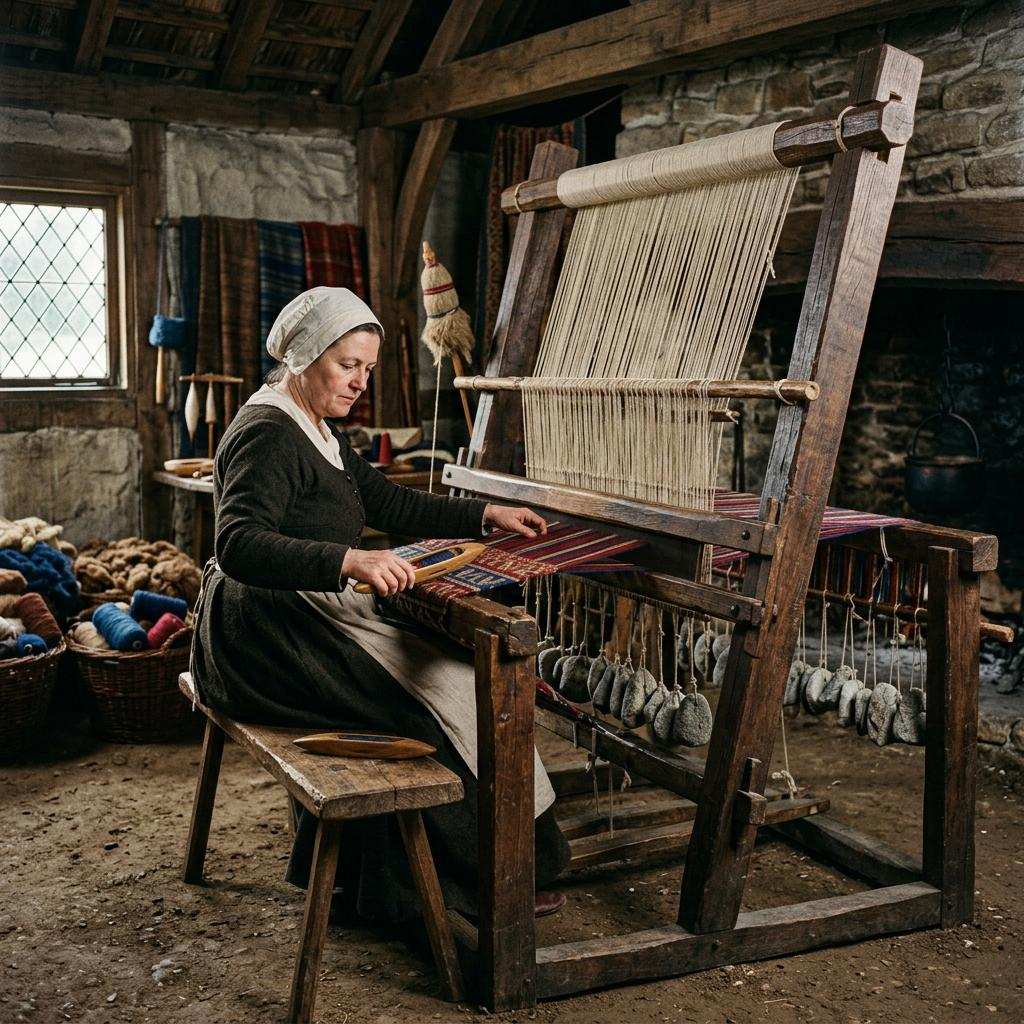
The archaeological identification of a weaving workshop may rely on loom weights, spindle whorls, tools, textile fragments, architectural features, and associated materials.
Bioarchaeology and the Study of Labor
Bioarchaeology examines human skeletal remains to investigate biological characteristics, health, activity, diet, disease, and other aspects of past populations.
The study of textile workers may focus on how repeated physical activity affected skeletal structures.
Researchers may examine:
Joint degeneration.
Muscle attachment changes.
Bone remodeling.
Fractures.
Dental wear.
Evidence of nutritional stress.
Signs of chronic disease.
Age-related changes.
Weaving can involve repetitive movements of the hands, wrists, shoulders, back, and legs. Depending on loom design and working position, different parts of the body may experience varying levels of strain.
However, skeletal changes are not uniquely associated with weaving. Many activities can produce similar patterns, and bones are affected by age, genetics, nutrition, disease, and overall lifestyle.
Therefore, identifying a specific occupation from skeletal remains is difficult.
Repetitive Work and Physical Stress
Textile production may have involved prolonged sitting, repetitive arm movement, hand manipulation, and maintaining particular postures.
Some weaving techniques require coordinated movements of the upper limbs and repeated adjustments of tension. Other textile tasks may involve standing, walking, bending, carrying materials, or operating equipment.
Bioarchaeologists could investigate whether individuals displayed patterns of physical stress consistent with repeated activity.
For example, differences in skeletal characteristics might be examined between individuals from urban burial populations and other groups, while considering age and sex-related biological variation.
Such comparisons must be cautious because physical activity patterns are rarely reflected in one specific skeletal feature.
Health, Diet, and Living Conditions
Urban textile workers may have experienced health conditions associated with crowded living environments, occupational demands, nutritional differences, and economic status.
Skeletal evidence could provide information about:
Childhood growth and development.
Nutritional deficiencies.
Infectious disease.
Trauma.
Dental health.
Chronic stress.
Stable isotope analysis may help investigate diet and mobility. Chemical analysis of bone and teeth can sometimes reveal information about the foods people consumed and the environments in which they lived.
Dental remains may provide information about childhood health, dietary patterns, and oral conditions.
However, archaeological populations represent incomplete samples. Burial populations may not include every social group, and individuals who were buried in particular locations may differ from the wider population.
Gender, Occupation, and Social Organization
Textile production has frequently been associated with women's labor in historical societies, but the organization of textile work varied widely.
Some activities may have been household-based, while others were conducted in specialized workshops or organized production settings. Men, women, children, and specialized craftspeople could participate in different stages of textile production depending on cultural and economic conditions.
Bioarchaeological interpretations should not assume that weaving was exclusively female or that occupational roles were identical across medieval Anatolia.
Historical documents, workshop archaeology, textile tools, inscriptions, and burial evidence may help clarify the social organization of production.
Identifying Textile Workers Archaeologically
A bioarchaeological study of urban weavers would require a reliable connection between the individuals being studied and textile production.
Possible sources of evidence include:
Burial contexts associated with workshops.
Written records describing occupations.
Inscriptions.
Textile tools found in associated archaeological contexts.
Spatial relationships between workshops and residential areas.
Evidence of craft specialization.
Historical documentation of textile production.
Without such evidence, skeletal patterns should not be interpreted as proof that an individual was a weaver.
Conclusion
The bioarchaeology of medieval Anatolian textile workers could provide insight into the relationship between labor, physical activity, health, and social organization.
By combining skeletal analysis with archaeological workshop evidence, historical documentation, and material culture, researchers could explore the lives of people involved in textile production.
This approach shifts the study of medieval textile industries from objects and economic systems toward the individuals whose labor sustained them.





