Sandhill Smithy: Eday's Neolithic Site
The name Sandhill Smithy presents an interesting archaeological puzzle because the word "smithy" evokes metalworking, while the title identifies the site as Neolithic.
This distinction is important.
The Neolithic predates widespread metallurgy in Orkney, so an archaeological site with Neolithic evidence should not automatically be interpreted as an ancient blacksmith's workshop simply because of its later place-name.
Understanding Place Names
Scottish archaeological landscapes often preserve names that were assigned centuries after the original archaeological activity.
A location may be called:
Smithy
Chapel
Castle
Kirk
Temple
Giants' Grave
without the archaeological remains actually belonging to the period implied by the name.
Archaeologists therefore distinguish between traditional place names and excavated evidence.
The Neolithic Background
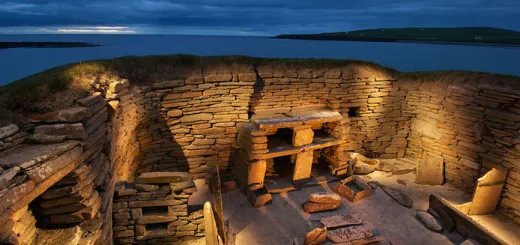
If Neolithic material survives at Sandhill Smithy, it belongs to the period when Orkney communities were establishing increasingly permanent agricultural settlements.
This was an era of remarkable architectural development.
People constructed stone houses, chambered tombs, standing stones, and ceremonial complexes.
Craft Production
Neolithic communities were highly skilled craftspeople.
They worked:
Stone
Bone
Antler
Shell
Clay
Wood
Organic fibers
Stone tools could be shaped through flaking, grinding, polishing, and drilling.
Pottery was also an important technology.
These crafts were essential to farming and household life.
The Importance of Context
A single artifact rarely tells the whole story.
A stone axe found in isolation has limited interpretive value.
An axe found beside a hearth, animal bones, pottery fragments, and a building provides much richer evidence.
Archaeologists therefore focus heavily on context.
Where something was found can be as important as what it is.
Eday's Wider Neolithic Network
Sandhill Smithy belongs within a much larger archaeological environment.
Eday's Neolithic monuments and settlements demonstrate that communities occupied and transformed the island repeatedly.
The site's value is therefore greatest when considered alongside other evidence rather than as an isolated archaeological curiosity.