Archaeologists have discovered previously unknown Stone Age rock paintings near Tingvoll municipality, located in Møre og Romsdal county, Norway.
Tingvoll is already recognised as one of Northern Europe’s most significant areas for prehistoric rock paintings, with previous studies documenting 25 distinct art fields distributed across two main locations.
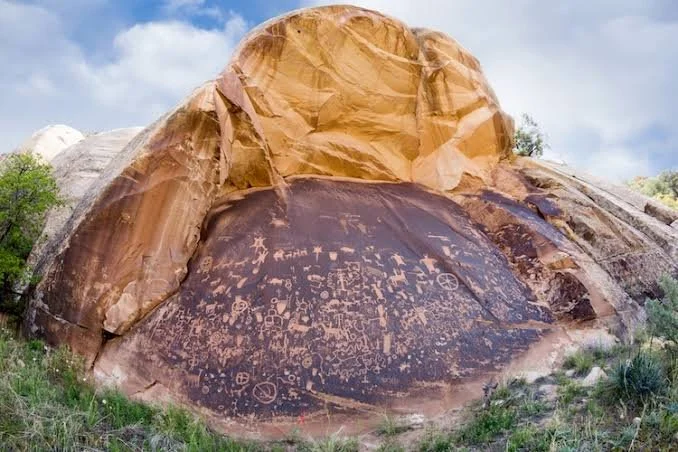
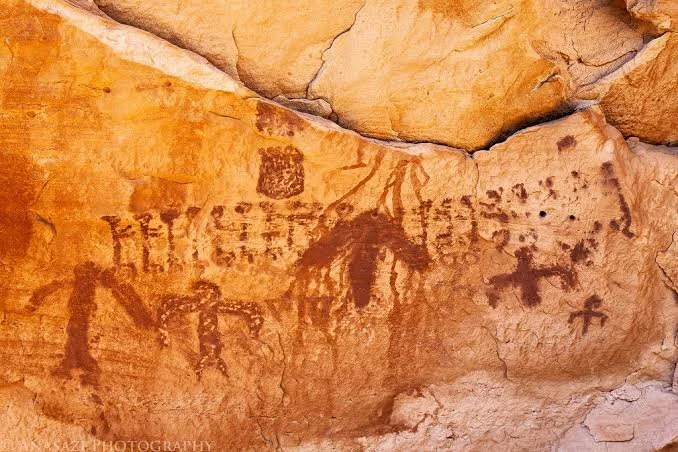
Unlike petroglyphs, which are carved or etched into stone, these images are rock paintings, created by applying pigment (often ochre) directly onto the rock surface. Dating them precisely is challenging, but most are believed to have been produced between 3,000 and 7,000 years ago.
The newly discovered site, identified by Jan Magne Gjerde and his colleague Dag-Øyvind Engtrø Solem, constitutes a separate and previously unknown rock art area, further expanding the archaeological importance of the region.
The pair identified rock paintings depicting fish – believed by experts to represent salmon or halibut, alongside geometric motifs that are thought to symbolise a boat.
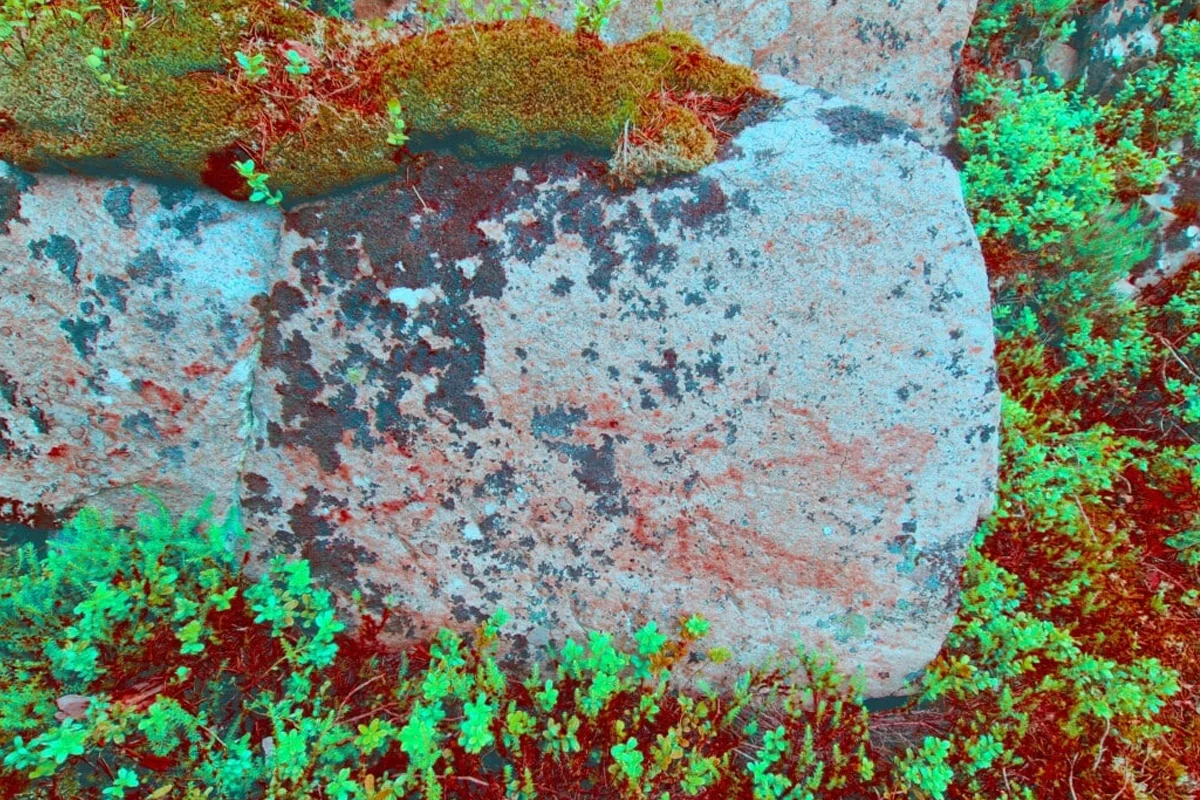
Solem, said: “We colour-manipulated the images to study the marks in the rock more closely, and then there was no doubt. These red lines were painted by humans.”
“Rock art is made in rocks that are constantly exposed to natural degradation. Over time, the paintings will therefore gradually disappear through various forms of weathering, and the condition varies greatly from place to place,” said Gjerde.
Leading experts in rock art conservation have been engaged to help assess, manage, and where possible preserve the rock paintings, which are currently deteriorating at an alarming rate.
In parallel, NIKU has worked in close cooperation with Møre og Romsdal County Council and the NTNU Science Museum to support research and long-term conservation efforts.