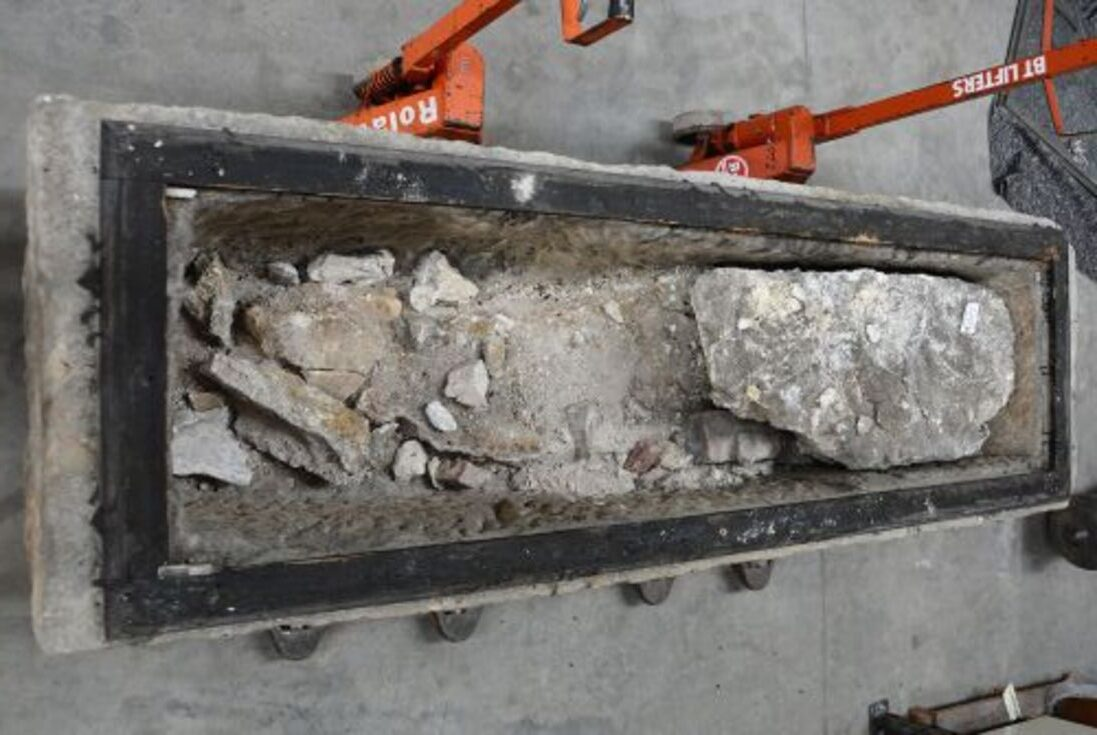
Archaeologists in England have revealed remarkable details about personal Roman burial customs after reanalyzing a rare stone sarcophagus filled with gypsum that was found in York. Nearly 2,000 years old, the burial has preserved clear impressions of textiles, possible hand and finger marks made in soft gypsum, and material that may still hold traces of DNA—providing rare insight into Roman funerary treatment of the dead.
The research forms part of the Seeing the Dead project, which examines Roman burial practices and physical remains. The sarcophagus, recorded as YORYM: 2010.1219 and curated by York Museums Trust, was originally discovered in 1877 during construction of York Railway Station. Although it has been known to researchers for generations and occasionally displayed publicly, it had never been fully excavated using modern scientific methods until this recent study.
A rare form of Roman burial
The burial stands out because of how the body was laid to rest. Once placed inside the stone coffin, liquid or semi-liquid gypsum—a refined mineral substance—was poured around the lower portion of the body. As the material set, it hardened into a solid mass that preserved delicate details of both the body and its immediate environment.
Such a burial method is extremely uncommon in Roman Britain. Researchers suggest the gypsum served as both a sealing layer and a preservative, protecting organic materials that would usually decompose. The technique is comparable to the well-known plaster casts from Pompeii, where cavities left by decayed bodies were filled to preserve detailed impressions of eruption victims.
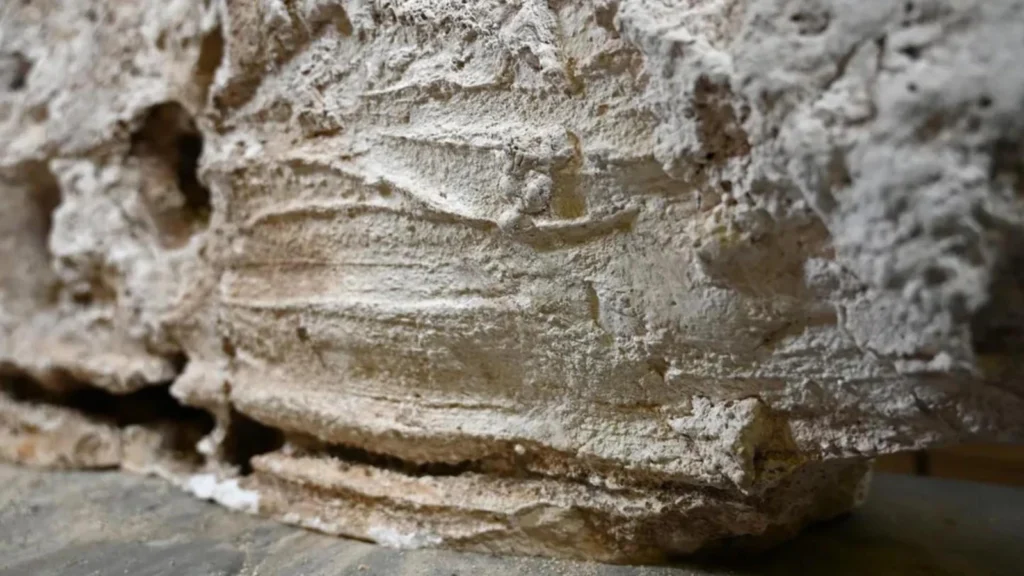
Unique impressions created by a Roman burial ritual. Credit: Seeing the Dead Project
Handprints Captured in Gypsum
Among the most notable findings were apparent hand and finger marks preserved on the exterior of the gypsum layer. These impressions overturn earlier ideas that gypsum in Roman burials was poured at extremely high temperatures. Instead, the evidence suggests it was mixed into a thick, malleable paste and shaped manually.
Roman archaeologist Dr. Maureen Carroll of the University of York explained that these impressions point to a highly intimate stage of the burial process. The hands-on application of the gypsum may indicate an emotional bond between those performing the burial and the deceased—an element of Roman mortuary practice that is seldom visible archaeologically.
Unusually Well-Preserved Textiles
Equally significant were fabric impressions on the inside of the gypsum shell. Distinct patterns show that the body had been wrapped in garments or a burial cloth. Even more rare, tiny remnants of textile fibers were found trapped within the hardened gypsum beneath the remains.
Such preservation is exceptional in Roman contexts. Researchers suggest that the gypsum penetrated the fabric while still soft, then solidified around the fibers, shielding them over time. Why this burial retained textiles when others did not is still uncertain and is now a central question in further scientific study.
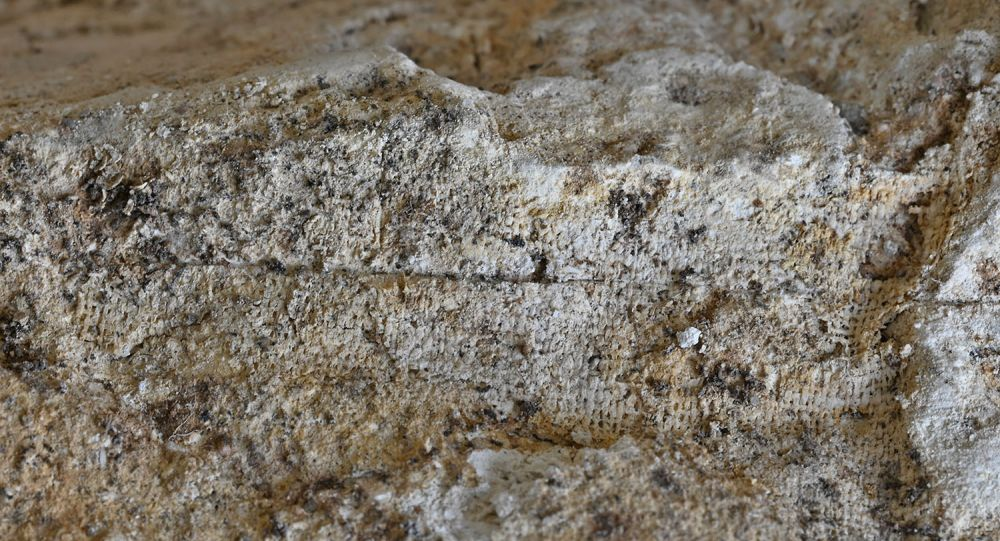
Fine details of fabrics are preserved in the hardened gypsum.
Handprints Preserved in Stone
One of the most remarkable findings was the presence of apparent hand and finger impressions on the outer layer of the gypsum casing. These marks contradict earlier beliefs that gypsum used in Roman burials was poured at extremely high temperatures. Instead, researchers now think the material had a thick, paste-like consistency and was shaped by hand.
According to Roman archaeologist Dr. Maureen Carroll of the University of York, these impressions point to an intimate and deliberate act within the burial process. Manually molding the gypsum may indicate a strong emotional bond between the mourners and the deceased—an element of Roman funerary practice that is rarely visible archaeologically.
Exceptionally Preserved Textiles
Equally striking were the impressions of textiles found on the inside of the hardened gypsum. Distinct patterns show that the body was wrapped in garments or a burial shroud at the time of burial. Even more unusual, tiny pieces of actual fabric were discovered trapped within the gypsum beneath the remains.
Such preservation is extremely uncommon in Roman contexts. Researchers suggest the wet gypsum penetrated the fabric and then hardened, encasing and safeguarding the fibers for centuries. Why textiles survived in this burial while others did not is still uncertain and remains a focus of ongoing study.
Scientific Sampling and DNA Potential
To document the burial with precision, archaeologists collected gypsum dust and fragments using a carefully mapped grid system. This method allows samples to be linked to specific body areas, including the head, hands, and feet, increasing the likelihood of extracting meaningful biological and material data.
The preserved gypsum and textile remnants may contain trace DNA, which could help identify the biological sex of the individual or offer clues about those who prepared the burial. While results are not assured, the potential alone marks a major step forward in understanding Roman burial customs.
Digital Reconstruction and Ongoing Research
High-resolution 3D scanning was carried out before and after excavation, recording details at a sub-millimetre scale. These scans enable a digital reconstruction of the burial as it originally appeared and ensure the data remains accessible for future research.
Although later contamination such as remnants from old display materials and pest treatments during museum storage—posed challenges and required protective measures, the excavation still produced exceptional findings. As laboratory analyses continue, the gypsum burial is expected to deepen knowledge of Roman craftsmanship, funerary rites, and the personal connections involved. More than a hundred years after its discovery, the sarcophagus is finally yielding its story preserved in stone and touch.