
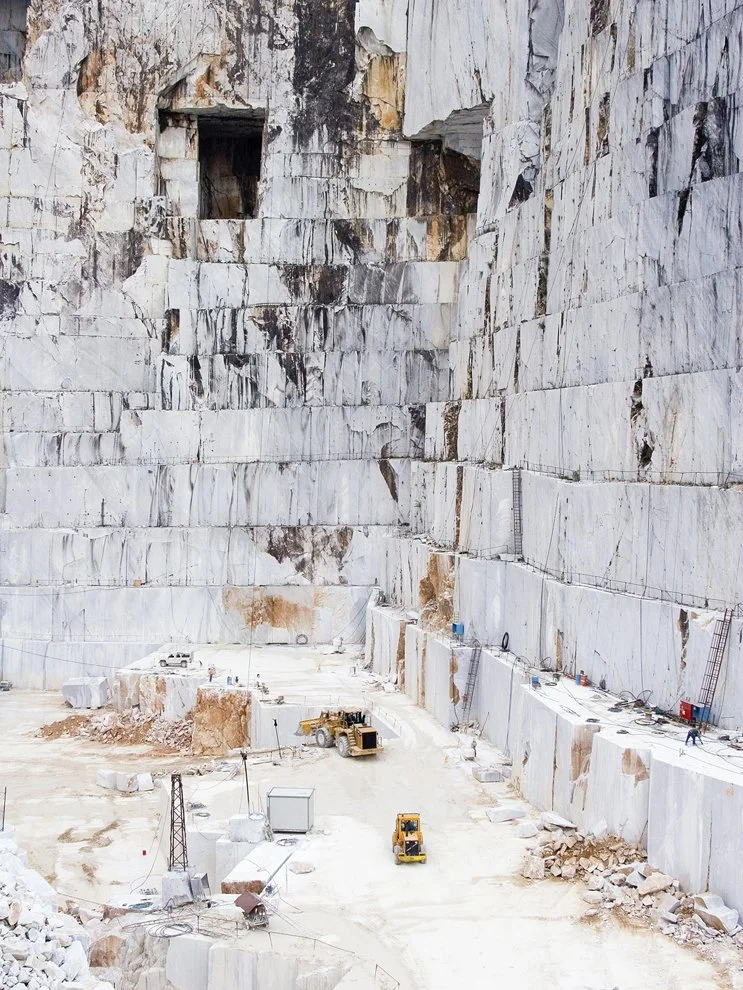
Looking beyond stone extraction to investigate the social worlds, personal expressions, and possible ritual practices of ancient quarry workers.
Introduction: Quarries as Places Where People Lived
Quarries are often studied as sources of building stone, monuments, and sculpture. Archaeologists investigate their geology, extraction techniques, tool marks, and transport routes to understand how raw materials reached construction sites.
Yet quarries were also places where people spent time working, resting, communicating, and organizing daily life. Large extraction projects could require workers, supervisors, craftspeople, transport personnel, and support staff. Temporary camps or longer-lived settlements might develop around these activities.
Evidence of this social environment can survive in unexpected forms. Graffiti scratched into rock, inscriptions, small offerings, hearths, discarded objects, and traces of temporary shelters may reveal aspects of quarry life that are not visible in the finished monuments.
The interpretation of these traces requires caution. A mark on a quarry wall may be a worker's inscription, a measurement, a tool mark, or a later visitor's contribution. Likewise, an unusual object does not automatically indicate ritual activity.
Reading the Quarry Landscape
The physical organization of a quarry can reveal how work was arranged. Extraction faces, unfinished blocks, ramps, paths, tool-maintenance areas, and discarded stone may indicate the movement of workers and materials.
Researchers record these features in relation to the geological structure of the site. The direction of extraction, the size of abandoned blocks, and the distribution of tool marks can help reconstruct the stages of production.
Worker camps may be identified through foundations, hearths, storage areas, pottery, and other domestic remains. However, not every concentration of artifacts represents a permanent settlement. Some may have accumulated during seasonal work or repeated visits.
Environmental reconstruction is important because quarry sites may change significantly after abandonment. Erosion, vegetation growth, later extraction, and modern machinery can obscure the original layout.
Graffiti and the Personal Expression of Workers
Graffiti can provide a rare glimpse into the people who worked in quarries. Depending on the period and region, marks may include names, symbols, short inscriptions, sketches, or informal records of activity.
Such markings can reveal literacy, personal identity, group affiliation, or the organization of work, but their interpretation depends on context. A name carved into a wall may identify a worker, supervisor, visitor, or later traveler.
Researchers examine the technique, location, weathering, and relationship of graffiti to extraction marks and other features. If an inscription crosses an earlier surface or lies within a later quarry cut, its relative chronology may be established.
The content of an inscription may also be ambiguous. A symbol that resembles a religious sign in one context might function as a work mark or personal emblem in another. Comparisons with securely dated inscriptions can help, but interpretations should remain open when evidence is limited.
Ritual Practices and Sacred Landscapes
Quarries may have acquired religious significance for several reasons. The extraction of stone for temples, statues, tombs, or other important structures could connect a quarry with a larger sacred project. Workers might also have maintained personal religious practices while away from their homes.
Archaeological evidence for ritual activity may include deliberately deposited objects, small shrines, inscriptions invoking deities, or repeated patterns of offerings. However, such features must be distinguished from practical storage, discarded equipment, or later occupation.
The use of a quarry for monumental construction does not make the entire site sacred. A location could simultaneously function as a workplace, a transport center, and a place where particular individuals performed religious acts.
Researchers should therefore investigate the scale and context of ritual evidence rather than assuming that all workers shared the same beliefs or practices.
Worker Camps, Food, and Social Organization
Quarry workers needed food, water, tools, shelter, and systems for moving materials. Camps associated with extraction projects can reveal how these needs were met.
Pottery, animal bones, plant remains, hearths, and storage features may provide evidence of food preparation and consumption. The composition of these assemblages can help researchers investigate whether workers relied on locally available resources or received supplies from elsewhere.
Differences in housing and material access may reflect distinctions among workers, supervisors, specialists, or administrators. Yet such differences should not automatically be interpreted as a direct record of social rank.
The organization of labor also varied. Some quarry projects may have depended on seasonal workers, while others required specialized teams or long-term settlements. Archaeological evidence can reveal patterns of activity, but it rarely establishes the legal or social status of every worker.
Connecting Quarries to Monumental Architecture
Quarries are often linked to finished structures through geological sourcing. Researchers compare the mineral composition and geological characteristics of stone at the quarry with those of blocks used in buildings or monuments.
When a match is secure, it can reveal the movement of material from the extraction site to the construction project. Transport routes, unfinished blocks, and tool marks can help reconstruct the process.
However, identifying a quarry source does not automatically establish who organized the extraction or how the workers were compensated. Those questions require additional evidence from inscriptions, administrative records, settlement remains, or broader historical context.
The relationship between quarry and monument can nevertheless illuminate the scale of the undertaking. A large construction project may have depended on coordinated extraction, transport, and skilled labor across multiple locations.
Conclusion: Recovering the Human World of Stone Extraction
Quarries preserve more than evidence of raw-material production. Graffiti, worker camps, domestic debris, and possible ritual deposits can reveal the personal and social dimensions of labor.
These traces must be interpreted in context. An inscription may not identify a worker, and an unusual deposit may not represent a ritual. The strongest conclusions come from combining surface recording, archaeological excavation, material analysis, and chronological evidence.
By studying quarries as lived landscapes, archaeologists can connect the production of stone with the experiences of the people who extracted, shaped, transported, and sometimes marked it. The finished monument may preserve the work of an entire community, while the quarry offers a more direct view of the people behind that achievement.




