
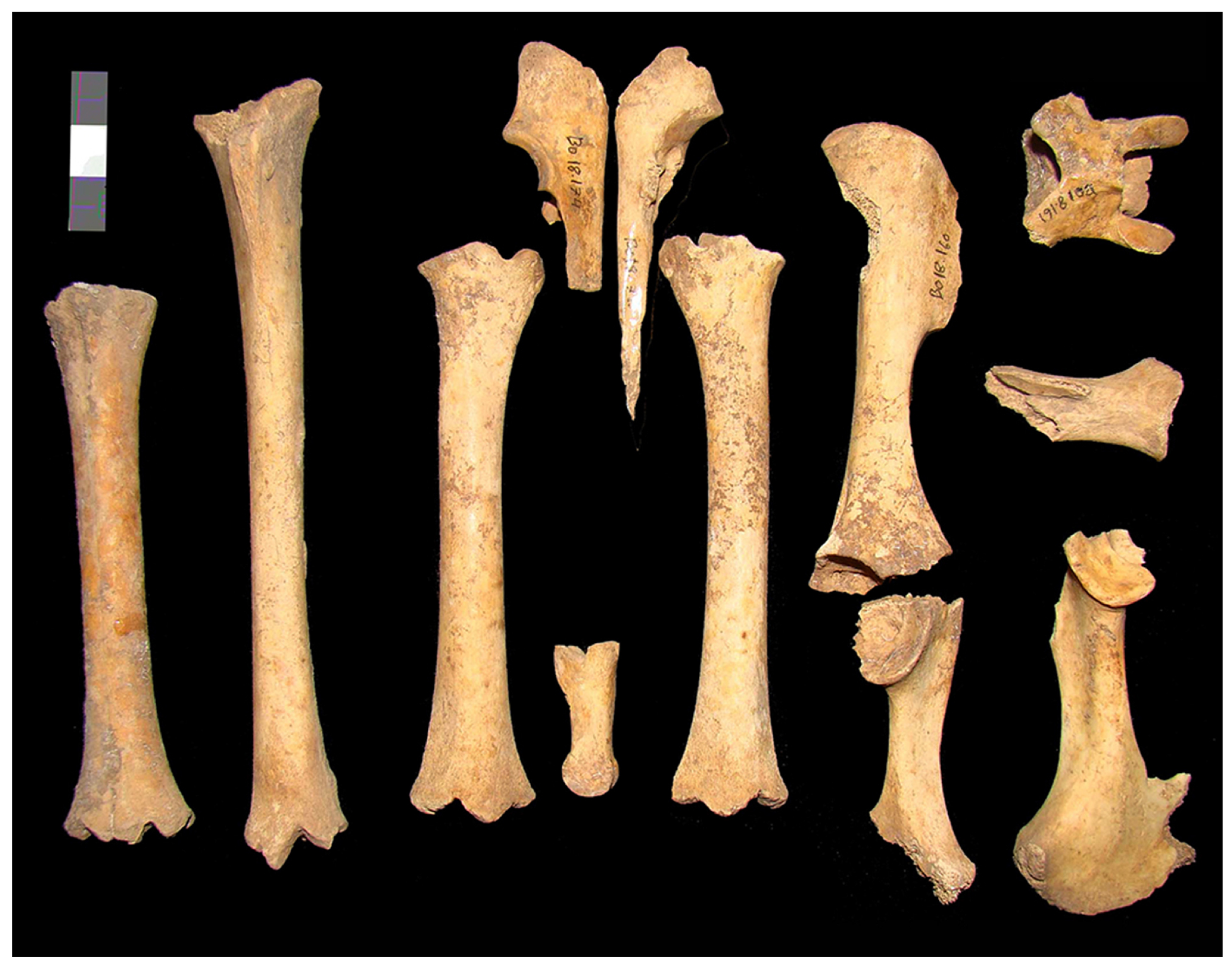
How abnormalities in ancient animal bones can reveal disease, working conditions, livestock management, and the relationship between people and domesticated animals.
Introduction: Reading Disease in Animal Bones
Animal bones provide evidence of diet, hunting, domestication, trade, and the organization of human settlements. They can also preserve traces of disease and physical stress, offering insight into the lives of animals that lived alongside people.
Zooarchaeological pathology is the study of disease-related and abnormal changes in animal remains recovered from archaeological contexts. These changes may include bone inflammation, joint degeneration, healed fractures, abnormal growth, and other alterations that developed during an animal's life.
Such evidence can help researchers investigate animal health and management. A herd containing animals with repeated skeletal injuries may have experienced particular working demands, while certain patterns of disease may be consistent with crowding or environmental stress.
However, skeletal abnormalities are not always diagnostic. Similar changes can result from different diseases, injuries, aging, or normal variation. Researchers must avoid assigning a specific disease without sufficient evidence.
Recognizing Pathological Changes
Bone responds to injury, infection, mechanical stress, and changes in an animal's development. Some conditions leave visible lesions, while others affect the shape and structure of joints or long bones.
Researchers examine the location, distribution, and appearance of these changes. They compare affected specimens with normal variation in the same species and consider the animal's age, body size, and likely activity.
A healed fracture may be visible as abnormal bone growth or a change in the shape of a bone. Joint degeneration can produce surface changes and the formation of additional bone, although these findings may also occur through aging or repetitive loading.
The interpretation must consider preservation. Soil pressure, erosion, and damage during excavation can create marks that resemble pathology. Detailed recording and, where appropriate, imaging help distinguish biological changes from post-depositional damage.
Disease, Herding, and Animal Management
Domesticated animals live within environments shaped by human decisions. Herd size, feeding practices, movement, housing, breeding, and the selection of animals for particular tasks can influence health.
Infections may spread more easily when animals are kept in close proximity, although the relationship depends on the pathogen, herd structure, and environmental conditions. Nutritional stress can also affect skeletal development, but many forms of nutritional deficiency do not leave a clear or unique signature in bone.
Researchers can compare pathology across different settlement types and periods. If a particular abnormality becomes more common in an assemblage associated with intensive animal keeping, the pattern may suggest a change in management, but other explanations must be considered.
Animal age profiles, sex ratios, butchery patterns, and evidence of enclosure structures can help reconstruct herd organization. Pathology becomes more informative when integrated with these independent indicators.
Working Animals and Repetitive Stress
Some domesticated animals were used for traction, transport, riding, or other forms of labor. Repeated loading can influence the musculoskeletal system, and certain patterns of bone change may be consistent with sustained physical demands.
However, it is difficult to identify a particular activity from skeletal changes alone. Joint degeneration can result from age, injury, body size, or several forms of movement.
Researchers compare skeletal patterns with experimental studies, modern veterinary knowledge, and archaeological evidence for equipment and transport. Harness fittings or vehicle remains may support an interpretation involving animal traction, but they do not prove that every animal in the same settlement performed such work.
The strongest conclusions distinguish evidence of physical stress from claims about the exact task that caused it.
Pathogens and the Limits of Skeletal Evidence
Some infectious diseases affect bone, while many do not. An animal can suffer a serious illness without leaving visible skeletal changes. Conversely, a bone lesion may resemble several different diseases.
Ancient DNA and other biomolecular methods can sometimes identify pathogens in archaeological material, although preservation and contamination create significant challenges. Molecular detection must be interpreted alongside skeletal evidence and the archaeological context.
Even when a pathogen is identified, researchers must determine whether it caused the observed lesion and how widespread the infection may have been. A single infected animal does not establish an epidemic or a herd-wide disease event.
Comparisons across multiple animals and sites can help investigate disease patterns. However, the absence of evidence may reflect preservation or sampling rather than the historical absence of a disease.
Animal Health and Human Economies
Animal disease could affect food supplies, transport, agricultural labor, and the exchange of livestock. The loss of animals might force communities to change herd composition, seek replacement stock, or alter their use of the landscape.
Archaeology can investigate these pressures through changes in animal remains, settlement patterns, and evidence of animal movement. Yet it is difficult to link a particular economic change directly to disease unless the chronology and biological evidence are strong.
Animal health also reflects human-animal relationships. Communities may have developed ways to protect valuable animals, manage reproduction, or respond to injury, even when their understanding of disease differed from modern veterinary science.
These practices are often difficult to observe directly, but patterns of survival, treatment, and herd management can offer indirect clues.
Conclusion: Reconstructing Animal Lives Through Pathology
Pathological changes in animal bones provide a valuable source of information about ancient livestock health, working conditions, and management practices. They can reveal injuries and biological stress that are otherwise absent from written records.
However, skeletal abnormalities rarely identify a specific disease or activity on their own. Researchers must distinguish pathology from normal variation, age-related changes, and damage caused after burial.
By combining osteological examination with animal demographics, biomolecular analysis, and settlement evidence, zooarchaeologists can investigate how people managed animals and responded to their health problems. This approach restores an important dimension of ancient economic life: the biological experiences of the animals on which many communities depended.




