
Introduction
Ceramic vessels were among the most widely used objects in ancient households. They served as containers for water, food, oils, grains, liquids, and other materials. Because pottery was frequently used and often fragile, broken vessels could create a practical problem for households.
Repairing pottery allowed people to extend the life of damaged objects rather than immediately discard them. Some repairs involved joining fragments using adhesives, metal fasteners, resins, or other materials.
The microarchaeology of pottery repair examines the small-scale evidence left by these practices. Staples, rivets, adhesives, drill holes, and repair residues can reveal technical knowledge, resource use, household behavior, and the value attached to ceramic objects.
Why Ancient Pottery Was Repaired
Pottery could be repaired for several reasons.
A vessel might have been valuable because of its material, craftsmanship, size, decorative qualities, or practical function.
Repair may have been especially useful for large storage containers or vessels that were difficult to replace.
The decision to repair an object may also reflect economic conditions, access to materials, or the availability of skilled labor.
A repaired vessel could continue serving its original purpose or be reused for a different activity.
Metal Staples and Rivets
Some pottery repairs involved metal fasteners.
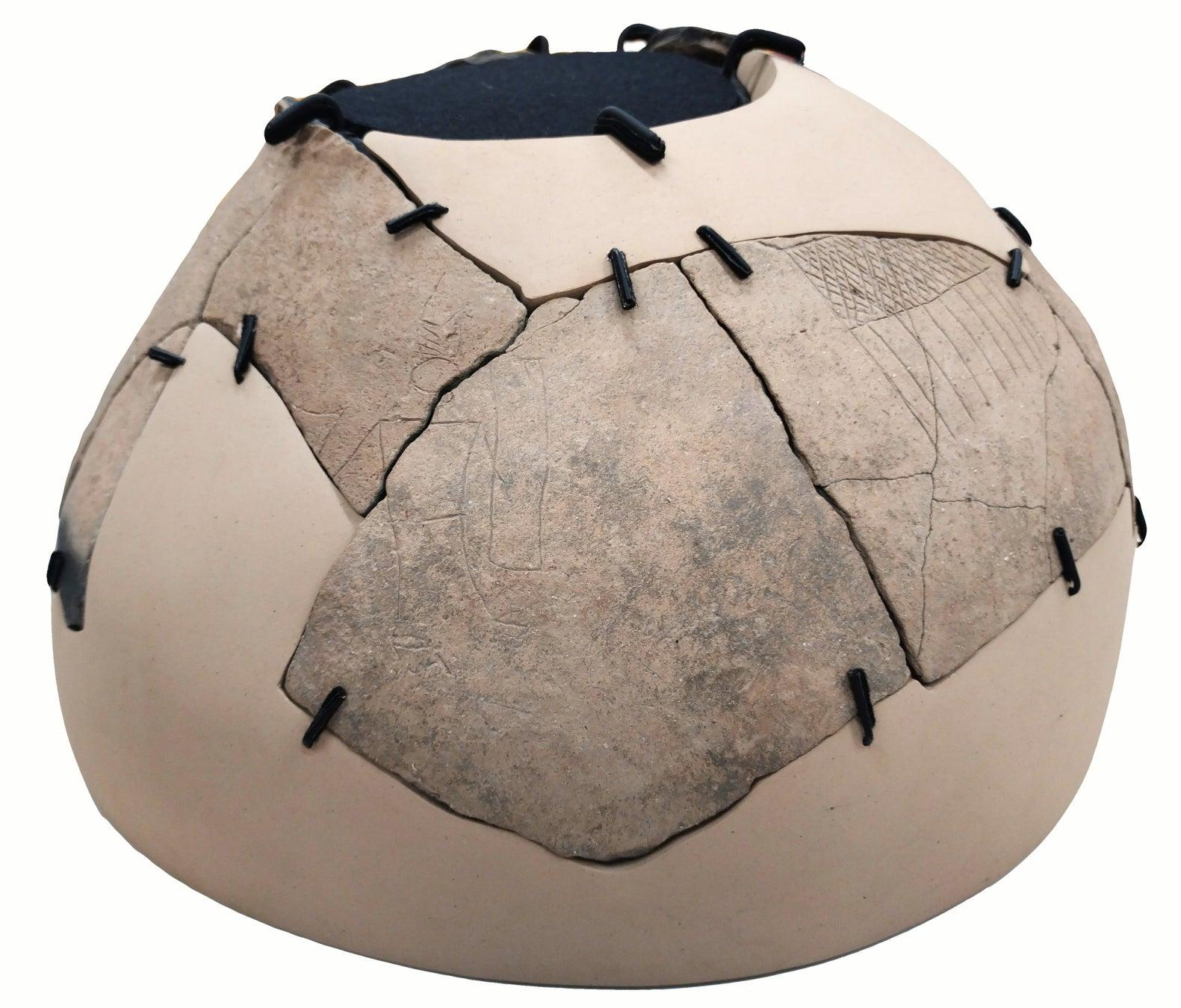
A broken vessel could be joined by drilling small holes near the fracture and inserting metal staples or rivets to hold the fragments together.
The repair process required careful preparation because ceramic material could crack during drilling.
Fasteners may have been made from copper alloys, iron, or other metals depending on the period and available materials.
The spacing and placement of fasteners could reflect the repairer's effort to stabilize the fracture while minimizing further damage.
Adhesives and Resins
Adhesives were another possible repair method.
Materials could include natural resins, bitumen, plant-based substances, waxes, or other compounds.
The choice of adhesive may depend on the vessel's material, the type of fracture, the availability of ingredients, and the intended use after repair.
Adhesives may be difficult to identify because organic compounds can degrade over time or become contaminated by burial conditions.
Microarchaeological Investigation
The study of pottery repair requires detailed examination of the vessel's surface and fracture zones.
Researchers may use:
Microscopy.
Residue analysis.
X-ray imaging.
Chemical analysis.
Metal identification.
Fracture analysis.
Surface examination.
These techniques may reveal drill holes, fastener placement, adhesive traces, repair patterns, and signs of repeated use.
The location of repairs can also help identify which parts of a vessel were considered most important to preserve.
Repair, Reuse, and Household Economy
Pottery repair reflects practical decisions made by individuals and households.
The continued use of repaired vessels may demonstrate resourcefulness, material conservation, and the economic value of everyday objects.
Repair may also have been a specialized craft.
Metalworkers, potters, or other artisans could have possessed the tools and knowledge required to repair particular ceramic objects.
A vessel repaired multiple times may have had a long use-life, although repeated repairs alone do not reveal the owner's social status or economic condition.
Archaeological Significance
Repaired pottery provides evidence of behavior that is often overlooked when researchers focus mainly on production and decoration.
Repair traces can reveal:
Technical knowledge.
Material availability.
Craft specialization.
Household resource management.
Object reuse.
Changes in vessel function.
The study of repaired ceramics also contributes to broader discussions about ancient attitudes toward durability, waste, and material value.
Conclusion
Pottery repair is an important archaeological subject because it demonstrates how people maintained and reused everyday objects.
Staples, rivets, adhesives, and resins provide evidence of practical ingenuity and technical skill.
Microarchaeological methods allow researchers to examine these traces closely and reconstruct the repair processes that extended the life of ceramic vessels.





