
Introduction
Viking Age settlements were supported by a combination of agriculture, livestock, fishing, gathering, trade, and craft production. Although Norse communities are often associated with maritime activity and large-scale farming, small gardens and household cultivation may also have played an important role in daily life.
Middens, or accumulated refuse deposits, are particularly valuable archaeological resources. They contain food waste, animal bones, ash, broken objects, organic materials, and other remains that help reconstruct settlement activities.
The concept of midden gardens explores whether accumulated household waste was reused as fertile soil for cultivating plants. This practice would connect waste disposal, agricultural production, and household environmental management.
What Are Midden Gardens?
Midden gardens are cultivated areas that use refuse-rich soil or deposits as a growing medium.
Organic waste can contribute nutrients to soil through decomposition. Animal manure, food waste, ash, plant remains, and other materials may influence soil fertility.
In archaeological settings, repeated waste accumulation can create raised or nutrient-rich areas that may later be used for cultivation.
However, the presence of a midden near a settlement does not prove that it was used as a garden.
Norse Household Agriculture
Viking Age Norse communities depended on local environmental conditions and available resources.
Agricultural activities could include:
Cereal cultivation.
Hay production.
Livestock management.
Small-scale plant cultivation.
Gathering wild plants.
Food storage and processing.
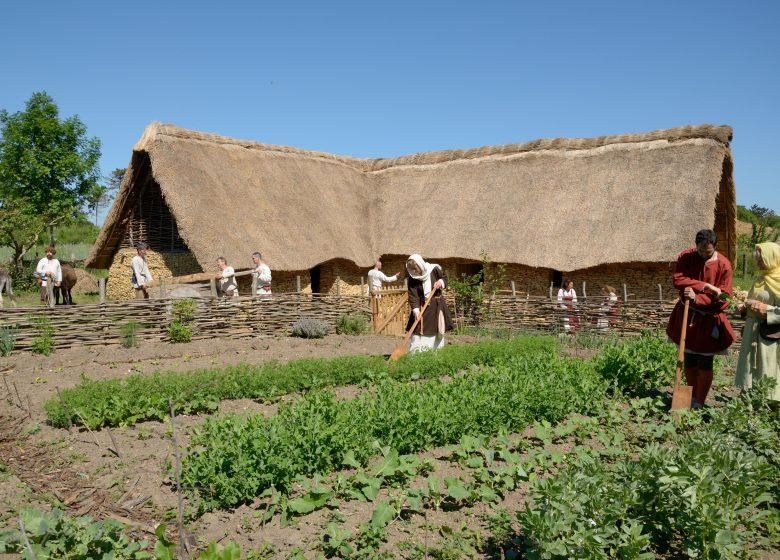
Households may have cultivated plants in small spaces close to dwellings, where they could be protected and maintained.
Garden cultivation could have supplemented the main agricultural economy, particularly by providing plants used for food, medicine, or other domestic purposes.
Archaeological Identification
Midden gardens are difficult to identify because refuse deposits can accumulate through many different processes.
Researchers would need to establish that a midden was modified or used for cultivation rather than simply deposited as waste.
Possible evidence includes:
Plant remains associated with cultivation.
Soil layers showing repeated disturbance.
Nutrient-rich deposits.
Small planting features.
Botanical evidence of cultivated species.
Spatial relationships between gardens and dwellings.
The presence of seeds in a midden may result from food waste rather than cultivation.
Soil Fertility and Environmental Analysis
Midden deposits may contain nutrients that alter soil conditions.
Archaeologists and environmental scientists can examine soil chemistry to identify patterns of phosphorus, nitrogen, organic matter, and other elements.
Botanical analysis may identify plants associated with cultivated or disturbed soils.
Phytoliths and pollen can also provide information about vegetation, although they must be interpreted carefully because they may be transported or deposited through natural processes.
Household Food Production
Gardens may have helped households produce small quantities of food close to their dwellings.
Their importance may have extended beyond food quantity. Cultivated plants could provide medicinal ingredients, seasonings, useful fibers, or materials for domestic activities.
Garden cultivation may also have been managed by household members who had different responsibilities within the settlement.
The archaeological evidence alone may not reveal who tended particular gardens, so interpretations of gender and labor organization should remain cautious.
Waste Reuse and Environmental Management
The reuse of midden materials for cultivation would demonstrate a form of practical resource management.
Instead of treating waste as a final product, households may have moved, reused, or incorporated organic materials into productive areas.
Such practices could reduce the need for additional soil resources while improving cultivation conditions.
However, not all waste would have been suitable for gardening. Ash, animal remains, and other materials could affect soil conditions differently depending on their composition and quantity.
Conclusion
Midden gardens provide a useful framework for studying small-scale cultivation and resource reuse in Viking Age Norse settlements.
Their identification would require evidence that waste deposits were intentionally used or modified for gardening.
Combining soil chemistry, botanical analysis, spatial archaeology, and household studies could reveal how cultivation contributed to settlement sustainability and everyday.





