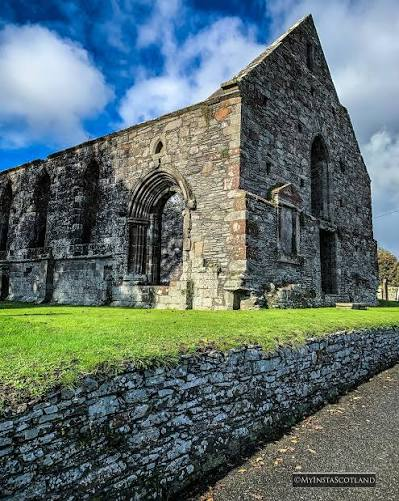
Whithorn Priory is one of the most important early Christian archaeological sites in Scotland.
Located in Wigtownshire, Whithorn has traditionally been associated with St Ninian and a Christian community dating to approximately the fifth century.
The site developed over many centuries into an important medieval religious center.
St Ninian and the Candida Casa
According to medieval tradition, St Ninian established a Christian center at Whithorn.
The site was associated with a church known as the Candida Casa, or “White House.”
The exact historical details surrounding Ninian remain uncertain, but Whithorn's early Christian archaeology is significant.
Early Christian Community
Archaeological evidence indicates that Whithorn became an important Christian center.
The site included:
churches;
burial grounds;
workshops;
and settlement activity.
Pilgrimage
During the medieval period, Whithorn became a major pilgrimage destination.
Pilgrims traveled from different regions to visit the sacred site.
Why Pilgrimage Mattered
Pilgrimage could bring:
religious prestige;
economic activity;
political connections;
and cultural exchange.
Visitors needed:
accommodation;
food;
transportation;
and religious services.
Burial
Thousands of burials have been associated with the site and surrounding religious landscape.
Human remains provide evidence for:
diet;
disease;
injuries;
mobility;
and population structure.
Early Crosses and Stones
Whithorn is associated with numerous early Christian stones.
These monuments demonstrate the development of Christian artistic traditions in southwest Scotland.
Connections With Ireland
Whithorn's location on the Irish Sea made it part of a maritime network.
Religious ideas could move between:
Scotland;
Ireland;
northern England;
and the Isle of Man.
Medieval Development
The religious center continued developing through the medieval period.
Later institutions transformed the earlier Christian settlement into a major ecclesiastical complex.
Why Whithorn Matters
Whithorn provides evidence for Christianity across more than a millennium.
It allows archaeologists to study:
early Christianity;
monastic life;
pilgrimage;
burial;
trade;
and medieval religious institutions.
Conclusion
Whithorn Priory is one of Scotland's most significant Christian archaeological landscapes.
Whether every traditional story surrounding St Ninian can be historically verified or not, the archaeological evidence demonstrates that Whithorn became an important Christian center remarkably early.
Its long history illustrates how a small early religious community could develop into a major pilgrimage destination.