Canals are a seriously underrated piece of technology and what about reservoirs we had to actually learn about how to build those at some point then part of that process is figuring out how to drain them later so we can clean them up now almost all minor bodies of water can be drained or diverted and when the water's gone you better believe there's some very weird things left lying around on the bottom from the ancient shipwreck to the entire submerged Village here's 20 bizarre discoveries found in drained water bodies
12 Most Incredible Archaeological Finds
In the following video we will share some amazing archaeological discoveries with you. Enjoy!
20 Mythical Creatures That Existed In Real Life
Throughout history, humans have created countless myths and legends about strange and wondrous creatures, from dragons to unicorns. But what if some of these creatures actually existed in real life? In this video, we'll explore 20 animals from around the world that are so unusual and fantastical, they seem almost mythical. From giant sloths to sea serpents, we'll delve into the stories and science behind these fascinating creatures and discover the truth behind the legends. So, join us on this journey into the realm of myth and reality! These are 20 mythical creatures that existed in real life!
How the Greco-Persian Wars changed the way Athenians drank their wine
The Greco-Persian wars are some of the most famous battles in history. The 300 Spartans at Thermopylae. The Greek phalanx at Marathon. The naval victory at Salamis. The end result? Athenian domination of the eastern Mediterranean, and the end of Persian aspirations to control Greece. But the failed invasion attempt by Persia wasn't entirely unsuccessful. While they didn't politically conquer Greece, culturally they were far more successful.
Join curator Jamie Fraser as he walks you through the Persian way of drinking wine with an Achaemenid rhyton, and how this very eastern way of drinking made it's way into the Athenian symposium (albeit in a different physical form).
Most Incredible Ancient Weapons
The history of mankind has been inevitably accompanied by wars. It is hard to think of a single year in the last ten thousand years when at least one civilization has not fought another. And as awful as it may sound, humans are very good at waging war. From the birth of ancient Greece to the present day, men have come up with more ways to kill and maim their fellow human beings than devices to cure them.
And sometimes, military engineers have come up with mechanisms that shock even modern engineers. We are now going to tell you how the first arrow machine gun was invented in ancient Korea, why the entire Roman army was afraid of Archimedes, and why they used to strap missiles to cats in the Middle Ages.
Hall Of Records & What’s Under The Pyramids
In the following video we will be talking about the Hall of Records and investigate what’s located under the pyramids. Watch the video to find out more!
What Happens When Non-Native Animals are Introduced to Africa?
The wildlife of Africa is diverse and abundant. No other continent has the diversity of wildlife found in Africa, which spans the entire climatic spectrum from scorching heat to freezing cold. Mammals, birds, reptiles, fish, and insects have all been attracted to the area's diverse vegetation. More than 40 primate species, ranging from tiny galagos to massive gorillas, a wide range of antelopes, gazelles, and other hoofed animals, and 70 carnivore species are among them. The birdlife is also abundant, with over 1,500 species found in the south of the Sahara. Africa also has the world's fastest land animal, the cheetah, the world's largest bird, the ostrich, and the world's largest land animal, the elephant.
Throughout history, animals have been introduced to new environments for various reasons, such as for economic, recreational, or ecological purposes. However, the introduction of non-native species can have significant consequences on the local ecosystems, leading to changes in biodiversity, ecosystem functions, and potentially causing harm to the native flora and fauna.
In this video, we will be focusing on the potential introduction of non-native animals to Africa and examining the factors that determine whether they can adapt and thrive or fail to survive in this new environment. We will be exploring the complex interplay between climate, habitat, diet, and the presence of predators, as well as other ecological and environmental factors that may influence the success or failure of non-native species.
Mysterious Discoveries From Ancient Civilizations
In the following video we will be exploring mysterious discoveries from ancient civilizations. Watch the video to find out more!
Are Humans the Product of Alien Experimentation?
In the following video we will be exploring whether humans are the product of alien experimentation. Watch the video below to find out more!
The dreadful talons of an extinct 10-foot-long eagle could lift kangaroos
An eagle relative with a wingspan of almost 10 feet roamed the skies over southern Australia more than 60,000 years ago. Gaff's mighty eagle, Dynatoaetus gaffae, has talons strong enough to snag a koala or a baby kangaroo for food. The enormous raptor was probably the biggest continental eagle ever observed in history.

A newly discovered bird from the Pleistocene Epoch was nearly twice the size of the modern Wedge-tailed Eagle, pictured here. DEPOSIT PHOTOS
The biography of this bird was pieced together by a group of Australian fossil hunters from Flinders University, according to a paper that was released on March 16 in the Journal of Ornithology. Between 1956 and 1969, four sizable fossilized bones were discovered at Mairs Cave in the Flinders Ranges of southern Australia. The authors discovered an additional 28 bones strewn among the site's stones, which helped them improve their understanding of this enormous extinct bird.
The Old World vultures that roamed Africa and Asia throughout the Pleistocene are connected to this extinct raptor. Its nearest living relative is probably the severely endangered Philippine Eagle, a monkey-eating bird. Dynatoaetus was probably the greatest avian predator on the earth during the late Pleistocene Epoch, when massive megafauna like the mammoth roamed the planet and ice sheets and glaciers were expanding.
Dynatoaetus fills a void left by the absence of huge terrestrial predators in prehistoric Australia, according to research author and Flinders University paleontologist Ellen Mather. This finding shows that Australia's magnificent family of birds used to be considerably more diverse and that raptors were also affected by the cataclysmic extinction that wiped off the majority of Australia's megafauna.
A new genus of raptors that is exclusive to Australia is represented by Dynatoaetus and the smaller bird Cryptogyps, which was just recently described.
"Dynatoaetus was extremely large. a statement from Trevor Worthy, a study co-author and paleontologist at Flinders University, stated that the eagle was "larger than any other eagle from other continents, and almost as large as the world's largest eagles once found on the islands of New Zealand and Cuba, including the whopping extinct 13kg [28 pound] Haast's eagle of New Zealand."
Additionally, Dynatoaetus coexisted with the Australian species known as the Wedge-tailed Eagle. This has interesting ramifications, according to the team.
Given that Australian birds of prey used to be more diversified, it is possible that the Wedge-tailed Eagle's previous range and diet were more constrained, according to Mather. If not, it would have been directly vying for those resources with the enormous Dynatoaetus.
Most of the megafauna on the continent, including the majority of Australia's eagles and vultures like the Dynatoaetus, went extinct about 50,000 years ago. Extreme environmental change and degradation (water loss, greater burning of trees and grass, etc.) that wiped off at least 13 super-sized megafauna species, including the largest wombats and kangaroos in the world, was suggested as a potential reason in a 2020 study.
DNA from Million-Year-Old People Reveals Huge Surprises
A decades-old Siberian tooth sample has shown a hitherto undiscovered mammoth lineage as well as some unexpected modifications in a probable ancestor.
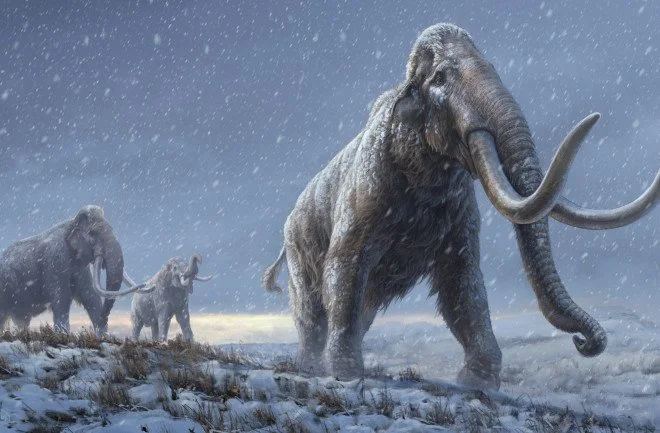
Woolly mammoths are famous from the Pleistocene era. Between 700,000 and 10,000 years ago, these enormous, shaggy creatures roamed a large portion of the Northern Hemisphere, prospering in the chilly eras when glaciers grew and huge, icy grasslands flourished. However, according to a study published in 2021 in Nature, the characteristics that allowed woolly mammoths to withstand the cold were not specific to these fuzzy elephants. According to a recent discovery made possible by million-year-old DNA, woolly mammoths acquired many of their characteristics that allowed them to survive in frigid climates from even older mammoth species.
Tom van der Valk and his team at Sweden's Science for Life Laboratory conducted the investigation, which was based on ancient DNA extracted from three mammoth teeth discovered in northeastern Siberia in the 1970s. The oldest relic, known as the Krestovka mammoth, is more than 1.2 million years old. Other fossils include the Adycha mammoth, which is thought to be approximately a million years old, and the Chukochya mammoth, which lived between 800,000 and 500,000 years ago. The goal of studying these extinct mammoths was to discover genetic hints about when woolly mammoths evolved their shaggy coats and physiological adjustments to their cold surroundings.
However, the DNA evidence did not match what was predicted by paleontology. The earlier mammoths that predated the woollies have genetic markers for cold-adapted characteristics. This indicates that the traits traditionally believed to be specific to woolly mammoths really evolved much earlier and were present in the steppe mammoth, who is assumed to be its presumed ancestor.

Paleontologist Chris Widga, of the Gray Fossil Site and Museum, who was not involved with the current work, claims that paleogenomics is demonstrating how constrained our understanding of evolution was when we were just given morphological evidence. Nearly all of the information we had on mammoths for more than a century came from bones, tracks, and the rare cadaver. According to Widga, however, relatively recent methods for analyzing ancient DNA in Pleistocene animals other than mammoths are swiftly refuting conventional wisdom.
Another surprise was provided by the DNA data, which revealed that the Krestovka mammoth belonged to a brand-new, previously undiscovered lineage of mammoths. These might have mated with early woolly mammoths to give rise to the Columbian mammoth, a massive North American species. In other words, the Columbian mammoths were probably hybrids and didn't evolve through adaptation. Paleontologists may now view these powerful creatures in a completely different way because this is the first instance of it that has been recorded in ancient DNA.
An Unknown Human Ancestor Gets a New Face in a 3.8-Million-Year-Old Skull
One of the earliest hominins to walk on two legs, Australopithecus anamensis, a near relative of Lucy, is shown by the male's cranium.

The remarkably complete skull of a human ancestor of the genus Australopithecus fills in some of the gaps in the human evolutionary tree. Dale Omori / Cleveland Museum of Natural History
Paleoanthropologist Yohannes Haile-Selassie physically jumped for delight when he discovered the entire Australopithecus skull in the Ethiopian sand. Despite seeing many skull fossils, he remarks, "I'd never seen anything like it before."
A 3.8 million year old face has been captured in a stunning photograph thanks to a serendipitous finding by Haile-Selassie and an Ethiopian shepherd. This discovery offers a previously unattainable glimpse at a hominid species from a crucial period in human evolution. The unique fossil, according to experts, can help redraw the evolutionary branches of humans at a time when they were only beginning to develop effective upright walking techniques.
According to Fred Spoor, a specialist in human evolution at the Natural History Museum in London, "This cranium looks set to become another celebrated icon of human evolution," in a News & Views article that was published with Haile-Selassie and colleagues' most recent paper in the journal Nature.
In 2016, the astonishingly complete skull was discovered at Woranso-Mille in Ethiopia's Afar region. But it has taken three and a half years of arduous work to respond to the initial query—exactly what type of skull is it?

Composite image of human hands holding “MRD” by Jennifer Taylor. Photography by Dale Omori and Liz Russell / Cleveland Museum of Natural History
The skull, known as MRD after a portion of its collection ID number, was examined by Haile-Selassie and colleagues with a wide range of hominin fossils from all around Africa. To determine what species the skull represents and where it fits in the interwoven lineages of our family tree, they evaluated various morphological traits. The findings show that a male Australopithecus anamensis was the owner of the skull. According to theory, the hominid species went extinct somewhat earlier than 3.8 million years ago after giving rise to Australopithecus afarensis, a subsequent branch that includes the famous specimen Lucy. A. anamensis possesses characteristics that are shared by both apes and humans, such as climbing arms and wrists and altered ankle and knee joints that allow for two-footed walking.
The majority of A. anamensis fossil specimens previously discovered have only been little fragments of bone, such a tooth, a portion of a jaw, or an arm or shin piece. The chance to examine a virtually intact braincase and face verifies the existence of a distinct species known as the "southern ape" and sheds light on the distinctions between A. anamensis and A. afarensis, two of the most prehistoric hominin progenitors.
The majority of A. anamensis' own characteristics, according to Haile-Selassie, are relatively primitive, including the creature's small brain, projecting face, and huge canine teeth. "Some characteristics, such as the orbital zone in the frontal area, are shared only with A. afarensis. However, everything else is incredibly archaic. It resembles an ape when viewed from the back. I never anticipated to see something like this in a species that is thought to be the ancestor of A. afarensis. Therefore, it altered a wide range of conceptions regarding their relationship.
The skull also challenges common beliefs that the older lineage gave rise to the younger one directly by indicating that the two may have coexisted for at least 100,000 years. However, the authors of the study emphasize that it's still very likely that early populations of A. anamensis gave rise to A. afarensis around 4 million years ago—they just didn't disappear right away.

A reconstruction of the facial morphology of the 3.8 million-year-old 'MRD' specimen of Australopithecus anamensis. Photograph by Matt Crow / Facial reconstruction by John Gurche made possible through generous contribution by Susan and George Klein / Cleveland Museum of Natural History
"It is likely that a small population of A. anamensis separated from the dominant population, suffered significant modifications, and gradually separated itself from the parent species of A. anamensis. That is most likely how A. afarensis emerged", according to Haile-Selassie.
The research team contends that the relationship between the two extinct hominin species, thought to be the ancestors of our own genus Homo, may be an excellent illustration of a nonlinear evolutionary process typical of other non-human animals. Our family tree's branches did not diverge primarily due to anagenesis, which occurs when one species transforms into another so completely that its parent vanishes.
"Just because one species gave rise to another, it doesn't mean that the source species (ancestor) disappeared," writes Rick Potts, director of the Smithsonian's Human Origins Program, via email from a dig in Kenya. Potts was not involved in the new study. "Like the evolutionary trees of nearly all other species, we have long known that the human family tree is branching and diversified. The new cranium is important because it demonstrates this pattern of variety in a little-known stage of hominin evolution, at the same time as our forebears became increasingly committed to standing up straight."
According to research by paleoanthropologist Meave Leakey and colleagues, A. anamensis was the first species to develop an enlarged knee joint that allowed each of its legs to momentarily support the entire weight of the animal during bipedal locomotion. With the ability to walk on two legs, ancient hominins were able to exploit a larger variety of habitats than those accessible to tree climbers, setting them distinct from the apes.

The 3.8 million-year-old cranium of the 'MRD' specimen of Australopithecus anamensis. Dale Omori / Cleveland Museum of Natural History
By examining the minerals and volcanic layers where the cranium fossil was discovered, a second, related study was able to more precisely date it. A. anamensis and his ancestors' long-gone environment was also described in the paper.
On the banks of an old lake, the skull was buried in sand that had been deposited in a river delta. Additionally, the sediment deposits contained evidence of plants, showing that a variety of other local ecosystems coexisted with the dry shrubland that made up the area around the old lake.
According to Beverly Saylor, a geologist at Case Western Reserve University and the principal author of the second research, "the area was dry with few trees, but there were forests around the shores of the lake and along the river that flowed into it." The data points to the male hominin presumably consuming a hard, ape-like diet of seeds, grasses, and similar foods, like contemporaries from other sites.
For fifteen years, Haile-Selassie and colleagues have worked in the Ethiopian region of Woranso-Mille. Haile-Selassie was dubious when a local shepherd announced to the camp that he had discovered some intriguing fossils, especially considering how frequently locals had brought him to alleged fossil locations just because they needed a ride somewhere. He requested that the shepherd accompany him on an hour-long trek to the location of his find from Habib Wogris, the regional leader who coordinates fieldwork in the area each year.
According to Haile-Selassie, "The chief has seen a lot of hominin teeth from the site and he realized that this tooth looked like a hominin tooth." I questioned where he had found the tooth as soon as he returned and opened his palm. Let us go, and we will show you, they said.

Yohannes Haile-Selassiewith “MRD” cranium. Cleveland Museum of Natural History
The shepherd had relocated his flock to the fossil site in the region's high terrain in order to avoid seasonal flooding in lower areas. Haile-Selassie explains that the man had been living there with his goats for around three months when he discovered the fossil while he was creating a shelter for the young goats from jackals and hyenas.
The shepherd led him to the spot where the tooth had been, and Haile-Selassie looked around for further pieces.
Haile-Selassie says, "Three meters from where I was standing there was this round thing, just like a rock, and I said oh my goodness." He literally started bouncing up and down in response, which led the shepherd to remark that the doctor had gone insane. I told them, in their language, that the doctor was not crazy. Haile-Selassie chuckles, "He is just excited.
Since the rare fossil was first discovered three years ago, scientists have been eager to put a human, or hominin, face on our distant relatives. With its official unveiling today, the enthusiasm has extended around the scientific community.
10 Most Forbidden Texts From The Bible
In the video below we will be exploring the 10 most forbidden texts from the Bible. Watch the video to find out more!
The Impeccably Preserved 2000-year-old Ancient Roman City of Timgad in Algeria
The ruins of Timgad lie on the slopes of the Aures Massif, about 35 km east of the town of Batna, in modern-day Algeria. Built nearly 2,000 years ago, by the Roman Emperor Trajan, the city is laid out in great precision and is one of the best surviving examples of the grid plan used by the ancient Roman city planners.
Timgad is one of the best surviving examples of the grid plan used by the ancient Roman city planners.
After the fall of the Roman Empire, Timgad was abandoned and forgotten. It wasn’t until 1,000 years later that its ruins, primarily preserved by the desert, were rediscovered. Indeed, the ruins of Timgad are so well-preserved that some visitors call it the Algerian Pompeii.
The city’s original design was a perfect square, 355 meters long on each side, with an orthogonal design highlighted by the decumanus maximus (east-west-oriented street) and the cardo (north–south-oriented street) lined by a partially restored Corinthian colonnade. The plan was to provide space for 15,000 residents, but the city quickly outgrew that number and spilled beyond the orthogonal grid in a more loosely but organized fashion. The city grew for the next 300 years as new quarters were added to the original ground plan leading to a quadrupling of the original size.
The ruins of Timgad are so well-preserved that some visitors call it the Algerian Pompeii.
Timgad’s construction served two purposes. First, the Roman colony housed veterans of Trajan’s mighty armed forces. Secondly, it functioned as a show of Roman power against the Indigenous Berber tribes that populated the northern and western regions of the continent. After its founding, Timgad quickly became an important center of commerce and trade. Its residents enjoyed peace and prosperity for several centuries.
All these centuries lying under the sand of the Sahara, Timgad remained exceptionally well preserved. At the west end of the decumanus maximus still stands a 12-meters-high triumphal arch, called the Arch of Trajan, which was partially restored in 1900. There is a temple dedicated to Jupiter that is of approximately the exact dimensions as the Pantheon in Rome. A large Byzantine citadel stands to the southeast of the city. There are also a 3,500-seat theater in good condition, a library, a basilica, and four public bathhouses.
Subsequent excavations of the city led to its designation as a World Heritage Site by UNESCO in 1982. Many Timgad ruins still stand today, including its signature arch known as the “Arch of Trajan” and its theater, which still hosts the occasional concert.
10,000 Rare Artifacts from Gobeklitepe to Amazon Women are Being Discovered
From Göbeklitepe to Amazon Women, rare artifacts of Şanlıurfa Archeology Museum are being discovered.
The Sanlıurfa Archaeology Museum building involves many main attributes, such as the largest enclosed space and exhibition hall museum in Turkey, the largest museum in Turkey, and among the known museums in the world as Number of Animations. It has the longest promenade route in Turkey and a 4.5 km long Promenade route.
Opened in 2015, Unique historical artifacts and mosaics, including those unearthed from the UNESCO heritage ancient site of Göbeklitepe, are carefully being cleaned by expert teams at the Şanlıurfa Archaeology Museum.
The finds unearthed during the excavations in many parts of the city, including, Göbeklitepe, and the unique mosaics depicting amazon women are being examined by restorers.
Visitors to the museum will be able to see the world’s oldest statue in Şanlıurfa, the imitation Göbeklitepe D temple, the original Nevali Çori temple, numerous regular animations, animations of the Prophet Abraham, and the world’s most beautiful mosaic museum.
About 10.000 artifacts are being exhibited at Şanlıurfa Archaeology Museum.
Gobekli Tepe & the Younger Dryas: why did we start farming?
Why did humans, after thousands of years of nomadic existence, hunting and gathering, decide to settle down and begin farming? This is perhaps one of, if not the, greatest question that archaeologists have been attempting to answer for the past century and a half. Going along with the development of agriculture and the Neolithic Revolution, there is another mystery. Watch the video for more!
English Knights Vs French Knights (The battle of Crecy)
Join us as we delve into the history of one of the most significant battles of the Hundred Years' War - the Battle of Crécy. Witness the tactics and strategies employed by King Edward III of England as he faced off against the superior French army and learn about the role of the longbow and the impact it had on the outcome of the battle. Enjoy!
Shocking Truth About The Egyptian Sphinx Finally Revealed
In the following video we will be talking about a shocking truth about the Egyptian Sphinx that has finally been revealed. Watch the video to find out more!
They Discovered In Antarctica What No One Was Supposed To See
In the following video we will be talking about what was discovered in Antarctica that no one was supposed to see. Watch the video to find out more and enjoy!
Lost Secrets of the Aztecs: Uncovering the Mysteries of the Mexica Grandmaster Triple Alliance
The Aztecs are one of the most iconic and fascinating ancient civilizations in the world. Their origins, rise to power, and eventual downfall are shrouded in mystery, making them a subject of great interest and study for historians and archaeologists alike. One of the most significant events in Aztec history was the formation of the Triple Alliance, which propelled them to become one of the most dominant powers in Mesoamerica.
The origins of the Aztecs are a matter of debate among scholars, with different theories and hypotheses proposed over the years. According to Aztec mythology, their ancestors were a group of people who migrated from a place called Aztlan in search of a new homeland. After years of wandering, they finally settled in the Valley of Mexico, where they founded the city of Tenochtitlan in the 14th century.
However, some scholars believe that the Aztecs were not originally from Aztlan, but rather from the region around the Valley of Mexico itself. They argue that the Aztecs were one of several ethnic groups that lived in the area and that they gradually rose to power over time, eventually becoming the dominant force in the region.
Regardless of their origins, the Aztecs were a formidable force by the time they formed the Triple Alliance in the 15th century. The alliance was a military and political pact between the Aztecs, the Texcocans, and the Tepanecs, which allowed them to pool their resources and expand their territories.
Under the leadership of the Aztec emperor Moctezuma I, the Triple Alliance went on a massive military campaign, conquering neighboring states and expanding their empire. The alliance was also a key factor in the Aztecs' ability to resist the Spanish invasion in the 16th century, as their combined forces were able to repel the Spanish armies for several years.
The concept of the Triple Alliance was based on the idea of mutual benefit and cooperation, with each member state contributing to the alliance in their own way. The Aztecs provided military might and resources, the Texcocans provided knowledge and culture, and the Tepanecs provided political influence and leadership.
The legacy of the Aztecs and the Triple Alliance continues to fascinate and inspire us today. Their achievements in architecture, art, and culture are still visible in the ruins of their ancient cities, and their story serves as a reminder of the power of cooperation and unity in the face of adversity.