In the following video we will investigate NASA's terrifying new discovery in Antarctica. Watch the video to find out more!
These Places Shouldn’t Exist On Earth But They Damn Well Do
Tune in to check out these places that probably shouldn't exist on earth, but they do anyway! Enjoy!
12 Mysterious Ancient Technologies Scientists Still Can't Explain
We know that our ancient ancestors were skilled builders and exceptionally gifted craftspeople. The evidence of that is everywhere, from the tiniest pieces of jewelry they made to the enormous cities they created. What we're less sure of is how they went about some of these construction tasks. Some of the things made by people living thousands of years ago ought not to have been possible with the technology of the time, and yet they were made nonetheless. Scientists struggle to explain some of the mysteries you're about to see, so see if you can come up with explanations of your own!
Restoring A 100 Year Old WW1 Sword
In this video we restore a rusted 100 year old Welsh sword from WW1 or is it? It looks like a replica that's in need of a major restoration. This antique sword needs lots of love. But with the right rust remover tools it becomes a rare beauty of a restoration project. Enjoy!
What Just Emerged In Antarctica Terrifies The Whole World
In the video below we will investigate what has just emerged in Antarctica that terrifies the whole world. Watch the video for more!
Mermaid Sightings - Why do people believe in mermaids?
In the following video we will take a look at why the mermaid legend is so universal. Enjoy!
JRE: "What Just Emerged At The Grand Canyon Terrifies Scientists!"
In the following video Joe Rogan will be explaining what exactly has just emerged at the Grand Canyon that terrifies scientists. Watch the video for more!
40 Mysterious Animals That Have Rarely Been Seen
The natural world contains about 8.7 million species and we only know about 2 million of them. That means mother nature has created some things that are definitely going to be a question to look at. Whether it’s regular common species in funky colors or completely new animals like the sarcastic fringe head, there is a lot you have not seen yet.
So without further ado, here are 40 animals you might have not seen before!
10 Civilizations You've Never Heard Of
Prepare to embark on a journey of discovery as we unveil 10 ancient civilizations you've likely never heard of! Delve into the annals of history and uncover the secrets of lost worlds. From enigmatic cultures hidden in the depths of time to remarkable societies that thrived in forgotten corners of the globe, join us as we shine a light on lesser-known civilizations.
The Most Terrifying Creatures in Norse Mythology
Embark on a bone-chilling adventure into the depths of Norse mythology. Unveiling the terrifying creatures that dwell within ancient Norse folklore, the video delves into the dark side of the Norse pantheon. From the ferocious Jörmungandr, the world-encircling serpent, to the menacing Fenrir, the wolf of doom. Explore lesser-known but equally fearsome beings like the Draugr, restless undead haunting the night. This video is a must-watch for mythology enthusiasts and anyone intrigued by the dark and mysterious aspects of Norse culture. Brace yourself for an immersive experience that will leave you in awe of the terrifying creatures that populate Norse mythology's rich tapestry.
Biblical Family Tree: Adam & Eve to Roman Times
In today’s video we will be exploring the Biblical family tree from Adam & Eve up to the Roman times. Watch the video to find out more!
The Daily Life of a Victorian Lady | Victorian Era
Are you curious about what daily life was like for Victorian women? In this video, we will take you on a journey back in time to look at a Victorian lady's daily routine. From morning to night, we'll explore the fascinating world of the 1800s and discover what it was really like to live as a Victorian woman.
Dark Middle Ages: People Must Know Truth (Forbidden History)
The Middle Ages are a period in European history that lasted from about the 5th century BC to the 15th century. This period was characterized by profound changes in the social, economic and cultural spheres, in particular the growing influence of religious institutions, the development of crafts and trade, as well as wars and conflicts between states, which could not but affect the traditions of the peoples of Europe and the emergence of interesting legends. And today we talk about how people walked, the abduction of the relics of St. Mark, and the features of the archers of medieval kings!
What Russia Just Discovered In Antarctica Terrifies The Whole World!
In the video below we will investigate a new scary discovery made by Russia in Antarctica. Enjoy!
What The 7 Wonders Of The Ancient World Looked Like
In the following video we will analyze what the 7 wonders of the ancient world looked like. Watch the video to find out yourself too!
The Oldest Religion in the World is Insane
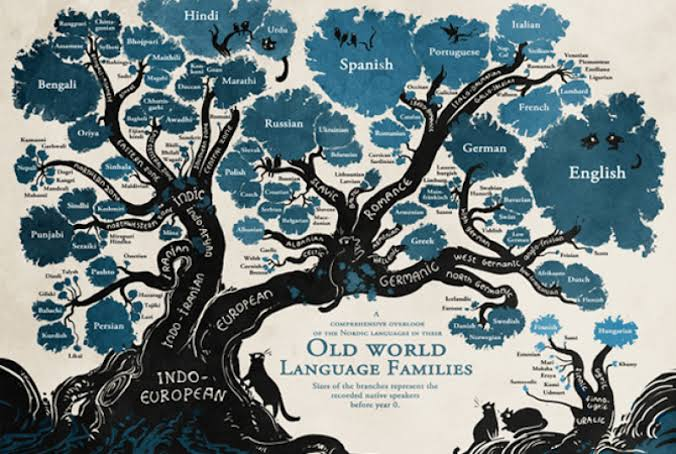
Proto-Indo-European mythology is the body of myths and deities associated with the Proto-Indo-Europeans, the hypothetical speakers of the reconstructed Proto-Indo-European language. Although the mythological motifs are not directly attested – since Proto-Indo-European speakers lived in preliterate societies – scholars of comparative mythology have reconstructed details from inherited similarities found among Indo-European languages, based on the assumption that parts of the Proto-Indo-Europeans' original belief systems survived in the daughter traditions.
The Proto-Indo-European pantheon includes a number of securely reconstructed deities, since they are both cognates – linguistic siblings from a common origin – and associated with similar attributes and body of myths: such as *Dyḗws Ph₂tḗr, the daylight-sky god; his consort *Dʰéǵʰōm, the earth mother; his daughter *H₂éwsōs, the dawn goddess; his sons the Divine Twins; and *Seh₂ul, a solar goddess. Some deities, like the weather god *Perkʷunos or the herding-god *Péh₂usōn, are only attested in a limited number of traditions – Western (European) and Graeco-Aryan, respectively – and could therefore represent late additions that did not spread throughout the various Indo-European dialects.
Some myths are also securely dated to Proto-Indo-European times, since they feature both linguistic and thematic evidence of an inherited motif: a story portraying a mythical figure associated with thunder and slaying a multi-headed serpent to release torrents of water that had previously been pent up; a creation myth involving two brothers, one of whom sacrifices the other in order to create the world; and probably the belief that the Otherworld was guarded by a watchdog and could only be reached by crossing a river.
Various schools of thought exist regarding possible interpretations of the reconstructed Proto-Indo-European mythology. The main mythologies used in comparative reconstruction are Indo-Iranian, Baltic, Roman, and Norse, often supported with evidence from the Celtic, Greek, Slavic, Hittite, Armenian, Illyrian, and Albanian traditions as well.
One of the earliest attested and thus one of the most important of all Indo-European mythologies is Vedic mythology, especially the mythology of the Rigveda, the oldest of the Vedas. Early scholars of comparative mythology such as Friedrich Max Müller stressed the importance of Vedic mythology to such an extent that they practically equated it with Proto-Indo-European myths. Modern researchers have been much more cautious, recognizing that, although Vedic mythology is still central, other mythologies must also be taken into account.
Another of the most important source mythologies for comparative research is Roman mythology. The Romans possessed a very complex mythological system, parts of which have been preserved through the characteristic Roman tendency to rationalize their myths into historical accounts. Despite its relatively late attestation, Norse mythology is still considered one of the three most important of the Indo-European mythologies for comparative research, due to the vast bulk of surviving Icelandic material.
Baltic mythology has also received a great deal of scholarly attention, as it is linguistically the most conservative and archaic of all surviving branches, but has so far remained frustrating to researchers because the sources are so comparatively late. Nonetheless, Latvian folk songs are seen as a major source of information in the process of reconstructing Proto-Indo-European myth. Despite the popularity of Greek mythology in western culture,Greek mythology is generally seen as having little importance in comparative mythology due to the heavy influence of Pre-Greek and Near Eastern cultures, which overwhelms what little Indo-European material can be extracted from it. Consequently, Greek mythology received minimal scholarly attention until the first decade of the 21st century.
Although Scythians are considered relatively conservative in regards to Proto-Indo-European cultures, retaining a similar lifestyle and culture, their mythology has very rarely been examined in an Indo-European context and infrequently discussed in regards to the nature of the ancestral Indo-European mythology. At least three deities, Tabiti, Papaios and Api, are generally interpreted as having Indo-European origins, while the remaining have seen more disparate interpretations. Influence from Siberian, Turkic and even Near Eastern beliefs, on the other hand, are more widely discussed in literature.
What's Hidden In Earth's Most Mysterious Sea?
In this video we will be explaining what’s hidden in Earth’s most mysterious sea, the Sargasso Sea, which is situated in the Atlantic Ocean. Watch the video below for more!
Archaeologists Have Found the Lost Tomb of Queen Cleopatra
A revelation that will redefine history as we know it: the long-lost tomb of none other than the legendary Queen Cleopatra has been unearthed! Hidden for centuries, this extraordinary find promises to unravel the enigmatic queen's mysterious life and reign. What secrets lie within the hallowed chambers? Prepare to be enthralled as we delve deep into the cryptic past, unearthing the untold stories and captivating intrigues that have remained hidden, until now.
Egyptian queen gained notoriety in history and drama as Mark Antony's wife after having been Julius Caesar's lover. She became queen upon the death of her father, Ptolemy XII, in the year 51 BCE. She shared the role of governing Egypt with her two brothers, Ptolemy XIII, and Ptolemy XIV, as well as her son, Ptolemy XV Caesar. After the Roman army led by Octavian defeated their combined troops, both Mark Antony and Cleopatra committed suicide, and Egypt was thereafter conquered by the Romans. Cleopatra was the first woman in antiquity who actively influenced Roman politics during a crucial juncture, and as a result, she became the archetype of the romantic femme fatale. Cleopatra's influence was unparalleled.
Why didn't Alexander the Great conquer Rome?
Alexander the Great is one of the most successful generals in the history of mankind. In his short life he managed to conquer the richest countries of the time, but he never conquered Rome. What was the reason? Watch the video below to find out!
10 Most Inbred Sovereigns In History
In the following video we will analyze the 10 most inbred sovereigns in History. Watch the video for more!