Scientists recreate the face of a victim of one of Europe's most savage battles in 1361

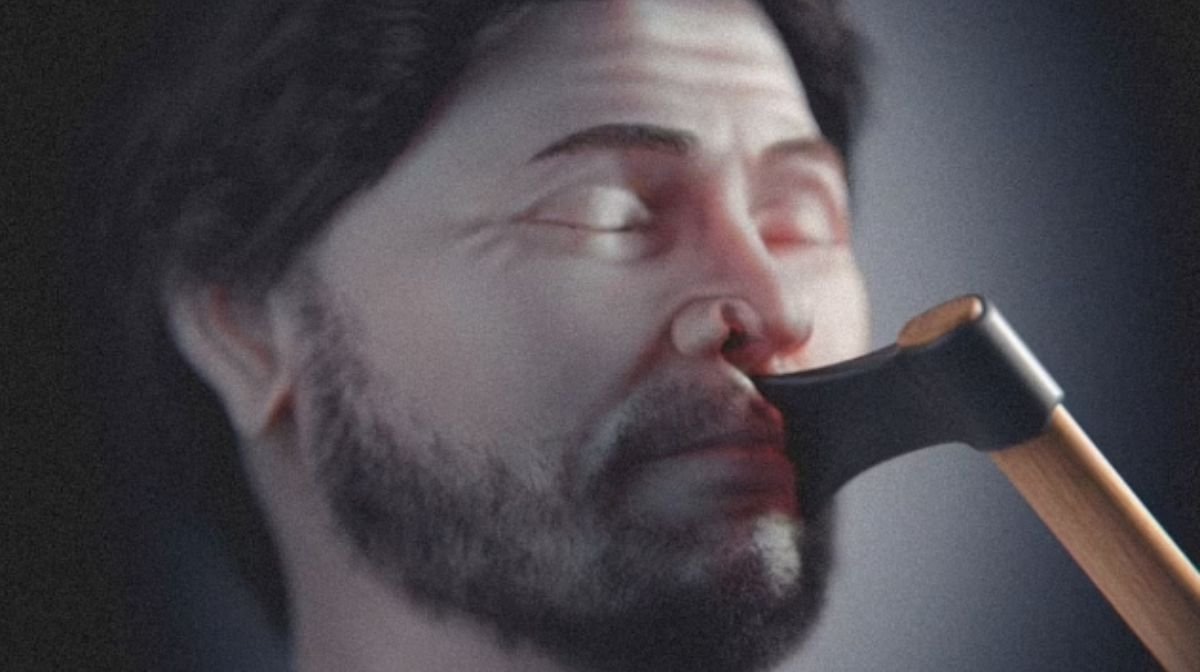
A medieval warrior whose face was split open in one of Europe's most savage battles has been brought back to life in a stunning recreation, 660 years after his gruesome death.

Experts reconstructed the fighter's visage after his skull was recovered from a mass grave outside Visby on the Swedish island of Gotland.

It was there in 1361 that a Danish force of some 2,500 men, many of them experienced mercenaries, perpetrated a massacre.

They faced a rural militia of roughly 2,000 poorly-armed peasants – at least a third of whom were minors or the elderly, excavations suggest.

In the slaughter that followed, the defenders suffered some 1,800 dead.

Among them was the warrior, whose mouth was smashed by an axe, with additional wounds above his left eye and on the left cheek bone probably caused by a pole weapon.

Now Brazilian graphics expert Cicero Moraes has brought his features to life by importing his skull into a digital interface.
He said: 'Once the skull was ready, a series of soft tissue thickness markers were spread across the skull.

'These markers, roughly speaking, indicate the skin boundaries in some regions of the face.

'To complement the data, we imported a CT scan of a living donor and deformed the bones and soft tissue from the CT scan to match the face being approximated.

'With the basic face defined, we finalised the approximation and generated the most scientific image, in shades of gray, with eyes closed and without hair.'

The skull itself yields an incomplete set of data, so some aspects – like the size of the nose, mouth and eyes – are projections based on statistical data.

Meanwhile, matters like hair and skin tone are subjective.

But the end result is an approximation of what the warrior would have looked like at his time of death.

Whether it was blow from axe that proved fatal remains unknown.

Mr Moraes said: 'It is difficult to estimate this with the skull alone.

'But surely such an injury would not be an easy thing to treat, considering the year and the reality at the time it was inflicted.'

For Mr Moraes, the images bring home the reality of war.

'These images are quite impactful,' he said.

'Today we have several conflicts happening in the world and we usually observe the scenes from afar, having no idea what happens to the combatants.

'Imagine how it is for those who receive such violence.'

After the battle, the citizens of Visby – the island's capital – surrendered to avoid further bloodshed. The victorious King Valdemar IV was paid a heavy ransom and claimed the island as part of his kingdom.

Both Sweden and Denmark continued to claim the island until the Second Treaty of Brömsebro was signed in 1645, following Denmark's defeat in the Torstenson War.

Five mass graves were ultimately found outside Visby's walls, with the first archaeological excavations in 1905 revealing many of the dead were buried in their armour.

Mr Moraes completed his reconstruction using a three-dimensional model of the skull shared by the Swedish History Museum in Stockholm.

He published his study in the 3D computer graphics journal OrtogOnLineMag.

Source: https://www.dailymail.co.uk/sciencetech/ar...

12 Most Mysterious Places Scientists Don't Believe

Mysterious places have always been a source of intrigue and wonder for mankind. From the depths of the oceans to the heights of the mountains, there are places that have been shrouded in mystery for centuries. Scientists have studied and explored these areas, but many remain unexplained and are filled with intrigue and speculation. Here are twelve of the most mysterious places around the world that scientists still can’t explain.

Scientists Discovered How Neanderthals Conquered the Ice Age

In this video, we're going to take a look at how early Neanderthals conquered the ice age. We'll explore their adaptations and how they were able to navigate in an environment that was so hostile.

Neanderthals are a fascinating group of humans, and this video will give you a deep insight into their history and how they managed to conquer the ice age. We'll see how their intelligent and adaptive behaviour helped them succeed in an environment that was so difficult to survive in.

Over 300,000 years ago, mysterious early Neanderthals, sporting bearskin clothing and the latest high-tech weaponry, conquered northern Europe in style. Indeed, the use of bearskin was likely the key adaptation of early humans to the climate in the north. It was an ancient blitzkrieg, and these early humans left their mark on the archaeological record.

Neanderthals were a human species that lived across Eurasia starting over 400,000 years ago — long before us — until they went extinct around 40,000 years ago. But their legacy lives on; Neanderthal genes can be found in every modern human population due to interbreeding.

What are the Jinn?

In this video we explore the king of mythical creatures in the middle east - the Jinn. What are some of the misconceptions about these creatures, and what different kinds are there out there? Watch the video to find out!

Archaeologists Make Extraordinary Discovery After Diving Into a Flooded Tomb in Sudan

Pearce Paul Creasman and his team were the first people to go into the tomb for 100 years and, in that time, it has become harder to access because of the rising water level.

Mr Creasman told BBC Newsday that this was the first time underwater archaeology had been carried out in Sudan, the location of the ancient royal burial site of Nuri.

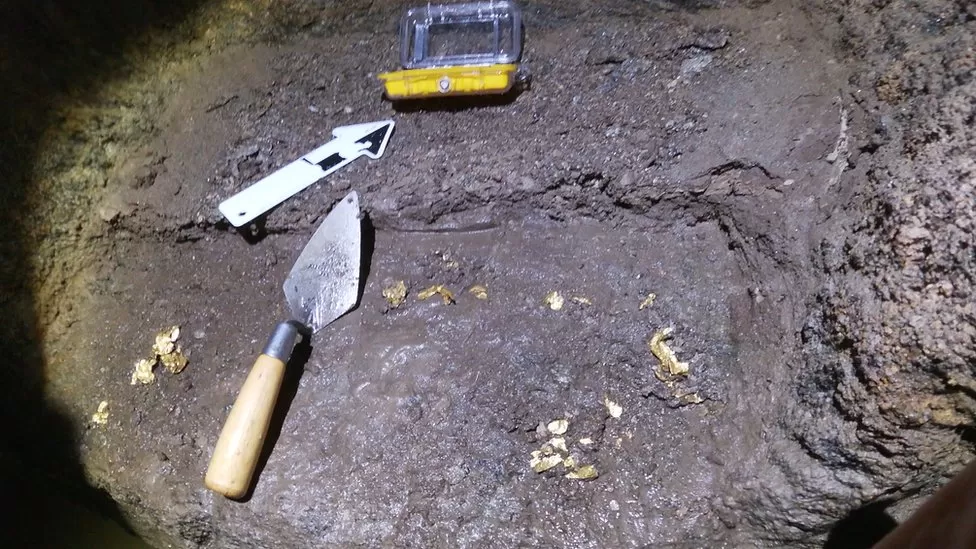
He found pottery figurines and gold leaf.

"The gold offerings were still sitting there - these small glass-type statues had been leafed in gold. And while the water destroyed the glass underneath, the little gold flake was still there," he told Newsday.

He believes these offerings were for Nastasen, a minor pharaoh who ruled the Kush kingdom from 335 BC to 315 BC.

This gold leaf would have been taken by thieves if it weren't for the rising water level making the tomb inaccessible to most, underwater archaeologist Kristin Romey writes in the National Geographic.

Mr Creasman told the BBC that the team "dug as far as we could" down a 65-step stairway which led to the tomb entry but "we got about 40 stairs down until we hit the water table and knew we wouldn't be able to go any further without putting our heads under".

Normal scuba tanks "would have been too cumbersome", he said, so instead they used a hose that pumped oxygen from the surface on the dive in January.

He described what he found as "remarkable":

"There are three chambers, with these beautiful arched ceilings, about the size of a small bus, you go in one chamber into the next, it's pitch black, you know you're in a tomb if your flash lights aren't on. And it starts revealing the secrets that are held within."

The tomb is part of the ancient site of Nuri which is spread across more than 170 acres in northern Sudan.

These pyramids mark the burials of Kushite royals who are sometimes referred to as "black pharaohs". The Kush kingdom lasted for many hundreds of years and, in the 8th Century BC, it conquered Egypt which it ruled for almost a century.

One difference between the pyramids in Sudan and the much more famous pyramids in Egypt is that the kings were buried below them, instead of inside.

Source: https://www.bbc.com/news/world-africa-4886...

Oldest Human DNA Found in the UK Reveals Origins of Early Britons

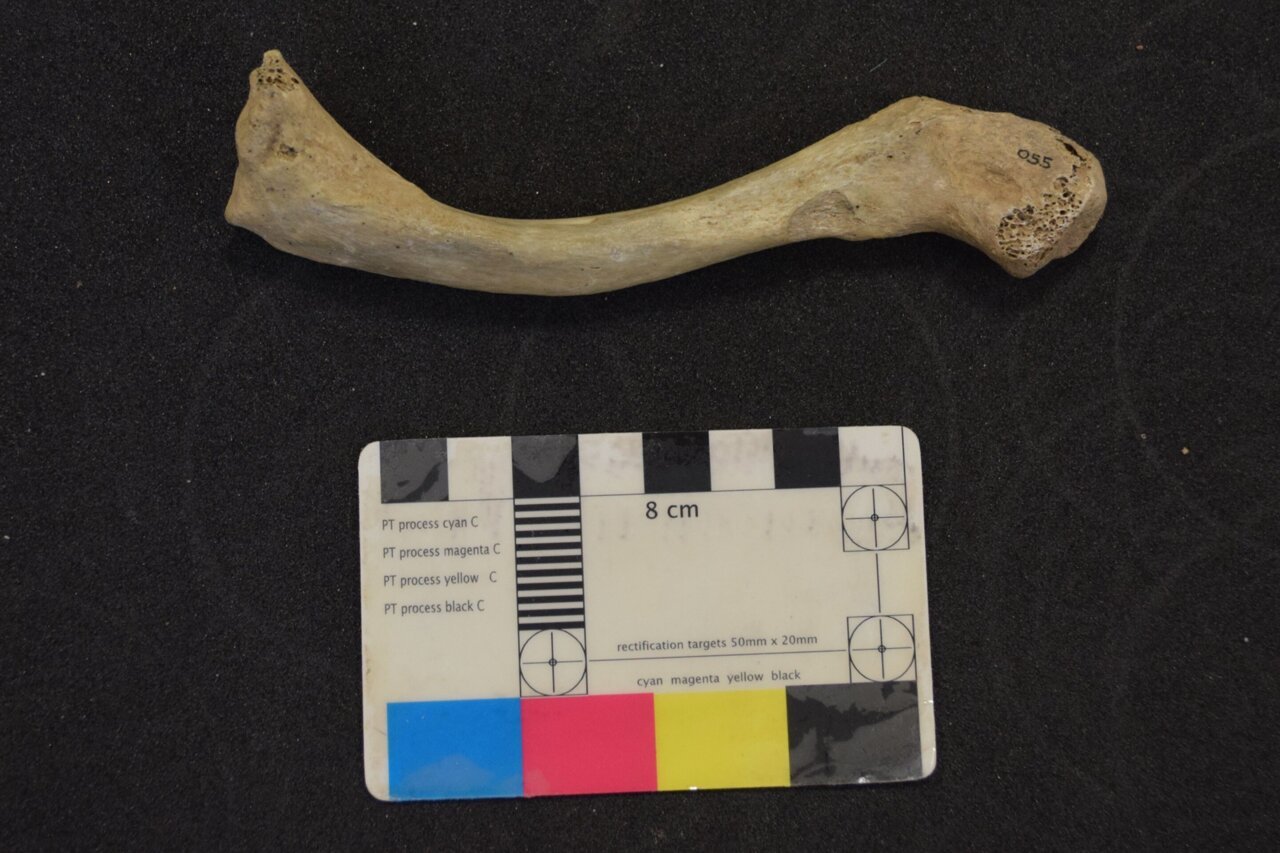
Human remains from Kendrick’s Cave, from which DNA was recently extracted.

Researchers investigating ancient remains found in England and Wales have determined that they contain some of the oldest human DNA ever obtained in the United Kingdom. The DNA indicates Britain was occupied by two unrelated groups, which the scientists believe migrated to the island at the end of the last ice age.

“Finding the two ancestries so close in time in Britain, only a millennium or so apart, is adding to the emerging picture of [Paleolithic] Europe, which is one of a changing and dynamic population,” said Mateja Hajdinjak, a geneticist specializing in ancient DNA at the Francis Crick Institute, in a University College London release. The research is published today in Nature Ecology & Evolution.

The team looked at DNA from the remains of two individuals, found in caves in England and Wales. The English remains date to about 15,000 years ago, while the Welsh remains date to about 13,500 years ago. The older remains were found in Gough’s Cave, Somerset, and the more recent remains were found in Wales’ Kendrick’s Cave.

When these people were alive, Britain was attached to continental Europe by a now-submerged land bridge called Doggerland. As the climate warmed and glaciers thawed, the sea level rose, cutting off the island.

Both remains are from the late Pleistocene, the epoch characterized by Neanderthals and wooly mammoths and ended with the conclusion of the most recent ice age about 12,000 years ago.

Sequencing the DNA and comparing it to previously analyzed DNA from West Eurasia and North Africa revealed the individuals’ histories. The ancestors of the Gough’s Cave individual arrived from northwestern Europe in a migration about 16,000 years ago, while the Kendrick’s Cave individual appeared to have descended from a western hunter-gatherer group that arrived in Britain about 14,000 years ago, with origins in the near East.

An ancient facial fragment from Gough’s Cave in Somerset.

Besides sequencing the DNA of two people, the researchers also conducted chemical analyses of other bones and teeth found at the sites. Those who lived near Kendrick’s Cave likely ate marine and freshwater foods, while those in Gough’s Cave survived on terrestrial mammals like aurochs and red deer.

Gough’s Cave is also where the remains of Cheddar Man were found. Cheddar Man was a lactose-intolerant person who died in his mid-20s about 10,000 years ago, whose remains were discovered in 1903.

“We knew from our previous work, including the study of Cheddar Man, that western hunter-gatherers were in Britain by around 10,500 years [before present], but we didn’t know when they first arrived in Britain, and whether this was the only population that was present,” said study co-author Selina Brace, a paleobiologist at Britain’s Natural History Museum, in the same release.

The groups in the two caves also had different cultural practices. Decorated animal bones—and no bones with signs of consumption—indicated that the cave in Wales was used primarily for burial, rather than occupation. Meanwhile, chewed bones and skulls fashioned into cups in Gough’s Cave indicate that its inhabitants were ritualistic cannibals.

There’s still plenty to decipher about when people arrived in Britain and how those ancient populations interacted, but the new research clues us in on the origins of two early groups.

Source: https://gizmodo.com/oldest-human-dna-found...

What Punishment Was Like in the Byzantine Empire

The Byzantine Empire ruled for nearly a thousand years and today at Nutty History we are looking for what punishments Byzantine Emperors employed to keep things in check.

In 395 AD, the mighty Roman Empire split like a cellular organism into two. The Western Roman Empire ruled from Rome and the Byzantine Empire ruled from Byzantium also known as Constantinople or as we know it today, Istanbul. The idea behind the split was to help the realms prosper and defend themselves more efficiently. It was believed that having two equal emperors would lessen the number of power struggles that had been taking place within the Roman Empire for decades.

However, that didn’t change much and neither changed the bizarre and evil punishments that were used as a deterrent against uprisings and revolutions. But laws could only be as strong as the people implicating them. Some rulers turned out too weak and some ruled with an iron fist, pardoning no one.

What It Was Like to Be a Roman Slave

Slave labor was a huge aspect of Roman life and the Republic depended heavily on free work from human beings who had no rights, no possessions, and were left at the whims of their masters to be worked to death, starved, tortured, and sometimes even killed for the sake of enjoyment.

Sure, you may have seen Russell Crowe play one in a movie, but chances are you have no idea just how brutal it really was.

Today we’re exploring what it was really like to be a Roman slave.

The myth of Zeus' test

Dig into the myth of Baucis and Philemon, a couple who unknowingly showed the gods hospitality after their neighbors refused.

It was dark when two mysterious, shrouded figures appeared in a hillside village. The strangers knocked on every door in town, asking for food and shelter. But, again and again, they were turned away. Soon, there was just one door left: that of a small, thatched shack. Would the owners help the visitors — or spurn them? Iseult Gillespie shares the myth of Baucis and Philemon.

The Strangest Places In The World You Won't Believe Exist

Our planet is full of strange, unique and sometimes odd places, some natural and some man-made.

Some of them are fascinating and some are just utterly bizarre, in this video we will give you some of the most mind boggling places we could find.

Why Half of Colosseum Is Missing

Some places around the world have become must-sees for millions of tourists, but we rarely know what secrets they are hiding. The Roman Colosseum used to be nearly twice as large as it is today! Its architectural glory started to dim down in 217 when a fire struck the upper parapets and much of the building's interiors. The downfall continued with an earthquake, and a big part of the Colosseum's outer ring was damaged. What else happened to the Colosseum and other famous monuments of architecture worldwide? Let's find out!

The Alfred Jewel: Dazzling Anglo-Saxon Treasυre Found In A Field In The Soυth Of England

No other artefact surviving from the Anglo-Saxon era embodies so many rich resonances as the Alfred Jewel. It is a matchless piece of goldsmith's work by a master-craftsman operating under the patronage of the West Saxon court. The Jewel represents the pinnacle of Anglo-Saxon technological achievement, while the name of the monarch which it proclaims places it among the most precious of royal relics.

The Jewel came to light in 1693, ploughed up in a field at North Petherton, Somerset. Even its find-spot contributes to its interest, since North Petherton is only a few miles from Athelney Abbey, the stronghold in the marshes from which Alfred launched his counter-attack on elements of the Great Army of the Danes. This attack ultimately led to his crucial victory at Edington in 878. The Ashmolean's registers record its presentation in 1718 to the Museum, where it has formed one of the principal treasures of the collection ever since.

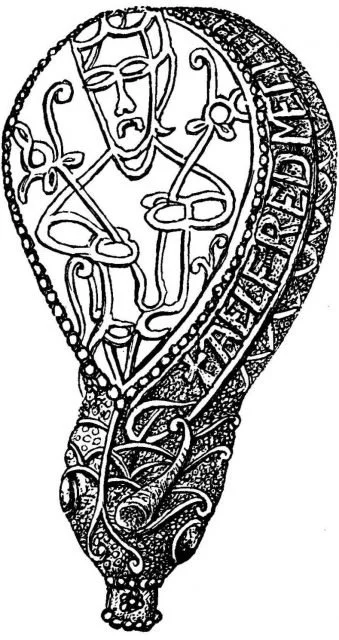
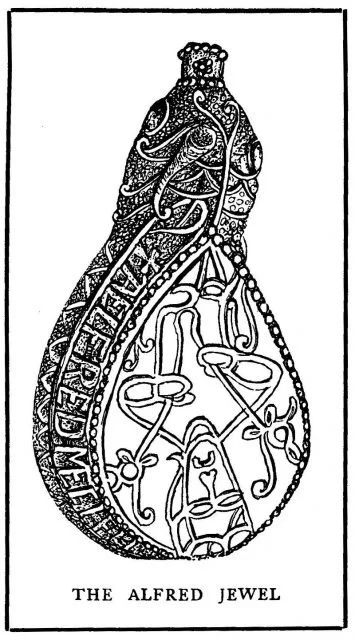
Over the years the Jewel has been the cause of as much speculation as admiration. Precisely what might have been its purpose was a source of much uncertainty: early theories suggested that it might have been the centrepiece of a royal headdress - literally a crown jewel - but the setting seemed inappropriate for that purpose. An alternative, that it was a pendant to be worn round the neck, seemed equally unhappy since it would have condemned the figure on the Jewel to have hung permanently upside-down. More recently opinion has moved towards its being an aestel or pointer, used to follow the text in a gospel book in much the same way that the Yad continues to be used in the Jewish synagogue for reading the Torah. The dragonesque head at the base of the Jewel holds in its mouth a cylindrical socket, within which the actual pointer - perhaps made of ivory - would have been held in place by a rivet (still in situ).

Similarly curious is the teardrop-shaped form of the piece. Current opinion suggests that the Jewel was formed around a pre-existing slab of rock-crystal, possibly a re-used Roman piece.

The figure represented in delicate colours in cloisonné enamel, on a plaque protected by the rock-crystal, is also enigmatic. Originally it was interpreted as St Cuthbert, the best-known English saint of the pre-Alfredian period, but it is now thought to represent the sense of sight: a contemporary silver brooch in the British Museum, engraved with figures representing all five senses, shows sight as a man holding two prominent plant-stems or flowers, exactly as on the Alfred Jewel. Such an allusion would be entirely appropriate for an instrument dedicated to the practice of reading.

And finally the inscription: AELFRED MEC HEHT GEWYRCAN - 'Alfred ordered me to be made'. No one has ever doubted that the sponsor of the piece was King Alfred the Great. He died in 899 after turning the tide of battle against the Scandinavian warriors who threatened the continuing existence of Anglo-Saxon control over much of England. The West Saxon flavour of the prose is entirely in sympathy with such an interpretation. Alfred's achievements were as much cultural as military, and amongst his most effective measures was his commissioning of translations of religious texts into the vernacular. With each of the copies of one of these texts - the Pastoral Care of Pope Gregory the Great, written c.890 - which he dispatched to monasteries throughout England, he is said to have sent also a precious aestel so that it might be read with all due solemnity.

Although less impressive than the Alfred Jewel, the Minster Lovell Jewel, dating from the late ninth-century, shares many of its characteristics: the use of granulation as decoration appears on the surfaces of both pieces, while the fine enamelling technique (which is also a feature common to both) is extremely rare elsewhere at this time. The likelihood is that both pieces were made in the same workshop. The socket at the base of the Minster Lovell Jewel, which retains a rivet like that on the Alfred Jewel, also suggests that they performed the same function as a pointer.

Both jewels are on display in the ‘England 400-1600’ gallery on the second floor.

Replicas of the Alfred Jewel were made around 1901, in celebration of the millenary of King Alfred's death. Some were made by Payne's of Oxford and others by Elliot Stocks of London, but no records survive for either of these companies from this period. A few replicas were later made by the Ashmolean's conservation department.

The History of the World: Every Year

Since 200,000 BCE, humanity has spread around globe and enacted huge change upon the planet. This video shows every year of that story, right from the beginning. Enjoy!

12 Most Amazing Recent Artifacts Finds

Archaeology is an interesting subject, but not all archaeology qualifies as being interesting. On this channel, we're interested only in the most informative, incredible, and surprising discoveries from the world of archaeology - those that literally stand out from the crowd. When that happens, we call it outstanding archaeology - and that's the subject of this video! Stand by because you're about to see some exceptional discoveries and learn some surprising things.

Bizarre Mystery of Mummified Coon Dog Solved after 40 years?

Trapped inside a hollow tree trunk, nature’s cruelest coffin, a hunting dog manically clawed for a sliver of space and desperately fought for life. The greater the hound’s effort; the greater the tree’s grip. Wedged in a wooden vise, the dog spent its last breaths within the heights of the trunk, final whimpers unheeded, and died as a permanent part of the oak—mummified in motion.

Lost in the canopy, almost 30’ above the floor of heavy northeast Alabama woods, the hound remained lodged in the trunk for roughly twenty years, hidden from the searching eyes of a forlorn master, but also shielded from predators, insects, and the elements. In 1980, a logging crew entered the hilly ground, toppled the oak, and chanced upon the stunningly well-preserved canine. Macabre to some, poignant to others, and fascinating to all, the story of the coon dog’s demise, discovery, display—and possible origin—is too bizarre for fiction.

Closing the Coffin

Tucked in the southeast corner of Georgia, at the edge of 438,000 acres of Okefenokee Swamp—Waycross serves as the seat of Ware County, as well as the home of a unique museum and a most curious resident—a dog that draws attention from all quarters of the globe.

The museum, Southern Forest World, opened its doors in 1981. “You name it, they come from states all over America,” says Bertha Dixon, owner and director. “England or Europe or Japan—people come all the way here for a look at Stuckie.” (Stuckie, indeed. In 2002, Southern Forest World opened the dog’s naming rights to the public, and “Stuckie” garnered the most votes as the winning moniker.)

Southern Forest World’s main building, a rotunda structure lined inside and out with Georgia pine, features a chestnut oak log as an unofficial showcase. The 7’ log, resting vertically above the floor with swinging glass protection plates attached to both end openings, contains the preserved body of the bluntly named hound, Stuckie, and draws a visceral response from most visitors. With no taxidermy, limb manipulation, staging, or ornamentation of any kind, he is frozen in situ at the log’s lip, as if in the strained process of emergence—claw and teeth exposure enhanced by approximately 60 years of dehydration.

Viewed from the log’s front end, Stuckie’s legs, head and front shoulders are visible, along with a small bit of leather strap on his upper back, probably the remains of a collar. Viewed from the rear, through the log’s reverse opening, hind quarters and tail are visible. The log’s ample diameter of 2’ is misleading—the hollowed cavity is only a handful of inches wide, a death tube for a full-size hound.

Dixon, well-versed in all manner of silviculture and forest oddities, easily recalls her first encounter. “I was amazed by him. Realizing what I know about forestry and trees, I understood how unique the circumstances had to be for Stuckie to be preserved. He is a hound breed and appears to be some shade of brown with some white coloring, and died at around four years old, chasing a coon up a chestnut oak.”

At some point in the 1960s, entering via a hole at the chestnut oak’s bottom, Stuckie scrambled up and inside the trunk that grew increasingly tight with height, Dixon explains. Translated, the tree’s wide and welcoming bottom hole slimmed to a narrow exit, providing an ideal escape hatch for a raccoon, but a tomb for a dog. Once Stuckie was trapped in place, the oak operated as a preservation chamber: “It’s the tannins,” Dixon explains. “A chestnut oak has acid, tannins, that actually soaked into the dog to preserve him. On top of that, his scent of decay went out the top of the tree in a chimney effect as the air went bottom to top. Anything that normally would have consumed the dead flesh, like a predator or insect, couldn’t smell him or get to him.”

“I always wondered about the backstory on what had happened,” Dixon continues, “and then one day a man walked in the door of our museum and told me: ‘I’m the one that cut down the tree. I’m the one that found the dog.”

Saws and Claws

In 2017, Dixon pulled back the curtain on the highly improbable canine discovery. “This man came in from Alabama and he was a logger on the original crew that cut the chestnut oak, and I was in shock,” she says. “In fact, I was so overwhelmed with information I never got the man’s name, but I sure remember his story.”

In 1980, according to the information provided to Dixon by the visitor (John Doe), a logging crew out of Rome, Ga., (Kraft Co.) was harvesting trees for pulpwood along the upper Alabama-Georgia border, in Cleburne and Haralson counties. On the Alabama side of the line (Cleburne County), the loggers began cutting hardwoods on hilly terrain in a relatively remote area—with no communities nearby, excluding four isolated houses in proximity.

The chestnut oak was cut into eight 7’ lengths. “Back in 1980, Georgia loggers didn’t transport trees in full length. They cut trees in 7’ sections.” Dixon explains. “Stuckie was in that tree and even though his preservation by nature is incredible, his preservation from logging damage is also incredible.”

Stuckie was waiting in the top of the section from the fourth cut—an approximate height of 28’. “First, when the tree was sawed down and fell, he wasn’t damaged at all. Second, it’s unbelievable that the saw completely missed him and didn’t turn him to sawdust when the tree was cut into sections. Third, when they put him on the truck, he again wasn’t damaged. When you understand the power and force involved in the falling, cutting, and transporting of logs, the fact that Stuckie never moved is unreal. The fact that he didn’t end up as pulpwood beats all the odds.”

“There is only a tiny space between the cut at the end of the log and where his paws are at,” Dixon continues. “No doubt, once you include the stump and count up, he was 28’ up the tree. Amazing.”

However, John Doe and the logging team were unaware of the canine passenger inside the fourth cut of the chestnut oak. Several logs at a time, the crew filled a trailer, periodically pausing to ensure the load was secure.

“One more time, he was going to make sure the trailer was loaded right. He walked around behind the logs, got up close—and saw claws. He backed way, way up, and told me, ‘Oh my Lord, what is coming out of this tree for me?’ In that moment, he had no idea what it was, and he didn’t even know if it was dead or alive. Somehow, someway, Stuckie avoided being turned to pulpwood.”

John Doe provided the puzzle pieces related to discovery, but what of Stuckie’s origin?

Enter Roger Prater, renowned coon hunter. “I know where that dog came from; I know what breed it was; and I know who lost him.”

Lost Redbone?

A coon hunter since childhood, Prater, 71, lives in Concord, Ga., roughly 50 miles south of Atlanta, but was raised in Haralson County, 20 miles from the chestnut oak that held Stuckie. Prater is a lifelong devotee of coon hunting and his true passion is a love of dogs. “My dogs are my family. God had a genuine purpose when he made dogs, and you won’t ever, ever find a more wonderful animal.”

Alongside a 40-year career spent in construction, Prater owns 600 acres of Pike County land he once worked between crops, cattle, and hay. Today, he rents out the 600 acres, and the self-titled “shade tree” farmer is a true authority on treeing walker coonhounds. His breeding business is championed by hunters across the United States: “I used to hunt redbone hounds in the 1960s and 1970s, but now I’ve had the same treeing walkers for 40 years from the Finley River strain and my dogs are hunted in about 30 states, mainly coons, but also bobcat, bear, and mountain lion.”

In 1980, Stuckie’s discovery put to rest a family hunting mystery, Prater says. “At the time, that whole area where he was found was heavy coon hunting because it was a huge section of woody hills, and there wasn’t much there except bootleggers and pulp-wooders. I was sitting in the barbershop and heard about this dog that was as old as Methuselah found by some loggers, and then the story was in the Haralson County newspaper, and then somebody hauled the dog and log to the county courthouse, before it went to the museum.”

Hunters by the dozen declared ownership of Stuckie, according to Prater. “Everybody around claimed the dog, but I knew the likely truth. That dog belonged to my cousin Keith Robinson.”

During a hunt in the early 1960s, Robinson (now deceased) lost a redbone hound in the precise vicinity of the chestnut oak, according to Prater. “Keith spent weeks and weeks in those woods, looking so hard for that redbone, and never found his dog. No trace and no clue—until the loggers showed up.”

At first comparison, a redbone hound, classically chestnut in color, doesn’t match the description of a brown and white hound. However, a redbone hound can have patches of white on the chest, and sometimes white coloration on the paws. Prater believes the dogs are one and the same: “That dog was Keith’s redbone. I believe that with my heart and mind.”

“His redbone was a treeing fanatic—fanatic like you ain’t never seen, and that is one of the most important keys to figuring out who the dog is,” Prater adds. “There’s a whole lot more going on than just a dog stuck in a tree, and hunters know what I’m talking about. If you truly want to understand the dog inside the tree, then you have to realize what was happening on that hunt. You’ve got to understand coon hunting.”

Slobbermouths Rule

“I've never left my dogs in the woods, and I'm not going to now, even if I have to look for them myself,” –12-year-old protagonist Billy Colman, speaking in ‘Where the Red Fern Grows,’ Wilson Rawls’ benchmark 1961 novel centered on a young hunter’s bond with a pair of redbone coonhounds.

Despite an individual’s hunting prowess or outdoor skill, coon hunting relies squarely on the ability and training of phenomenally intelligent and durable dogs. Chasing a telltale, bawling symphony of hounds in the dead of night, on the trail of a masked bandit through tangled gullies, sloughs, and wooly cutovers is arguably the most evocative chase in all of hunting, and when executed by top dogs, it is a timeless display of instinct and primal bloodlust.

Typically, hunters release coon hounds and wait for the dogs to strike a coon (a predominantly nocturnal animal) scent. In the 1960s, decades before GPS and digital tracking technology, hunters watched the hounds disappear into the woods in a general direction, but were blind to true individual or pack location until a coon scent was struck.

When a hound crosses a hot scent (sometimes cold), it cuts loose with a deep, guttural bawl—laced with a beautiful musical quality unique in nature. The coon scent is captured, dogs give chase, long bawls resound, hunters scramble after the sounds, and the hunt is on.

Bawl. Bawl. Bawl. The physical distance between master, dogs, and coon is always variable, and is heavily contingent or terrain and weather, ensuring a hunt may require mere minutes or extend to several hours. Time is controlled by the speed of the dogs, distance upon strike to the coon, how far the coon chooses to run, and a seemingly endless host of additional factors.

Consistently bawling on the track of the coon, the dogs close the distance and when the pressure eventually gets too hot, the coon goes up—into the relative safety of a tree. When the coon takes to a tree and a hound arrives in the vicinity, the sound of the long bawl often switches to a changeover—a distinct inflection declaring an end to the coon’s ground movement. In rapid succession, the hound sniffs out the tree sheltering the coon, and when certain, makes an absolute commitment—“fell treed”—by placing it’s front paws on the trunk, raring back, and opening up with a staccato series of chop barks. The chops are manically incessant, distinguishing some hounds as “slobbermouths,” capable of rattling off 80 to 100 chops per minute.

The hound, nearing the climax of a hunt, is in a primal zone, with every fiber of its being zeroed on the coon prey. The catch-at-all-costs mode of some hounds is the full explanation of how and why Stuckie was trapped in the chestnut oak, Prater emphasizes. “Some dogs lose their minds when they get close to a coon. That’s what happened when he saw that hole at the bottom of the tree and went in. At that exact moment, that wasn’t a normal dog; that was a dog with everything except the coon locked out of its brain.”

“I’ve seen dogs do unbelievable things when chasing a coon,” Prater continues. “Dogs fall through ice or I’ve seen dogs chase coons underground into holes and smother. I’ve watched dogs climb up into trees through the limbs like a cat, keep going up after a coon, and then fall out and die. In the wrong circumstances, they will get crazy and nothing will stop them getting to the coon. Nothing.”

Into the hole and up the oak trunk, Stuckie put his back on one side of the hollow, paws and claws against the other, and pushed toward the coon, which merely ascended further up the wooden tube, ensuring pursuit—and death of a hound.

“There was no way to track the dog back then,” Prater adds. “How could Keith have known where his dog was? Most of the time back then nobody had a tag on their dogs, and sometimes not even a collar.”

Dogs on a hunt always know where the master is waiting, or at least the locale where they were released to begin the hunt. And significantly, particularly in the 1960s, an owner had no reliable means to know where the dogs might be roaming, other than the audible cacophony of the moving pack. No dog sounds; no clue on location. For decades, and likely for centuries, when hunting dogs got lost, owners left behind a coat or article of clothing at the point of release, in hopes the missing dog would return to the spot. On many, many occasions, the time-honored technique worked to perfection, with a hunter returning the following day to find a lost hound resting on a coat.

“When a dog gets away in coon hunting, it can be miles and miles,” Prater says. “Sometimes they just go and go until they find the game and tree. Even if you were only a half mile away in those hills, they were out of hearing fast. Keith laid down his jacket that night, but the dog never came back. It couldn’t get back to him. It couldn’t get back home.”

Rest in Peace

At Southern Forest World, Stuckie is the resident of honor, and his drawn and withered appearance evokes a steady chain of response. “Some adults are a little scared at first, but when most people see Stuckie, they feel sad about what happened and want to know more,” Dixon says. “One thing for sure, we’ll always take care of him here. People will be talking about Stuckie long after we’re all gone. No matter how you see what happened, he’s a very, very special dog.”

R.I.P. Stuckie—the coon dog that refused to quit.

Source: https://www.agweb.com/news/crops/crop-prod...

Jenglot: The Terrifying Demon that Appeared in Indonesia

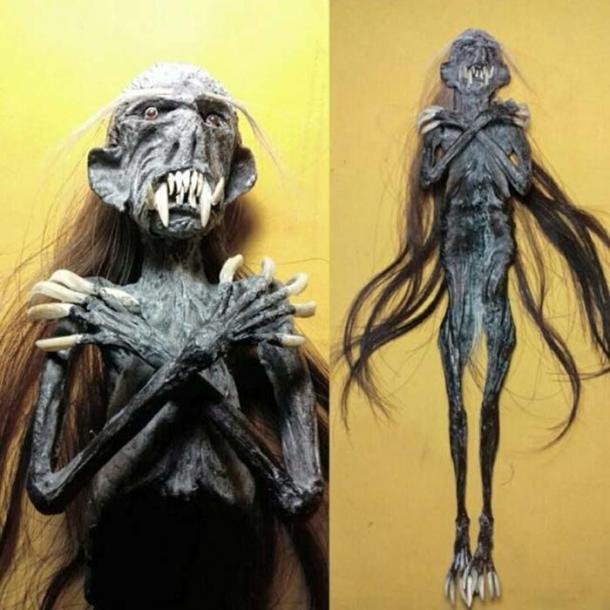
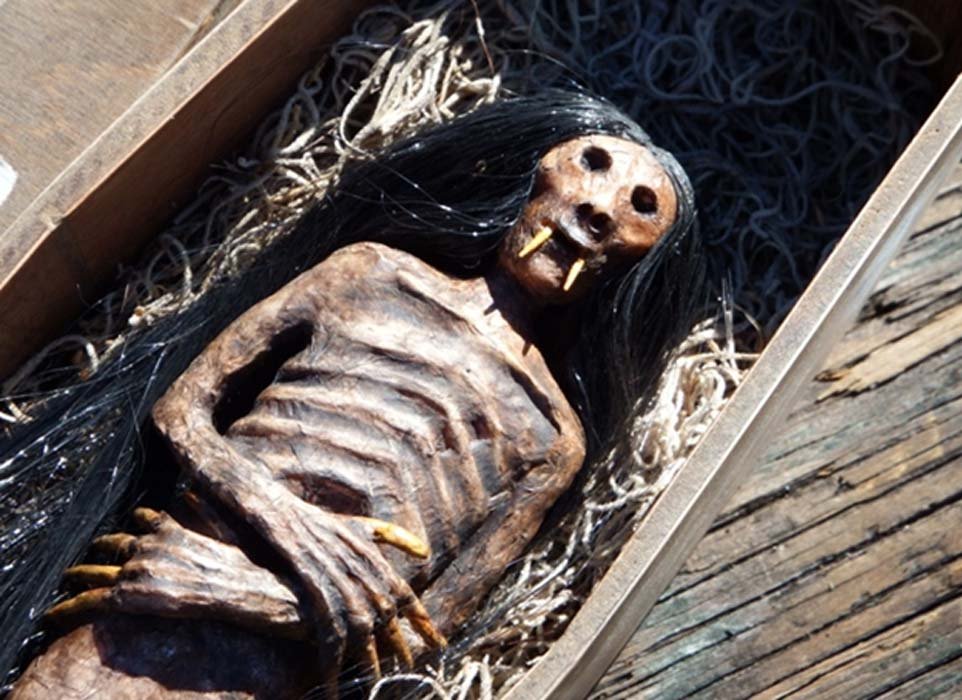
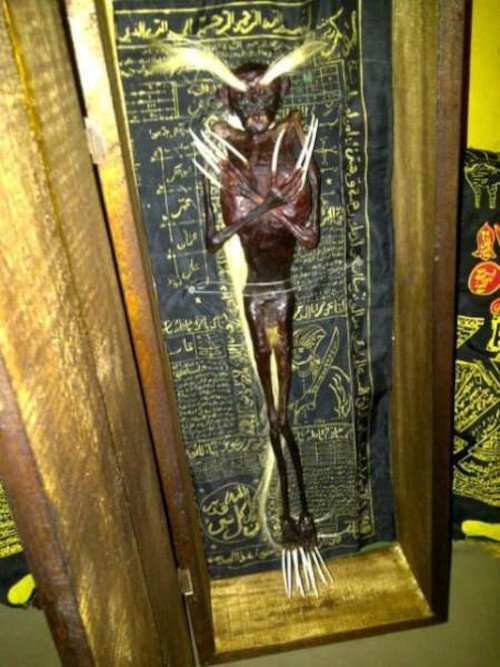
The "Jenglot" is a mysterious and popular entity in Indonesia. It is shaped like a small human, and it is not known whether the Jenglot is a real demon or the creation of folklore. One thing is clear; many Indonesians believe that the Jenglot possesses mysterious powers.

Jenglot, according to folklore, mysteriously appeared in Pulau Jawa, Indonesia, in the year 1997. It was argued that the entity could be found in many places, like underground, on the branches of a tree, or even on rooftops of houses. Jenglot looks like a mini version of a cachexic man and is equipped with sharp jaws, long fingernails, and long flowing hair.

Jenglot is believed to belong to the vampire family because its main nourishment comes from the blood of animals or humans. The owner of the Jenglot must feed the creature with a drop of their blood each day.

If the owner fails to do so, it is believed that their loved ones will face dire consequences. The blood must not be fed directly to the mouth of the Jenglot but instead be placed beside it.

Some argued that the creature comes alive for a while to drink blood, especially when there is no one around. Others claim that the Jenglot will get the nutrition from the blood without "physically" drinking it.

Origins of the Jenglot

Many people believe that the Jenglot was once a human being like us. Tradition states that the creature was formerly a hermit who practiced black magic to obtain everlasting life. When the hermit finally passed away, the earth refused to accept his body (presumably due to his unacceptable sins), where he remained undecomposed and finally regressed to being the size and stature of what society knows as a Jenglot. There are also rumors that say Jenglot is a rare animal species not yet discovered by science—and that the Jenglot is nothing more than a man-made doll.

Jenglot was claimed to be found by shamans (medicine men in the old times) after performing magical rituals, though the creature can also mysteriously appear on its own as well. Certain sources also claimed that the Jenglot is a demon that can be caught and kept by those with the knowledge of black crafts.

According to Muhammad Syakir Muhammad Azmi, an Islamic Medicine practitioner from Malaysia, Jenglot can be crafted with basic kinds of stuff. The price of the stuff to make Jenglot varies on its availability even though it's not considered as expensive, it is considered dark.

It is also possible to create a Jenglot using the fetus of a dead animal. It is believed that Jenglot, made from these animals, is more "nutritious" and hence more expensive on the market. As a man-made "creature," the Jenglot by itself didn't have any powers. However, Jenglot derives its powers from the incantations of powerful black magic spells done by experienced shamans.

The Jenglot is said to be capable of "appeasing" its masters (owners) in many ways. For example, providing protection, as a lucky charm, or to exact revenge over its owner's enemies.

Exhibition and Studies About the Jenglot

There were previously exhibitions about the Jenglot in Malaysia and Indonesia. The exhibitioners claimed that the Jenglot is a "supernatural" and not a man-made being and can be "killed" for the exhibitions.

Jenglot has induced curiosity among scholars. One study was published in the Malaysian Medical Journal in the year 2009 about hair samples from three suspected Jenglots. In this research, hair samples from Jenglots were submitted by a Malaysian businessman and studied under a powerful electron microscope. The researchers concluded that the hair originated from a normal human being and was purportedly "planted" on the head of the Jenglot.

Source: https://exemplore.com/paranormal/Jenglot-T...

Here's What Archaeologists Found Inside Egypt's Mysterious 2,000-Year-Old Sarcophagus

A mysterious black sarcophagus discovered in Egypt two weeks ago has been opened by archaeologists, according to Egypt’s Ministry of Antiquities, revealing three skeletons and foul-smelling sludge.

Reddish-brown sewage water inside the massive 2,000-year-old tomb weighing 27 tons, unearthed at a construction site, gave off a stench so pungent that initial prying efforts had to be abandoned.

“We found the bones of three people, in what looks like a family burial,” said Mostafa Waziri, secretary-general of the Supreme Council of Antiquities, according to the BBC. “Unfortunately the mummies inside were not in the best condition and only the bones remain.”

At almost 6.5 feet high and 10 feet long, the structure is the largest of its kind ever found intact, the BBC reports. The tomb is believed to date back to the early Ptolemaic period, which began in 323 BC after the death of Alexander the Great.

According to the Ministry of Antiquities, the three skeletons inside the sarcophagus may have been soldiers. One cracked skull reportedly indicates an arrow injury.

Addressing concerns that examining the tomb could unleash a Pharaoh’s curse, Waziri said, “We’ve opened it and, thank God, the world has not fallen into darkness,” the BBC reports.

“I was the first to put my whole head inside the sarcophagus… and here I stand before you … I am fine,” he added.

The skeletons will be transferred to the Alexandria National Museum for restoration and further study.

Source: https://time.com/5343928/egypt-sarcophagus...

Books You Can (Never) Read

In this video we will discuss the history of books, literacy, and lost media. Are you ready to learn what you can never know? Enjoy!

How an Indian Monk Changed Japan Forever | History of Medieval Japan (Nara)

In the 8th century, a South Indian (Tamil) Buddhist monk named Bodhisena journeyed from Madurai to the Far East in an attempt to locate his spiritual mentor. He arrived in Imperial Nara, Japan and discovered a country on the brink of collapse: wracked by drought and a smallpox epidemic, facing an ongoing debt crisis, and struggling through political turmoil.