Medieval Biological Warfare? Julius Caesar Did WHAT? Norse Carbon Dioxide Intoxication

Here is some horrible facts of history you might have not heard of before, or have you?

History (derived from Ancient Greek ἱστορία (historía) 'inquiry; knowledge acquired by investigation') is the systematic study and documentation of the human past.

The period of events before the invention of writing systems is considered prehistory. "History" is an umbrella term comprising past events as well as the memory, discovery, collection, organization, presentation, and interpretation of these events. Historians seek knowledge of the past using historical sources such as written documents, oral accounts, art and material artifacts, and ecological markers. History is incomplete and still has debatable mysteries.

History is an academic discipline which uses a narrative to describe, examine, question, and analyze past events, and investigate their patterns of cause and effect. Historians debate which narrative best explains an event, as well as the significance of different causes and effects. Historians debate the nature of history as an end in itself, and its usefulness in giving perspective on the problems of the present.

Stories common to a particular culture, but not supported by external sources (such as the tales surrounding King Arthur), are usually classified as cultural heritage or legends. History differs from myth in that it is supported by verifiable evidence. However, ancient cultural influences have helped create variant interpretations of the nature of history, which have evolved over the centuries and continue to change today. The modern study of history is wide-ranging, and includes the study of specific regions and certain topical or thematic elements of historical investigation. History is taught as a part of primary and secondary education, and the academic study of history is a major discipline in universities.

Herodotus, a 5th-century BC Greek historian, is often considered the "father of history", as one of the first historians in the Western tradition, though he has been criticized as the "father of lies". Along with his contemporary Thucydides, he helped form the foundations for the modern study of past events and societies. Their works continue to be read today, and the gap between the culture-focused Herodotus and the military-focused Thucydides remains a point of contention or approach in modern historical writing. In East Asia, a state chronicle, the Spring and Autumn Annals, was reputed to date from as early as 722 BC, though only 2nd-century BC texts have survived.
Why You Wouldn’t Survive in England

Imagine a grand stage where history unfolded its dramatic acts, from the smoke-laden intrigue of the Gunpowder Plot to the relentless resilience of Winston Churchill. This is the English Parliament, a living, breathing testament to the nation's heritage, set against a backdrop of stone and tradition. This was a world brimming with intrigue and ideals, where every word could precipitate a revolution or cement an empire. Delve into this captivating narrative and discover the untold stories of power, persuasion, and political maneuverings that shaped the life within the English Parliament.

The Majestic White Temple In Thailand Looks Like A Fairy Tale

Despite looking like an elaborate set design for an upcoming Hollywood film, the Wat Rong Khun or White Temple is very much a real temple found in Thailand.

Unsurprisingly it is a tourist hotspot, with many making the journey to catch a glimpse of the stunning feat of architecture. It is actually a very modern piece of architecture, having been constructed in 1997 by Chalermchai Kositpipat.

Truly a work of art, the White Temple features some awe-inspiring designs, not to mention the amazing crisp whiteness maintained across the building.

Sadly it took some damage in a recent earthquake in Mae Loa, but the Buddhist temple will see repairs made to it over the next few years.

Medieval Europe: A Complete Overview

Medieval Europe is a feature length journey through the Middle Ages! It is divided into 5 major timeframes. The Early Middle Ages picks up after the fall of Rome, and deals with the rise of monasticism, the Carolingians, Magyar and Viking invasions, and the feudal and manor systems. Then we head into the High Middle Ages, with a glimpse at village and city life, as well as a tour of each main region, beginning with England. This is followed by a quick overview of the Crusades and religious orders, and then the Late Middle Ages, going over the Black Death, Hundred Years War, and Western Schism. Europe recovers during the Italian Renaissance, as we take a look at the famous artists and humanists of the period, before another short tour of where each region stands as the Medieval age ends. The timeframe goes a bit beyond year 500 to 1500.

What if the Alexander's Empire Lived On? Animated Alternate History

Alexander the Great is one of histories greatest questions. He conquered most of the known world by the age of 32, before he died. People throughout all ages, from Julius Caesar to Napoleon, admired Alexander for his military accomplishments. In this video, we will answer how the Macedonian empire could have gone if he Alexander the Great lived longer.

Where Did a Billion Years Of Earth's History Go?

Did you know that about a quarter of the Earth's geologic history is just... missing? It's not that we can't find evidence. It's that the evidence just doesn't exist. Physically. This is not a joke, or an exaggeration, or a conspiracy. It's a scientific fact that has an equally mysterious name: The Great Unconformity.

Today you will learn:

Where and why did a 14-kilometer layer of soil disappear without a trace across the planet? What is the connection between the Grand Canyon and the mountain ranges in Australia? How did the deadliest winter in the history of the planet become the cradle of vibrant life? Who turned off Earth's magnetic field 500 million years ago?

We're off to explore the mysteries of the grandest events in planetary history. The mystery of the Great Unconformity!

The Stomach-Churning Things Cheyenne Dog Soldiers Did to Captive Women

The Wildest of Wild West, where the Cheyenne Dog Soldiers, a fearsome warrior society, carved their notorious legacy.

A warrior society believed to have been initiated by actual dogs transformed into fierce fighters. Fighters who spread fear and terror for decades.

In today's video we look at The Stomach-Churning Things Cheyenne Dog Soldiers Did to Captive Women... Enjoy!

The MASSIVE Ancient Superweapon That Shattered The Walls Of Constantinople: The Basilic Cannon

Standing 40 feet tall and boasting a thickness of over 16 feet, the inner Theodosian Walls of ancient Constantinople were once thought to be impenetrable. Yet, in the year 1453, these seemingly unbreakable barriers met their match in one of the largest caliber weapons ever forged – the Ottoman Empire’s Basilic Cannon.

In the 15th Century, the development of the cannon marked a groundbreaking advancement in artillery. This colossal weapon proved to be a catalyst for military and diplomatic transformations, heralding a new epoch of siege warfare and defensive tactics.

Constructed when cannons were still in their infancy, the Basilic Cannon's massive size and historical significance assured its place in the annals of history. The cannon's tremendous power was indisputable; however, even its ambitious creator could not have foreseen the pivotal role it would play in the 1453 Siege of Constantinople...

Anne of Cleves: Too Ugly for Henry VIII? Facial Re-Creations & History Revealed

Ugliest wife, or luckiest wife?

Anne of Cleves is known to history as being the “ugly” fourth wife of King Henry VIII, but we have reasons to believe this is not true. Anne of Cleves was sent at the age of 24, only speaking German and not familiar with English customs, to be the fourth wife of King Henry VIII. After an awkward first meeting between the two, Henry shunned her, saying she was not nearly as beautiful as everyone described. Today, we'll interweave her history with information about her appearance using contemporary accounts. After that, I'll reveal my re-creations of Anne of Cleves from two different portraits.

What are the Largest Pyramid Stones Saying?

The pyramids of Egypt's Old Kingdom contain some truly magnificent stones placed in conspicuously visible locations. These blocks are telling a story, but what clues can be found to help us understand the message?

If megalithic stones are found above a pyramid's entrance, does it make any sense to think of this entrance as being hidden?

Many of the largest stones in the 4th dynasty pyramids have cracked, but how were the ancient Egyptians interpreting these failures?

This video investigates these questions, and ponders what we might learn from looking the at the largest pyramid lintels.

A Day In The Life Of A Roman Slave (History Documentary)

The Roman Empire, revered as one of the greatest civilizations in history, bestowed upon humanity a rich legacy of poetry, music, art, and captivating stories that continue to resonate even in the present day. It was a fertile breeding ground for scientific discoveries, groundbreaking medical advancements, and profound intellectual contributions from esteemed minds like Socrates, Hippocrates, Plato, and Aristotle, among countless others. However, when we reflect upon the ancient glory of Rome, our minds tend to drift toward images of opulence, indulgence, and extravagant living. What often eludes our thoughts is the dark undercurrent that propelled this grandeur: the institution of slavery.

Slavery formed an integral pillar of the Roman Empire, a fundamental cog in its sprawling ecosystem. Astonishingly, an alarming statistic reveals that one in every five citizens within the empire was enslaved. So deeply entrenched was this practice that it prompted an intriguing proposition to Emperor Nero from his advisor Seneca. The Senate, recognizing the overwhelming prevalence of slavery, contemplated the idea of distinguishing slaves from free men through distinct attire. Yet, they swiftly abandoned the notion, for they foresaw the dire consequences that lay ahead if the slaves were to fully grasp their immense numerical strength. If these subjugated individuals were to awaken to their collective might, they could easily orchestrate an uprising against their masters, plunging the empire into chaos.

In essence, while the Roman Empire stands as a testament to human achievement and cultural marvels, it is imperative that we confront the somber truths that lurk beneath its veneer of magnificence. The legacy of Rome is not solely a tale of artistic brilliance and intellectual prowess; it is also a narrative tinged with the plight and oppression of countless souls who toiled in bondage, their contributions and sufferings largely forgotten or overshadowed by the glories of the empire they helped build.

What They Discovered Frozen In Ice Shocked The Whole World

Whether you head to a local lake or as far as Antarctica, you can be sure that all kinds of freaky things are lurking below the ice! Yes, frozen water hides all kinds of secrets, and it’s only when it starts to thaw that we discover exactly what is lost in its depths! From ancient viruses with unfathomable powers, to forgotten photos that tell the story of a doomed arctic expedition, these are the 20 Most Incredible things found in Ice!

Frozen Civilizations Found Under The Ice In Antarctica

Join us on our journey today through all the civilizations lost to time and to the ancient ice that once covered our beloved Earth! Find out, was there pyramids in the Antarctica? What mysteries lay frozen beneath the ice? Stay tuned and find out!

Forbidden Archaeology: Lost Giants of America | The Smithsonian's Biggest Secret

In 1886, mining engineer John T. Reid was told the Paiute legend of a giant people defeated by the natives near Lovelock, Nevada. The last of the giants met their fiery end deep within the bowels of a cave.

Reid’s belief in this legend stirred great interest in the secrets held within Lovelock Cave.

Official excavations were undertaken in both 1912 and 1924 by the University of California, with reports telling of thousands of artifacts being recovered. Of these artifacts, the most puzzling were human remains. Well, they were almost human.

Skeletons measuring between eight and ten feet tall were said to be found during the dig. Skeletons belonging to who are now known as “The Lovelock Giants.”

Legends of people of enormous size are told across a myriad of cultures, And despite what we’ve been told by mainstream science, there is evidence to suggest they really existed. The remains of giants have been found all over the United States; and all over the world.

So why aren’t these amazing finds on display in any museum? Or taught in any classes? Or mentioned in any history books?

Because the existence of giants, for some reason, has been covered up.

The Stomach-Churning Punishments Primarily Used On Women

Women across history have faced an impossible task – please, but don’t take up the space, fulfill a role but not one you get to choose, and become the ideal… by any means possible. In fact, fulfilling the demands on women from society at any given time has been a dangerous task. Maybe you’re a woman in 10th-century China, maybe you hear how all the women of the nobility have tiny three-inch feet – making your own that small becomes an agonizing life’s work. Maybe you’re a woman of Victorian England – chasing the hourglass means day after day in organ-crushing corsets.

Though you can forget beauty ideals, maybe you’re a woman of the medieval period, making your way as a respected and regarded healer, before the church, then the world turns on you, declaring what once served them so well, are only the workings of the devil. The world's positioning of women has been littered with pitfalls and punishment from antiquity to now. In today’s video we look at the unspeakable punishments befalling women.

DNA Results of Ötzi the Iceman

In this video we will provide DNA results based on Ötzi's DNA published in a 2012 study. Watch the video for more!

Slavs and Vikings: Medieval Russia and the Origins of the Kievan Rus

In this video will cover the history of Russia, starting with the ancient origins of the Slavs, formation of the early Eastern Slavic states, how the Varyag (Varangians) Vikings led by Rurik took over these states and started to expand towards Byzantium and the Khazars. Enjoy!

Top 10 Most Mysterious Recent Discoveries From Ancient Egypt!

The mysterious past of Ancient Egypt, with all of its wondrous treasures and intriguing mysteries, never ceases to enthrall people all over the globe. Historians and researchers in Egypt have made astounding finds that have thrown insight into the intriguing civilization that flourished alongside the Nile. In this video, we will look into 10 of the most intriguing enigmatic recent findings from Ancient Egypt. Each of these findings reveals new facets of history and leaves us wondering about the secrets that remain concealed underneath the grains of age.

Vlad The Impaler Punished Women In BRUTAL Ways!

Have you ever wondered where the tales of Dracula's brutality truly originated? Vlad the Impaler was the historical figure who inspired the legend of Dracula. His bloodlust and sadistic nature were greater than even the darkest boundaries of fiction. How did Vlad the Impaler deliberately target women with his brutality during his reign of terror?

We take a terrifying journey into the sadistic world of Vlad the Impaler in this unsettling video. We will discover the real life of Vlad and the dreadful punishments he inflicted on women, leaving them with both physical and psychic scars.

Did Size Matter to the Romans?

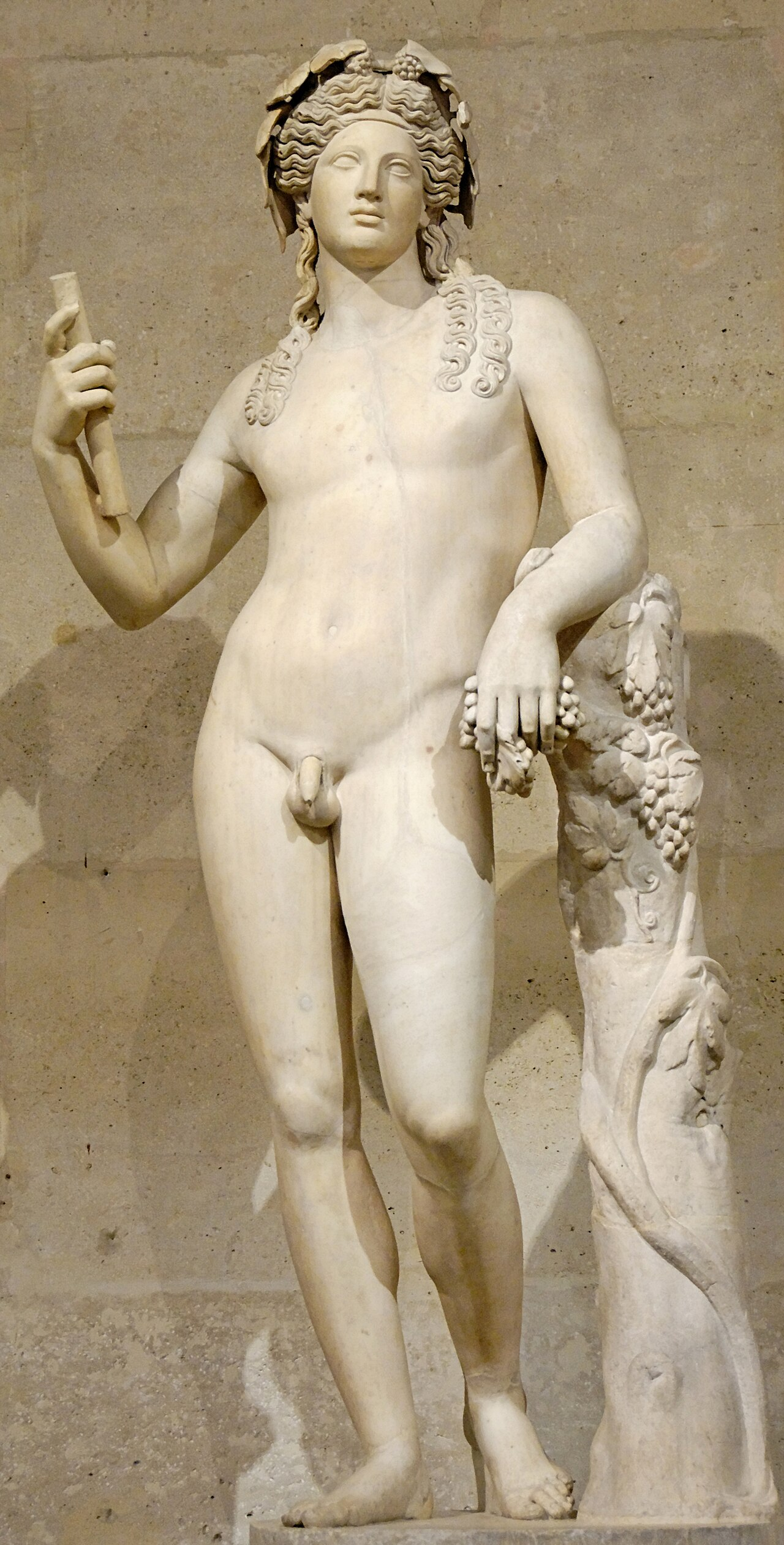
In the following video we will investigate whether size mattered to the Romans. Watch the video to find out more!