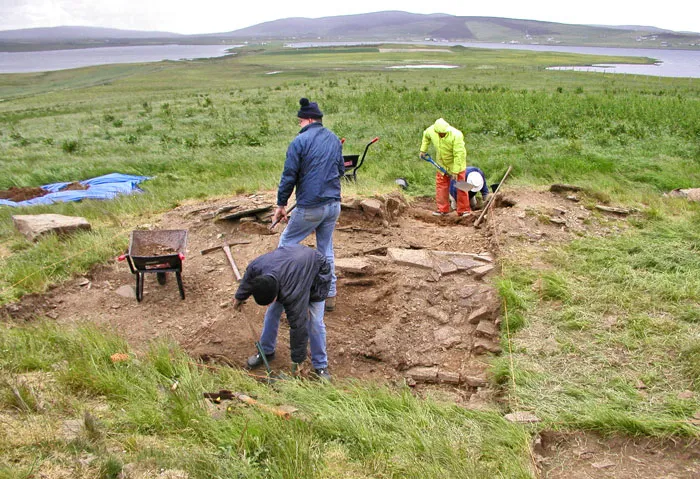
Badachro, in the northwest Highlands of Scotland, lies within a landscape rich in prehistoric archaeological remains.
Neolithic cairns and monuments in this region provide evidence for early farming communities and their changing relationships with the Highland environment.
The Neolithic Highlands
The Neolithic period brought significant changes to Scotland.
Communities increasingly practiced:
agriculture;
livestock management;
pottery production;
and monument construction.
Cairns
A cairn is a mound constructed primarily from stones.
In the Neolithic, cairns could serve as:
burial monuments;
ceremonial locations;
landmarks;
or territorial markers.
Burial
Human remains within prehistoric cairns can reveal information about:
age;
sex;
health;
diet;
and population relationships.
Monumental Labor
Constructing a cairn required organized labor.
People had to gather and move large quantities of stone.
This demonstrates community cooperation.
Highland Environment
The Highlands provided:
grazing;
freshwater;
forests;
rivers;
and coastal resources.
Neolithic communities adapted their economies to local conditions.
Farming
Cereal cultivation was possible in suitable areas.
Livestock were particularly important.
Cattle and sheep could provide:
meat;
milk;
hides;
and other products.
The Meaning of Monuments
A cairn transformed an ordinary part of the landscape into a place associated with the ancestors.
Such monuments could establish a relationship between:
community;
territory;
and memory.
Why Badachro Matters
The site contributes to the broader archaeological understanding of Neolithic settlement and funerary traditions in the northwest Highlands.
Conclusion
The Neolithic cairn landscape around Badachro demonstrates that prehistoric Highland communities were actively reshaping their environment.
Through agriculture, settlement, and monument construction, they created lasting connections between their communities and the land.