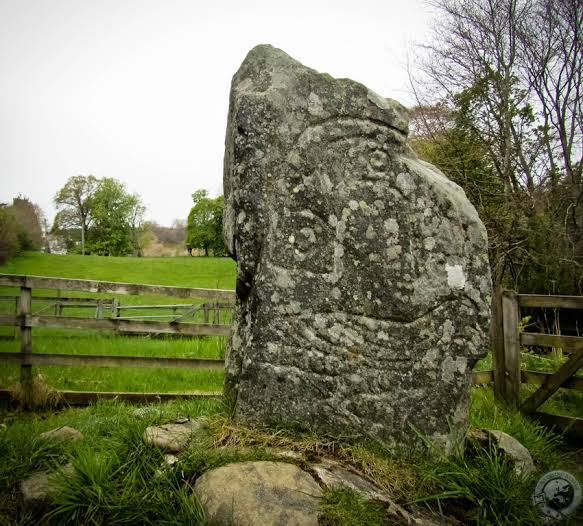
Clach an Tiompain, associated with the prehistoric landscape of Sutherland, represents the long tradition of standing-stone construction in northern Scotland.
Standing stones are among the most visually striking surviving monuments from prehistoric Britain.
Although their precise functions often remain uncertain, they clearly demonstrate that prehistoric communities deliberately placed large stones within meaningful landscapes.
What Is a Standing Stone?
A standing stone is a large stone intentionally erected vertically.
Unlike chambered tombs, standing stones often contain little obvious internal architecture.
Their meaning must therefore be interpreted through:
location;
orientation;
archaeological context;
and relationships with other monuments.
Construction
Raising a large stone required planning.
Workers had to:
select the stone;
transport it;
prepare the ground;
create a socket;
raise the stone;
and stabilize it.
Why Erect Standing Stones?
Several interpretations have been proposed.
They could mark:
territorial boundaries;
burial locations;
ceremonial spaces;
astronomical observations;
gathering places;
or significant routes.
A single stone may have served several purposes.
Landscape and Visibility
Standing stones were often deliberately positioned where they could be seen.
Their visibility could establish a connection between:
people;
landscape;
and monument.
Astronomy
Some prehistoric standing stones appear to have relationships with:
sunrise;
sunset;
solstices;
or lunar positions.
However, astronomical interpretations must be supported by evidence rather than assumed.
Social Cooperation
Moving and erecting large stones required communal effort.
The project could strengthen social bonds by bringing people together for a shared purpose.
Ritual
Standing stones may have been associated with ceremonies involving:
ancestors;
seasonal events;
communal gatherings;
or religious practices.
The exact rituals remain unknown.
Sutherland's Prehistoric Landscape
Sutherland contains a remarkable range of prehistoric monuments.
These include:
cairns;
stone rows;
settlements;
forts;
and standing stones.
Clach an Tiompain belongs to this broader cultural landscape.
Long-Term Memory
A standing stone can survive for thousands of years.
Even after the community that erected it disappeared, the monument remained.
Later societies could reinterpret or incorporate it into their own landscapes.
Why Clach an Tiompain Matters
The stone provides evidence for the ability of prehistoric communities to create enduring landmarks.
It demonstrates that people were not simply adapting to the natural landscape.
They were actively transforming it.
Conclusion
Clach an Tiompain represents one of the simplest yet most mysterious forms of prehistoric monument.
A single upright stone may appear uncomplicated, but its construction required planning and cooperation, while its location may have carried deep social or symbolic meaning.
Like many standing stones across Scotland, it remains a physical reminder of communities whose beliefs are largely lost but whose monuments continue to shape the landscape thousands of years later.