• MAIN PAGE
  • LATEST NEWS
    • Lost Cities
    • Archaeology's Greatest Finds
    • Underwater Discoveries
    • Greatest Inventions
    • Studies
    • Blog
  • PHILOSOPHY
  • HISTORY
  • RELIGIONS
    • Africa
    • Anatolia
    • Arabian Peninsula
    • Balkan Region
    • China - East Asia
    • Europe
    • Eurasian Steppe
    • Levant
    • Mesopotamia
    • Oceania - SE Asia
    • Pre-Columbian Civilizations of America
    • Iranian Plateau - Central Asia
    • Indus Valley - South Asia
    • Japan
    • The Archaeologist Editor Group
    • Scientific Studies
    • Aegean Prehistory
    • Historical Period
    • Byzantine Middle Ages
    • Predynastic Period
    • Dynastic Period
    • Greco-Roman Egypt
  • Rome
  • PALEONTOLOGY
  • About us
Menu

The Archaeologist

  • MAIN PAGE
  • LATEST NEWS
  • DISCOVERIES
    • Lost Cities
    • Archaeology's Greatest Finds
    • Underwater Discoveries
    • Greatest Inventions
    • Studies
    • Blog
  • PHILOSOPHY
  • HISTORY
  • RELIGIONS
  • World Civilizations
    • Africa
    • Anatolia
    • Arabian Peninsula
    • Balkan Region
    • China - East Asia
    • Europe
    • Eurasian Steppe
    • Levant
    • Mesopotamia
    • Oceania - SE Asia
    • Pre-Columbian Civilizations of America
    • Iranian Plateau - Central Asia
    • Indus Valley - South Asia
    • Japan
    • The Archaeologist Editor Group
    • Scientific Studies
  • GREECE
    • Aegean Prehistory
    • Historical Period
    • Byzantine Middle Ages
  • Egypt
    • Predynastic Period
    • Dynastic Period
    • Greco-Roman Egypt
  • Rome
  • PALEONTOLOGY
  • About us
No results found

Biak Island: New Guinea's Rock Art Petroglyphs

July 22, 2026

Introduction

Located in Cenderawasih Bay (formerly Geelvink Bay) off the northern coast of Papua, Biak Island is home to one of the most concentrated and diverse open-air and cave rock art complexes in the western Pacific. Etched and painted across exposed limestone cliffs, sea caves, and interior shelters, Biak's petroglyphs (carvings) and pictographs (paintings) document millennia of ceremonial life, maritime navigation, and cultural interactions along the Papuan coast.


Motif Typology and Spatial Distribution

The rock art of Biak is broadly divided into two primary stylistic traditions based on medium, technique, and location:

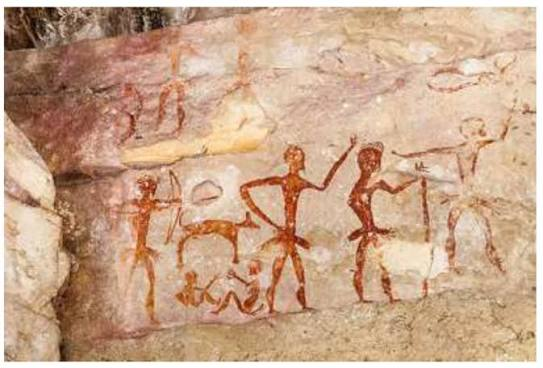
  1. Chalk & Ochre Pictographs: Found predominantly inside sheltered sea caves and high cliff faces. These feature prominent hand stencils (created by spraying wet pigment over a hand held against the stone wall), face-mask designs (korwar-like human faces), and vivid depictions of outrigger canoes, sea turtles, and frigatebirds painted in red hematite and charcoal.

  2. Incised Petroglyphs: Carved directly into exposed coastal limestone wave-cut notches and inland karst surfaces. These are characterized by deeply pecked or abraded geometric patterns, including concentric circles, spirals, sunbursts, and stylized anthropomorphic figures with outstretched arms.

Archaeological dating of associated cave deposits, combined with patination and weathering analysis on the rock faces, suggests that the oldest art layers extend back into the pre-Austronesian mid-Holocene, while later motifs incorporate symbolic elements associated with the arrival of Austronesian seafarers around 3,000 years ago.

Many of the human face motifs directly parallel the wooden ancestor statues (korwar) produced historically in the Cenderawasih Bay region, pointing to deep temporal continuity in ancestral veneration and spiritual iconography.

Conclusion

Biak Island's rock art petroglyphs and pictographs constitute an invaluable visual library of ancient Papuan worldviews. They reflect an enduring relationship with the maritime landscape, serving as territorial markers, spiritual sanctuaries, and enduring monuments to the complex ritual traditions that flourished along the northern shores of New Guinea.
← Wola Valley: Papua New Guinea's Sweet Potato Gardens Kei Islands: Moluccas' Lapita Pottery Links →
Featured
image_2026-07-21_212653218.png
July 22, 2026
Ivane Valley: PNG's 49,000-Year Highland Settlers
July 22, 2026
Read more →
July 22, 2026
image_2026-07-21_212601977.png
July 22, 2026
Kuk Swamp: PNG's 7,000-Year Wetland Farming
July 22, 2026
Read more →
July 22, 2026
image_2026-07-21_212507642.png
July 22, 2026
Wola Valley: Papua New Guinea's Sweet Potato Gardens
July 22, 2026
Read more →
July 22, 2026
image_2026-07-21_212422594.png
July 22, 2026
Biak Island: New Guinea's Rock Art Petroglyphs
July 22, 2026
Read more →
July 22, 2026
image_2026-07-21_212301612.png
July 22, 2026
Kei Islands: Moluccas' Lapita Pottery Links
July 22, 2026
Read more →
July 22, 2026
image_2026-07-14_214817674.png
July 18, 2026
Aru Islands: Papua's 30,000-Year Wallabies Hunt
July 18, 2026
Read more →
July 18, 2026
read more

Powered by The archaeologist