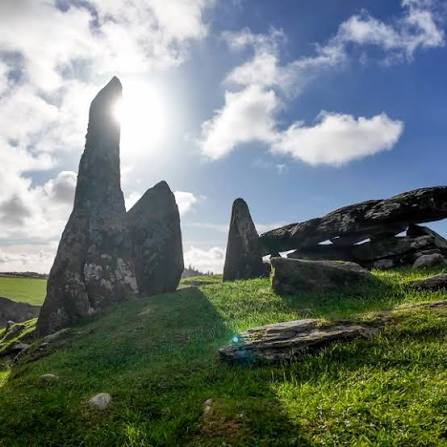
Bowser's Knowe is associated with the rich Neolithic archaeological landscape of Westray in Orkney.
The site belongs to the broader tradition of prehistoric cairns that transformed the island landscape into a network of monuments connected with burial, ancestry, and community identity.
Neolithic Westray
Westray was home to farming communities approximately 5,000 years ago.
The island provided:
fertile soils;
grazing;
freshwater;
marine resources;
and building stone.
The Cairn Tradition
Stone cairns could serve several purposes.
They might function as:
burial monuments;
memorials;
landmarks;
or ritual spaces.
Monument Construction
Constructing a cairn required coordinated labor.
People needed to:
gather stone;
transport it;
arrange internal structures;
and build the outer mound.
Burial
Human remains found in prehistoric cairns demonstrate that the dead could remain physically present within the community's landscape.
Ancestors
The monument could help maintain relationships between:
living people;
ancestors;
and territory.
This relationship may have reinforced social identity.
Landscape Visibility
A cairn visible from surrounding fields could act as a permanent landmark.
It could mark:
a sacred place;
a territorial boundary;
or an ancestral location.
Farming Communities
The builders cultivated crops and raised livestock.
They also exploited marine resources.
This mixed economy helped them survive the island's changing seasons.
Connections to Other Sites
Westray contains several important prehistoric sites.
These demonstrate that the island participated in the wider cultural world of Neolithic Orkney.
Why Bowser's Knowe Matters
The cairn contributes to the archaeological picture of Westray as a landscape shaped by both domestic settlement and ceremonial activity.
Conclusion
Bowser's Knowe represents the enduring importance of monuments in Neolithic Westray.
The cairn transformed stone into a permanent reminder of the dead and helped connect communities to their ancestors and landscape.