The Scar Boat Burial on the island of Sanday is one of the most remarkable Viking Age archaeological discoveries in Orkney.
Dating to approximately the late ninth or early tenth century, the burial contained a boat, human remains, animal remains, and numerous objects.
The discovery provides extraordinary evidence for Norse society in Orkney and demonstrates the importance of maritime identity in the Viking Age.
The Boat Burial
The burial involved a small boat placed within a grave.
The vessel formed the central element of the burial structure.
Boat burials were powerful expressions of Viking identity because boats represented:
travel;
warfare;
trade;
fishing;
and social status.
Human Remains
The burial contained several individuals.
The presence of multiple people raises questions about their relationships and roles.
Modern scientific techniques can examine:
age;
sex;
ancestry;
diet;
and genetic relationships.
Grave Goods
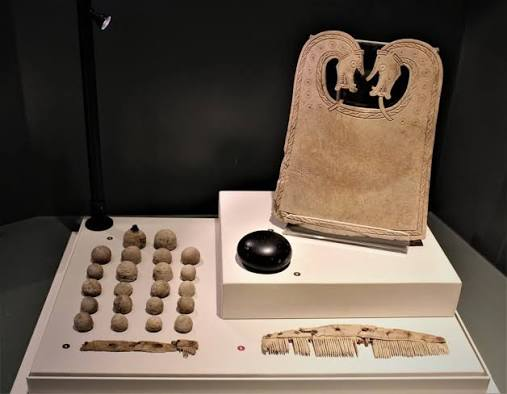
The burial contained numerous objects.
These included items associated with:
weapons;
clothing;
household activity;
fishing;
and personal identity.
Weapons
Weapons in Viking burials could include:
swords;
spears;
shields;
or axes.
Their presence could communicate martial identity or social status.
Household Objects
Other objects could include:
combs;
tools;
containers;
and domestic equipment.
These provide insight into everyday life.
Textiles and Clothing
Preserved artifacts can reveal aspects of Viking clothing and appearance.
Brooches, buckles, and other fittings may indicate how garments were worn.
Animals
Animal remains were also associated with the burial.
Animals could have practical or symbolic roles.
They might represent:
food;
transportation;
status;
companionship;
or ritual offerings.
Viking Orkney
By the Viking Age, Norse settlers had established themselves throughout Orkney.
They interacted with existing populations and transformed the islands politically and culturally.
Maritime Society
The sea was fundamental to Viking life.
Ships allowed people to:
trade;
raid;
migrate;
fish;
and maintain political connections.
A boat burial therefore expressed more than transportation technology.
It represented an entire way of life.
Burial and Status
Elaborate burials required substantial resources.
The construction of the grave and provision of goods could communicate the importance of the deceased.
Why Scar Matters
The Scar burial provides a rare combination of:
boat archaeology;
human remains;
animal remains;
weaponry;
domestic artifacts;
and clothing evidence.
Conclusion
The Scar Boat Burial is one of the most important Viking Age graves in Scotland.
It demonstrates how boats were central to Norse identity and how burial ceremonies could combine people, animals, objects, and maritime symbolism.
The grave provides an unusually intimate glimpse into Viking society in Orkney, where Scandinavian traditions became deeply embedded in the islands' history.