• MAIN PAGE
  • LATEST NEWS
    • Lost Cities
    • Archaeology's Greatest Finds
    • Underwater Discoveries
    • Greatest Inventions
    • Studies
    • Blog
  • PHILOSOPHY
  • HISTORY
  • RELIGIONS
    • Africa
    • Anatolia
    • Arabian Peninsula
    • Balkan Region
    • China - East Asia
    • Europe
    • Eurasian Steppe
    • Levant
    • Mesopotamia
    • Oceania - SE Asia
    • Pre-Columbian Civilizations of America
    • Iranian Plateau - Central Asia
    • Indus Valley - South Asia
    • Japan
    • The Archaeologist Editor Group
    • Scientific Studies
    • Aegean Prehistory
    • Historical Period
    • Byzantine Middle Ages
    • Predynastic Period
    • Dynastic Period
    • Greco-Roman Egypt
  • Rome
  • PALEONTOLOGY
  • About us
Menu

The Archaeologist

  • MAIN PAGE
  • LATEST NEWS
  • DISCOVERIES
    • Lost Cities
    • Archaeology's Greatest Finds
    • Underwater Discoveries
    • Greatest Inventions
    • Studies
    • Blog
  • PHILOSOPHY
  • HISTORY
  • RELIGIONS
  • World Civilizations
    • Africa
    • Anatolia
    • Arabian Peninsula
    • Balkan Region
    • China - East Asia
    • Europe
    • Eurasian Steppe
    • Levant
    • Mesopotamia
    • Oceania - SE Asia
    • Pre-Columbian Civilizations of America
    • Iranian Plateau - Central Asia
    • Indus Valley - South Asia
    • Japan
    • The Archaeologist Editor Group
    • Scientific Studies
  • GREECE
    • Aegean Prehistory
    • Historical Period
    • Byzantine Middle Ages
  • Egypt
    • Predynastic Period
    • Dynastic Period
    • Greco-Roman Egypt
  • Rome
  • PALEONTOLOGY
  • About us

Bronze Age cairn reveals clues to ancient monument construction

March 11, 2026

Archaeologists investigating a large prehistoric cairn near Simpevarp have uncovered new insights into a Bronze Age burial monument and the people who constructed it thousands of years ago.

The excavation, carried out over several weeks at the end of June last year, revealed how ancient builders carefully used the surrounding natural landscape when creating the monument. Researchers also discovered a rare grave offering that has survived to the present day, providing a valuable glimpse into ancient burial traditions.

The cairn measures roughly 12 meters in diameter and stands about 0.8 meters high. It is composed of stones ranging from 20 to 50 centimeters in size.

Excavations revealed that the monument was constructed in two to three layers. The upper layer consisted mainly of larger stones, while smaller stones—often sharp-edged and cracked—were placed directly on top of a naturally arched bedrock surface that already resembled a mound.

Researchers also observed that the stone packing extended down the edges of the rock formation. Because of this natural elevation, the cairn may have appeared several meters taller when viewed from a distance, creating a more imposing presence in the landscape for those approaching the burial site.
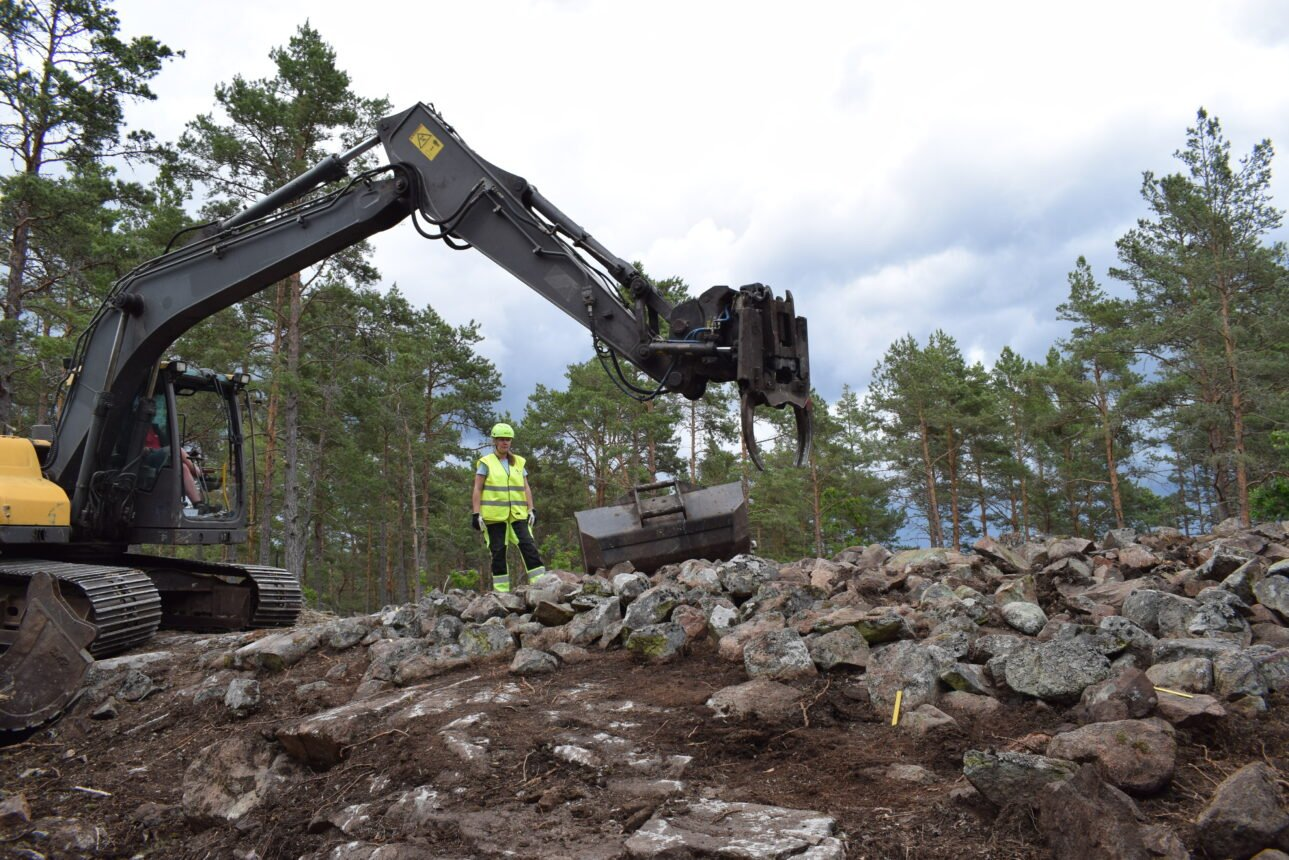
Researchers believe the cairn’s elevated appearance was likely intentional. The monument’s height is most striking when viewed from the south, facing the sea, suggesting that the builders may have designed it to impress people approaching the coast by boat near Simpevarp.

Another significant feature uncovered during the excavation was a straight line of stones running through the center of the cairn. Stretching nearly eight meters from southwest to northeast, this carefully arranged row divided the monument into two halves. Beneath this central axis lay a deep crack in the bedrock filled with soil, which archaeologists believe may mark the original burial location.

Although prehistoric graves often contain human remains or burial goods, the harsh coastal conditions likely caused organic materials to decompose over time. Soil recovered from fissures in the rock contained charcoal, indicating that fires had once burned at the site, but no human bones survived.

However, on the final day of excavation, archaeologists discovered an important artifact—a flint scraper placed within a bedrock crack beneath the cairn. Dating to the Bronze Age, the tool was likely left as a grave offering for the deceased, providing a rare surviving trace of a burial that would otherwise have vanished entirely.
← Archaeologists find perfectly intact painted coffins in incredible ancient Egypt discoveryArchaeologists Were Digging Into a Hill—and Stumbled Upon a 125,000-Year-Old Factory →
Featured
image_2026-03-10_215853994.png
Mar 11, 2026
Scientists Analyzed 41,000-Year-Old Neanderthal Bones—And Reached a Horrifying Conclusion
Mar 11, 2026
Read More →
Mar 11, 2026
image_2026-03-10_215653720.png
Mar 11, 2026
British Museum urged to stop 'erasing Palestine and supporting genocide'
Mar 11, 2026
Read More →
Mar 11, 2026
image_2026-03-10_215449811.png
Mar 11, 2026
Discovering the Golden Road: guided walk and heritage stories in the Preseli Hills
Mar 11, 2026
Read More →
Mar 11, 2026
image_2026-03-10_215303738.png
Mar 11, 2026
Archaeologists identify 1,000-year-old megalith in Central Sulawesi
Mar 11, 2026
Read More →
Mar 11, 2026
image_2026-03-10_215140187.png
Mar 11, 2026
A Settlement Discovery Could Upend Our Theory of Early America
Mar 11, 2026
Read More →
Mar 11, 2026
image_2026-03-10_215023458.png
Mar 11, 2026
Coin used to pay for bus ticket in Leeds found to be 2,000 years old
Mar 11, 2026
Read More →
Mar 11, 2026
read more

Powered by The archaeologist