• MAIN PAGE
  • LATEST NEWS
    • Lost Cities
    • Archaeology's Greatest Finds
    • Underwater Discoveries
    • Greatest Inventions
    • Studies
    • Blog
  • PHILOSOPHY
  • HISTORY
  • RELIGIONS
    • Africa
    • Anatolia
    • Arabian Peninsula
    • Balkan Region
    • China - East Asia
    • Europe
    • Eurasian Steppe
    • Levant
    • Mesopotamia
    • Oceania - SE Asia
    • Pre-Columbian Civilizations of America
    • Iranian Plateau - Central Asia
    • Indus Valley - South Asia
    • Japan
    • The Archaeologist Editor Group
    • Scientific Studies
    • Aegean Prehistory
    • Historical Period
    • Byzantine Middle Ages
    • Predynastic Period
    • Dynastic Period
    • Greco-Roman Egypt
  • Rome
  • PALEONTOLOGY
  • About us
Menu

The Archaeologist

  • MAIN PAGE
  • LATEST NEWS
  • DISCOVERIES
    • Lost Cities
    • Archaeology's Greatest Finds
    • Underwater Discoveries
    • Greatest Inventions
    • Studies
    • Blog
  • PHILOSOPHY
  • HISTORY
  • RELIGIONS
  • World Civilizations
    • Africa
    • Anatolia
    • Arabian Peninsula
    • Balkan Region
    • China - East Asia
    • Europe
    • Eurasian Steppe
    • Levant
    • Mesopotamia
    • Oceania - SE Asia
    • Pre-Columbian Civilizations of America
    • Iranian Plateau - Central Asia
    • Indus Valley - South Asia
    • Japan
    • The Archaeologist Editor Group
    • Scientific Studies
  • GREECE
    • Aegean Prehistory
    • Historical Period
    • Byzantine Middle Ages
  • Egypt
    • Predynastic Period
    • Dynastic Period
    • Greco-Roman Egypt
  • Rome
  • PALEONTOLOGY
  • About us

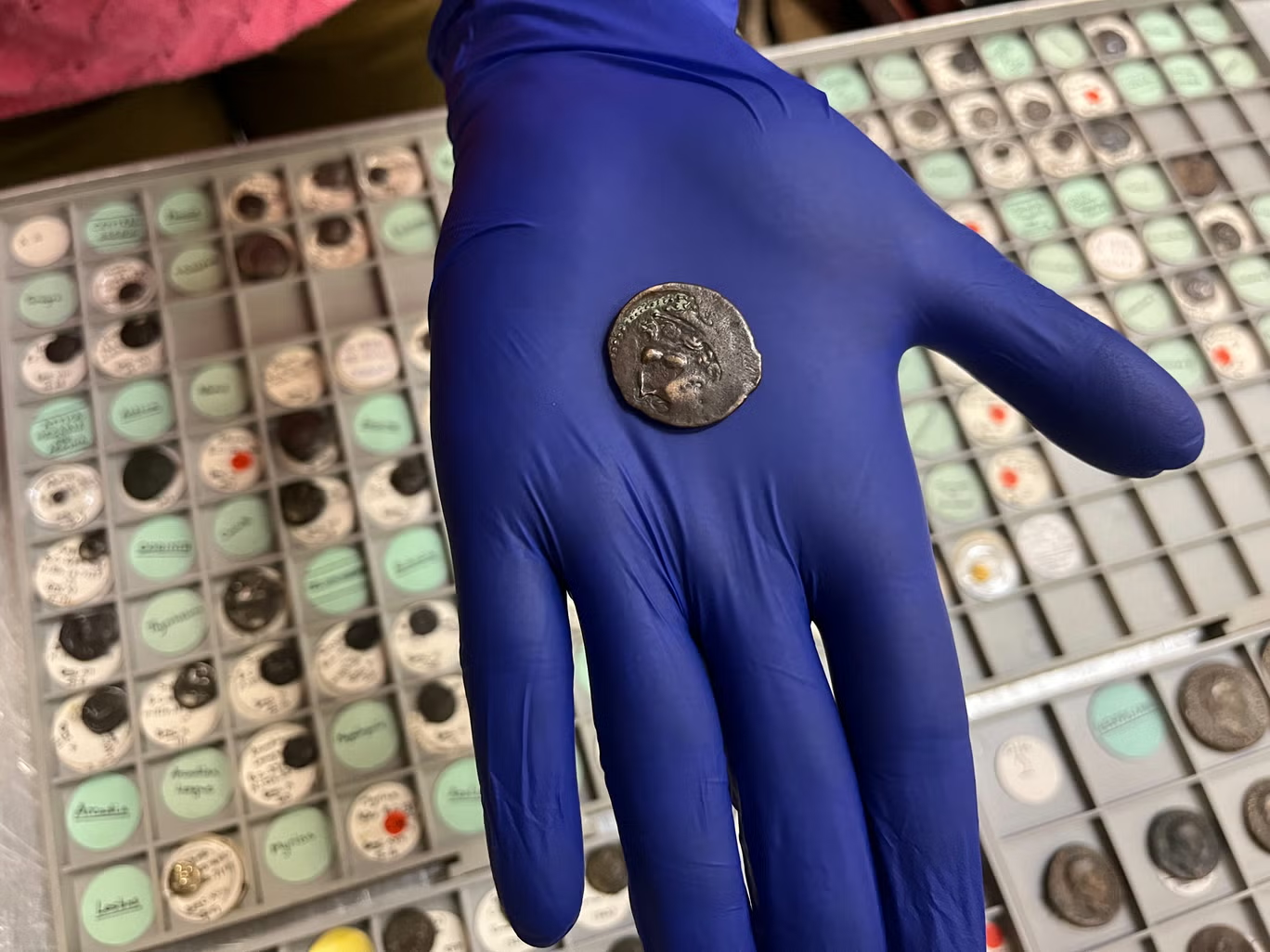
The coin has been donated to Leeds Museums and Galleries

Coin used to pay for bus ticket in Leeds found to be 2,000 years old

March 11, 2026

An unusual coin once used to pay a bus fare in Leeds during the 1950s has been identified as an artifact from an ancient civilisation more than 2,000 years old.

The coin was originally handed to a local bus driver and later collected by James Edwards, a former chief cashier for Leeds City Transport, who was responsible for gathering and counting fares at the end of each day. Because the coin was not valid British currency, Edwards set it aside and eventually gave it to his young grandson Peter, who kept it safely in a small wooden chest for more than seventy years.

Researchers from the University of Leeds later examined the object and determined that it came from the Carthaginian culture connected to the Phoenicians. The coin was minted in the Spanish coastal city of Cadiz during the 1st century BC.

Peter, now 77, recalled that his grandfather often kept unusual foreign coins he encountered while counting fares. When Peter visited his grandfather’s home, he would occasionally receive a few of these coins as gifts.

“It was not long after the war, so I imagine soldiers returned with coins from countries they had been sent to,” he explained. Although neither of them were serious coin collectors, they were fascinated by the objects’ designs and origins. To Peter, they felt like hidden treasure.

The coin features the face of the god Melqart on one side. Melqart was an important Phoenician deity often depicted in a way that resembles the Greek hero Heracles, wearing the famous lionskin headdress.

Experts believe the coin was produced in what was once a Carthaginian settlement along the Spanish coast. After finally learning its origin, Peter decided the coin should be preserved and studied by professionals rather than kept privately.

He donated the artifact to Leeds Museums and Galleries, where it is now part of the Leeds Discovery Centre collection. The centre houses coins and currency from many cultures around the world, representing thousands of years of history.

City officials described the journey of the coin as remarkable, noting that a small object created by an ancient civilisation managed to travel across continents and centuries before finally becoming part of a museum collection in Leeds.
← A Settlement Discovery Could Upend Our Theory of Early AmericaArchaeologists find perfectly intact painted coffins in incredible ancient Egypt discovery →
Featured
image_2026-03-10_215853994.png
Mar 11, 2026
Scientists Analyzed 41,000-Year-Old Neanderthal Bones—And Reached a Horrifying Conclusion
Mar 11, 2026
Read More →
Mar 11, 2026
image_2026-03-10_215653720.png
Mar 11, 2026
British Museum urged to stop 'erasing Palestine and supporting genocide'
Mar 11, 2026
Read More →
Mar 11, 2026
image_2026-03-10_215449811.png
Mar 11, 2026
Discovering the Golden Road: guided walk and heritage stories in the Preseli Hills
Mar 11, 2026
Read More →
Mar 11, 2026
image_2026-03-10_215303738.png
Mar 11, 2026
Archaeologists identify 1,000-year-old megalith in Central Sulawesi
Mar 11, 2026
Read More →
Mar 11, 2026
image_2026-03-10_215140187.png
Mar 11, 2026
A Settlement Discovery Could Upend Our Theory of Early America
Mar 11, 2026
Read More →
Mar 11, 2026
image_2026-03-10_215023458.png
Mar 11, 2026
Coin used to pay for bus ticket in Leeds found to be 2,000 years old
Mar 11, 2026
Read More →
Mar 11, 2026
read more

Powered by The archaeologist