• MAIN PAGE
  • LATEST NEWS
    • Lost Cities
    • Archaeology's Greatest Finds
    • Underwater Discoveries
    • Greatest Inventions
    • Studies
    • Blog
  • PHILOSOPHY
  • HISTORY
  • RELIGIONS
    • Africa
    • Anatolia
    • Arabian Peninsula
    • Balkan Region
    • China - East Asia
    • Europe
    • Eurasian Steppe
    • Levant
    • Mesopotamia
    • Oceania - SE Asia
    • Pre-Columbian Civilizations of America
    • Iranian Plateau - Central Asia
    • Indus Valley - South Asia
    • Japan
    • The Archaeologist Editor Group
    • Scientific Studies
    • Aegean Prehistory
    • Historical Period
    • Byzantine Middle Ages
    • Predynastic Period
    • Dynastic Period
    • Greco-Roman Egypt
  • Rome
  • PALEONTOLOGY
  • About us
Menu

The Archaeologist

  • MAIN PAGE
  • LATEST NEWS
  • DISCOVERIES
    • Lost Cities
    • Archaeology's Greatest Finds
    • Underwater Discoveries
    • Greatest Inventions
    • Studies
    • Blog
  • PHILOSOPHY
  • HISTORY
  • RELIGIONS
  • World Civilizations
    • Africa
    • Anatolia
    • Arabian Peninsula
    • Balkan Region
    • China - East Asia
    • Europe
    • Eurasian Steppe
    • Levant
    • Mesopotamia
    • Oceania - SE Asia
    • Pre-Columbian Civilizations of America
    • Iranian Plateau - Central Asia
    • Indus Valley - South Asia
    • Japan
    • The Archaeologist Editor Group
    • Scientific Studies
  • GREECE
    • Aegean Prehistory
    • Historical Period
    • Byzantine Middle Ages
  • Egypt
    • Predynastic Period
    • Dynastic Period
    • Greco-Roman Egypt
  • Rome
  • PALEONTOLOGY
  • About us

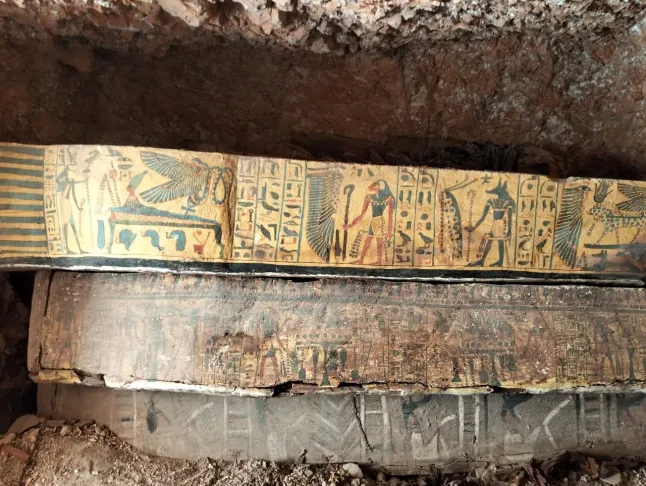
The painted coffins were found stacked in a chamber in Luxor

Archaeologists find perfectly intact painted coffins in incredible ancient Egypt discovery

March 11, 2026

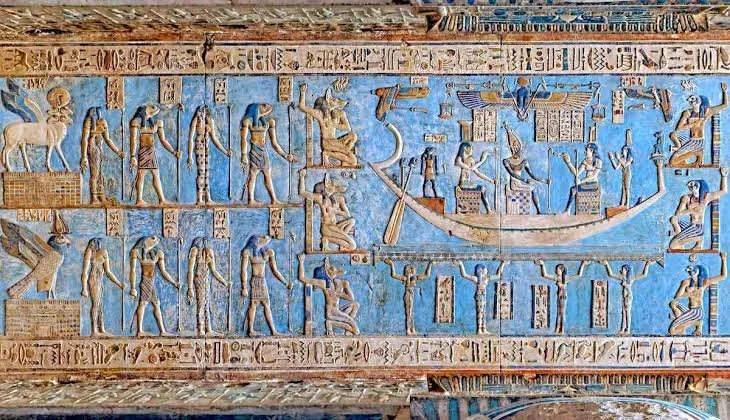
Archaeologists in Egypt have uncovered a tightly packed rock-cut chamber filled with dozens of beautifully painted coffins. The discovery was made in the Asasif Necropolis on the west bank of Luxor, one of the most important archaeological regions of ancient Egypt.

Dating to the Third Intermediate Period of Egypt (around 1070–664 BC), the find includes 22 wooden coffins decorated in vivid colours as well as a cache of rare papyri sealed inside ceramic vessels.

Women Linked to the Cult of Amun

Many of the coffins appear to belong to women who held the title “Singer of Amun,” a religious role connected to rituals honoring the powerful Egyptian deity Amun. Women with this title were often associated with temple ceremonies and sacred music performed during religious festivals.

The discovery was announced by the Egyptian Ministry of Tourism and Antiquities following excavations carried out by a joint archaeological mission from the Supreme Council of Antiquities and the Zahi Hawass Foundation for Archaeology and Heritage.

Officials described the find as another significant addition to the growing list of major archaeological discoveries being made across Egypt.

A Hidden Chamber in an Ancient Tomb

The coffins were discovered in a section of the courtyard belonging to the tomb of Sennep in the Qurna area. This region forms part of the vast Theban Necropolis, which stretches across the desert west of Luxor.

Archaeologists uncovered a rectangular chamber carved directly into the bedrock. Evidence suggests that this was not the original burial site but rather a secondary storage chamber where coffins from earlier tombs had been carefully relocated.

Inside the chamber, the 22 coffins were arranged in an orderly fashion. They were stacked in multiple layers across ten horizontal rows, with the lids separated from the coffin bases to maximize the limited space available.

Carefully Organized Reburials

Researchers believe the arrangement shows that the burials were not carried out hastily. Instead, the careful placement suggests a well-planned process, possibly supervised by temple authorities responsible for safeguarding the remains.

Many coffins from this period were emptied or disturbed in antiquity, making it notable that these examples still contained mummified remains. Although most of the coffins do not display personal names, several prominently feature professional titles, offering clues about the roles these individuals held in temple life.

Preservation and Study

According to Zahi Hawass, detailed conservation work will now be undertaken to stabilize and restore the coffins. Once the restoration process is complete, the artifacts and papyri will be studied further to reveal more about the religious community that lived and served in ancient Thebes thousands of years ago.
← Coin used to pay for bus ticket in Leeds found to be 2,000 years oldBronze Age cairn reveals clues to ancient monument construction →
Featured
image_2026-03-10_215853994.png
Mar 11, 2026
Scientists Analyzed 41,000-Year-Old Neanderthal Bones—And Reached a Horrifying Conclusion
Mar 11, 2026
Read More →
Mar 11, 2026
image_2026-03-10_215653720.png
Mar 11, 2026
British Museum urged to stop 'erasing Palestine and supporting genocide'
Mar 11, 2026
Read More →
Mar 11, 2026
image_2026-03-10_215449811.png
Mar 11, 2026
Discovering the Golden Road: guided walk and heritage stories in the Preseli Hills
Mar 11, 2026
Read More →
Mar 11, 2026
image_2026-03-10_215303738.png
Mar 11, 2026
Archaeologists identify 1,000-year-old megalith in Central Sulawesi
Mar 11, 2026
Read More →
Mar 11, 2026
image_2026-03-10_215140187.png
Mar 11, 2026
A Settlement Discovery Could Upend Our Theory of Early America
Mar 11, 2026
Read More →
Mar 11, 2026
image_2026-03-10_215023458.png
Mar 11, 2026
Coin used to pay for bus ticket in Leeds found to be 2,000 years old
Mar 11, 2026
Read More →
Mar 11, 2026
read more

Powered by The archaeologist