• MAIN PAGE
  • LATEST NEWS
    • Lost Cities
    • Archaeology's Greatest Finds
    • Underwater Discoveries
    • Greatest Inventions
    • Studies
    • Blog
  • PHILOSOPHY
  • HISTORY
  • RELIGIONS
    • Africa
    • Anatolia
    • Arabian Peninsula
    • Balkan Region
    • China - East Asia
    • Europe
    • Eurasian Steppe
    • Levant
    • Mesopotamia
    • Oceania - SE Asia
    • Pre-Columbian Civilizations of America
    • Iranian Plateau - Central Asia
    • Indus Valley - South Asia
    • Japan
    • The Archaeologist Editor Group
    • Scientific Studies
    • Aegean Prehistory
    • Historical Period
    • Byzantine Middle Ages
    • Predynastic Period
    • Dynastic Period
    • Greco-Roman Egypt
  • Rome
  • PALEONTOLOGY
  • About us
Menu

The Archaeologist

  • MAIN PAGE
  • LATEST NEWS
  • DISCOVERIES
    • Lost Cities
    • Archaeology's Greatest Finds
    • Underwater Discoveries
    • Greatest Inventions
    • Studies
    • Blog
  • PHILOSOPHY
  • HISTORY
  • RELIGIONS
  • World Civilizations
    • Africa
    • Anatolia
    • Arabian Peninsula
    • Balkan Region
    • China - East Asia
    • Europe
    • Eurasian Steppe
    • Levant
    • Mesopotamia
    • Oceania - SE Asia
    • Pre-Columbian Civilizations of America
    • Iranian Plateau - Central Asia
    • Indus Valley - South Asia
    • Japan
    • The Archaeologist Editor Group
    • Scientific Studies
  • GREECE
    • Aegean Prehistory
    • Historical Period
    • Byzantine Middle Ages
  • Egypt
    • Predynastic Period
    • Dynastic Period
    • Greco-Roman Egypt
  • Rome
  • PALEONTOLOGY
  • About us
No results found

Carlungie Earth House: Barry's Iron Age Cellar

August 31, 2026

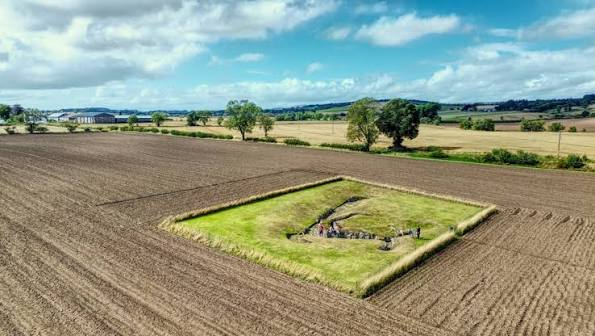
The Carlungie Earth House, near Barry in Angus, is one of the best-known souterrains in eastern Scotland.

Its underground stone passage provides evidence for the construction techniques and economic practices of Iron Age communities.

The Underground Chamber

Carlungie consists of a carefully constructed subterranean structure.

The walls are formed from stone slabs, while the roof was created using large stones spanning the chamber.

Storage Interpretation

The structure has traditionally been interpreted as a storage facility.

Its underground environment would have provided:

  • darkness;

  • cool temperatures;

  • protection;

  • and relative humidity stability.

Food Preservation

Agricultural societies had to preserve food between harvests.

Stored grain and other foods were essential for surviving periods when fresh resources were scarce.

Iron Age Farming

The communities associated with Carlungie cultivated crops and raised livestock.

Agriculture was central to their economy.

Domestic Settlement

Earth houses were generally associated with settlements.

The people using Carlungie would have lived in nearby above-ground structures.

Why Build a Separate Storage Space?

Separating food storage from living areas could provide advantages.

It could reduce:

  • pests;

  • fire risk;

  • moisture;

  • and accidental contamination.

Construction

The builders demonstrated considerable knowledge of structural engineering.

The roof stones had to distribute weight safely.

The Question of Ritual

Some archaeologists have suggested that certain souterrains may also have had ritual functions.

Underground spaces could have symbolic meanings involving:

  • darkness;

  • fertility;

  • protection;

  • or transformation.

Why Carlungie Matters

The site provides insight into the practical side of Iron Age life.

It demonstrates that food production was accompanied by sophisticated systems of storage and resource management.

Conclusion

Carlungie Earth House is a remarkable prehistoric “cellar” that reveals how Iron Age communities managed food and underground space.

Its construction demonstrates technical skill, while its potential storage function provides evidence for sophisticated agricultural planning.

← West Grange of Conan: Angus's WheelhouseKinneff Old Church: Kincardineshire's Pictish Stones →
Featured
image_2026-08-25_001355140.png
August 31, 2026
Mount Sandel: Northern Ireland's 9,000-Year Settlement
August 31, 2026
Read more →
August 31, 2026
image_2026-08-25_001215052.png
August 31, 2026
Star Carr: England's 10,700-Year Mesolithic Lakeside Camp
August 31, 2026
Read more →
August 31, 2026
image_2026-08-25_001438686.png
August 31, 2026
Staosnaig: Scotland's 6,000-Year Shell Midden
August 31, 2026
Read more →
August 31, 2026
image_2026-08-25_001541318.png
August 31, 2026
Barnhouse: Orkney's Neolithic Village and Standing Stones
August 31, 2026
Read more →
August 31, 2026
image_2026-08-25_001752145.png
August 31, 2026
Links of Noltland: Orkney's 5,000-Year Stone House
August 31, 2026
Read more →
August 31, 2026
image_2026-08-25_001848207.png
August 31, 2026
Skara Brae: Orkney's 5,100-Year Underground Village
August 31, 2026
Read more →
August 31, 2026
read more

Powered by The archaeologist