• MAIN PAGE
  • LATEST NEWS
    • Lost Cities
    • Archaeology's Greatest Finds
    • Underwater Discoveries
    • Greatest Inventions
    • Studies
    • Blog
  • PHILOSOPHY
  • HISTORY
  • RELIGIONS
    • Africa
    • Anatolia
    • Arabian Peninsula
    • Balkan Region
    • China - East Asia
    • Europe
    • Eurasian Steppe
    • Levant
    • Mesopotamia
    • Oceania - SE Asia
    • Pre-Columbian Civilizations of America
    • Iranian Plateau - Central Asia
    • Indus Valley - South Asia
    • Japan
    • The Archaeologist Editor Group
    • Scientific Studies
    • Aegean Prehistory
    • Historical Period
    • Byzantine Middle Ages
    • Predynastic Period
    • Dynastic Period
    • Greco-Roman Egypt
  • Rome
  • PALEONTOLOGY
  • About us
Menu

The Archaeologist

  • MAIN PAGE
  • LATEST NEWS
  • DISCOVERIES
    • Lost Cities
    • Archaeology's Greatest Finds
    • Underwater Discoveries
    • Greatest Inventions
    • Studies
    • Blog
  • PHILOSOPHY
  • HISTORY
  • RELIGIONS
  • World Civilizations
    • Africa
    • Anatolia
    • Arabian Peninsula
    • Balkan Region
    • China - East Asia
    • Europe
    • Eurasian Steppe
    • Levant
    • Mesopotamia
    • Oceania - SE Asia
    • Pre-Columbian Civilizations of America
    • Iranian Plateau - Central Asia
    • Indus Valley - South Asia
    • Japan
    • The Archaeologist Editor Group
    • Scientific Studies
  • GREECE
    • Aegean Prehistory
    • Historical Period
    • Byzantine Middle Ages
  • Egypt
    • Predynastic Period
    • Dynastic Period
    • Greco-Roman Egypt
  • Rome
  • PALEONTOLOGY
  • About us
No results found

Castle o'Burrian: Westray's Broch Remains

August 31, 2026

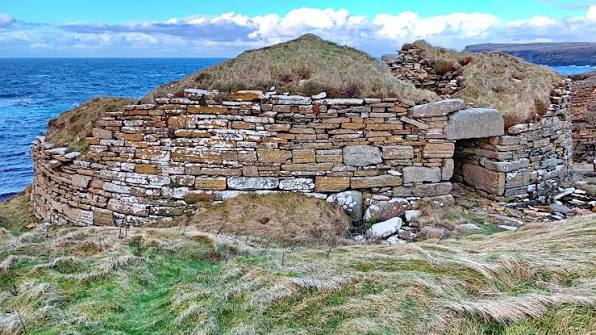
Castle o'Burrian is a prehistoric archaeological site on Westray associated with the Iron Age settlement tradition of northern Scotland.

Its remains are particularly valuable for understanding the distinctive architectural tradition of brochs, monumental stone towers that developed during the Iron Age.

What Is a Broch?

A broch is a large, circular stone structure characteristic of northern Scotland.

Brochs are often:

  • thick-walled;

  • internally hollow;

  • and built with carefully layered stone.

Some contained:

  • staircases;

  • galleries;

  • chambers;

  • and multiple floors.

Engineering

Broch builders used a technique known as double-wall construction.

Two stone walls were built with a gap between them.

This could create:

  • internal galleries;

  • stairways;

  • storage areas;

  • and structural stability.

Why Build So Tall?

The height of brochs remains debated.

Possible functions include:

  • defense;

  • status display;

  • elite residence;

  • community refuge;

  • or a combination of these.

Westray's Environment

Westray provided:

  • fertile farmland;

  • coastal resources;

  • and abundant stone.

These resources supported substantial settlements.

Agriculture

Broch communities relied on farming.

They raised:

  • cattle;

  • sheep;

  • pigs;

  • and possibly horses.

Cereal cultivation was also important.

Marine Resources

Fishing and coastal gathering supplemented agriculture.

The surrounding waters provided:

  • fish;

  • shellfish;

  • seabirds;

  • and marine mammals.

Social Status

The enormous investment required to build a broch may have demonstrated the power or prestige of its builders.

A monumental tower could communicate:

  • wealth;

  • authority;

  • security;

  • and group identity.

Iron Age Society

Brochs existed within complex societies.

Communities may have been organized around:

  • households;

  • local leaders;

  • kinship groups;

  • and territorial alliances.

Archaeological Evidence

Broch sites can contain:

  • pottery;

  • animal bones;

  • iron objects;

  • stone tools;

  • and structural remains.

These materials help reconstruct daily life.

Why Castle o'Burrian Matters

The site contributes to the understanding of Iron Age architecture in Orkney.

It demonstrates that Westray participated in broader northern Scottish traditions of monumental stone construction.

Conclusion

Castle o'Burrian represents the remarkable architectural abilities of Iron Age communities.

Broch construction required careful planning, engineering knowledge, and substantial labor.

The monument therefore provides evidence not only for defense, but also for the social organization and technological capabilities of prehistoric Westray.
← Noup Head: Westray's Iron Age FortGrobust: Westray's Neolithic Settlement →
Featured
image_2026-08-25_001355140.png
August 31, 2026
Mount Sandel: Northern Ireland's 9,000-Year Settlement
August 31, 2026
Read more →
August 31, 2026
image_2026-08-25_001215052.png
August 31, 2026
Star Carr: England's 10,700-Year Mesolithic Lakeside Camp
August 31, 2026
Read more →
August 31, 2026
image_2026-08-25_001438686.png
August 31, 2026
Staosnaig: Scotland's 6,000-Year Shell Midden
August 31, 2026
Read more →
August 31, 2026
image_2026-08-25_001541318.png
August 31, 2026
Barnhouse: Orkney's Neolithic Village and Standing Stones
August 31, 2026
Read more →
August 31, 2026
image_2026-08-25_001752145.png
August 31, 2026
Links of Noltland: Orkney's 5,000-Year Stone House
August 31, 2026
Read more →
August 31, 2026
image_2026-08-25_001848207.png
August 31, 2026
Skara Brae: Orkney's 5,100-Year Underground Village
August 31, 2026
Read more →
August 31, 2026
read more

Powered by The archaeologist