
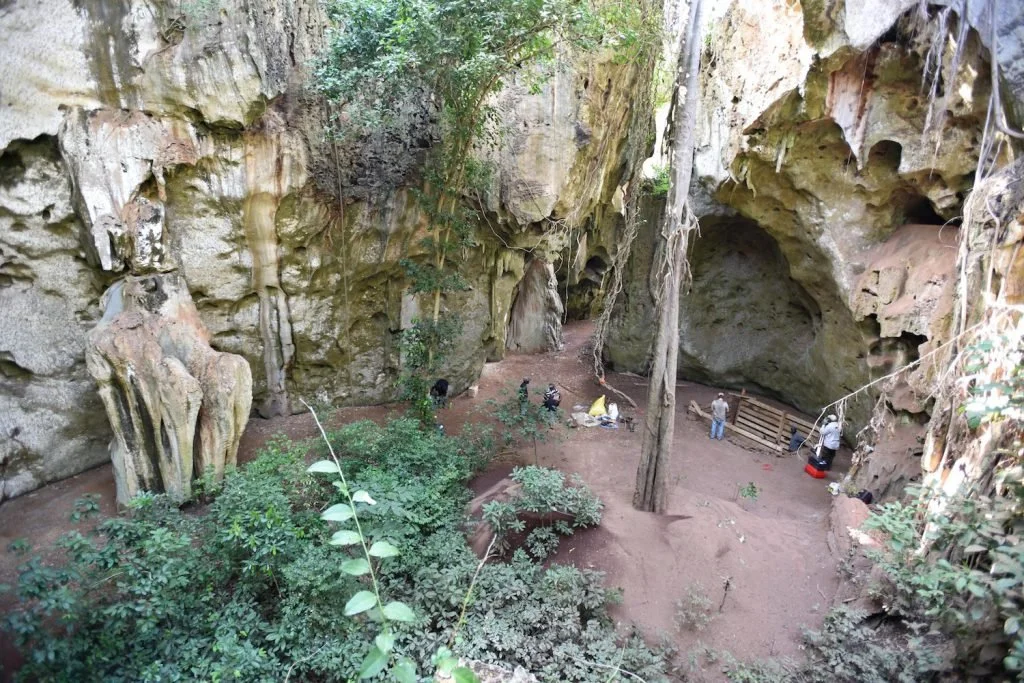
Comparing burial locations to understand how landscape, preservation, social practice, and cultural beliefs shaped the treatment of the dead.
Introduction: Why Were Some People Buried in Caves?
Burial practices vary widely across human societies. Some communities interred their dead in open-air cemeteries, while others used caves, rock shelters, chambers, or natural cavities. In certain regions, both practices occurred within the same broad cultural period.
These differences raise important questions. Did communities choose caves because they offered protection, privacy, or symbolic significance? Were open-air cemeteries preferred because they were easier to access, maintain, or associate with settlements? How much of the archaeological pattern reflects cultural decisions, and how much results from environmental preservation?
There is no universal answer. Burial location can reflect several interacting factors, including local geology, climate, settlement organization, religious beliefs, social identity, and the availability of suitable places.
The archaeological challenge is to distinguish deliberate burial choices from the effects of natural processes and unequal preservation. A cave containing human bones is not automatically a cemetery, and an open-air concentration of bones may represent secondary deposition rather than primary burial.
Caves as Burial Environments
Caves provide enclosed spaces that can shelter human remains from some environmental processes. Depending on their structure and climate, they may offer relatively stable temperatures, protection from direct rainfall, and spaces that are less accessible to animals or casual disturbance.
These properties can influence preservation. Human bones may survive well in some caves, while acidic water, humidity, salt, or other chemical conditions can cause substantial deterioration in others. Cave environments are not uniformly protective.
Caves may also have held cultural significance. Their darkness, enclosed spaces, and relationships with prominent landscape features could have influenced how people understood them. However, such meanings cannot be assumed from the physical characteristics of the cave alone.
Researchers investigate cave burials by examining the position of the remains, the arrangement of bones, associated artifacts, sediment layers, and evidence of repeated visits. These features can help distinguish deliberate burial from accidental death, natural accumulation, or the later movement of remains.
Open-Air Cemeteries and Their Archaeological Signatures
Open-air cemeteries can take many forms, including individual graves, clustered burials, burial mounds, stone-lined structures, and large organized burial grounds. Their layouts may reveal patterns of social organization and the repeated use of particular places.
Burial placement can reflect proximity to settlements, access routes, boundaries, or other features of the landscape. Yet the relationship between a cemetery and a nearby settlement does not automatically establish why the site was selected.
Open-air burials are often exposed to environmental processes that can disturb or destroy evidence. Erosion, farming, construction, animal activity, and changing water conditions may alter the original arrangement of graves.
Archaeologists therefore record stratigraphy and grave structure carefully. They examine whether remains were placed in articulated positions, whether grave cuts are visible, and whether the bones show evidence of later disturbance.
The absence of an intact skeleton does not necessarily mean that a burial never existed. Preservation and later land use can leave only fragments of the original mortuary landscape.
Cultural Beliefs and the Treatment of the Dead
Burial practices are closely connected to cultural ideas about death, ancestry, identity, and the relationship between the living and the dead. However, the specific meanings associated with caves or open-air cemeteries vary across societies and periods.
Some communities may have used caves for repeated burial, while others used them for temporary deposition or as one stage in a longer mortuary process. Open-air cemeteries could likewise accommodate diverse practices, including primary burial, secondary burial, cremation, and the placement of grave goods.
Researchers investigate these possibilities by studying the condition and arrangement of bones. Disarticulated remains may indicate secondary handling, but natural disturbance can produce similar patterns. Cut marks, burning, and other modifications must be assessed in relation to the entire context.
Grave goods and associated structures may provide clues about the treatment of the dead, but their meanings are rarely straightforward. Objects may represent status, identity, ritual obligations, or choices made by surviving relatives.
Environmental Factors and Preservation Bias
The archaeological distribution of cave and open-air burials is shaped by preservation. Caves can accumulate sediment and protect remains in some circumstances, while open-air sites may be more vulnerable to erosion and development.
This creates a potential bias: researchers may discover more cave burials in regions where cave environments preserve bones well, even if the original population used several burial locations.
Geology also influences site availability. Limestone landscapes may contain extensive cave systems, whereas other regions offer few natural cavities. Communities cannot choose a cave burial tradition where suitable caves are absent unless they construct alternative enclosed spaces.
Climate and hydrology further affect preservation. Water movement can transport bones, while soil acidity may dissolve them. The modern condition of a site may therefore obscure the original differences between burial environments.
A meaningful comparison must consider how many potential burial locations survive, how extensively they have been surveyed, and whether the archaeological record is likely to preserve each type of site equally.
Comparing Cave and Open-Air Burial Populations
Scientific methods can help determine whether cave and open-air burials belonged to the same community or reflected different populations and periods.
Radiocarbon dating can establish chronology when suitable material survives. Stable isotope analysis may contribute information about diet and mobility, while ancient DNA can help investigate biological relationships. These methods do not directly reveal religious identity or explain why a burial location was chosen.
Osteological analysis can compare age profiles, patterns of disease, trauma, and other characteristics. Differences between burial groups might reflect social selection, environmental conditions, population change, or differences in preservation.
Researchers must also account for sampling bias. A cave used for several centuries may contain individuals from different periods, while an open-air cemetery might represent a narrower interval. Direct comparison is unreliable unless the chronological and contextual differences are understood.
When Both Practices Occur in the Same Region
The coexistence of cave and open-air burials is particularly informative because it demonstrates that burial location may have been a choice rather than an unavoidable environmental outcome.
However, different burial places do not necessarily represent separate social groups. A community might have used different locations according to age, family relationships, status, ritual requirements, or changes in custom over time.
The archaeological sequence matters. If cave burials predate an open-air cemetery, the change may reflect a transformation in mortuary practice. If both were used simultaneously, researchers can investigate whether they served different functions.
Even then, the interpretation should remain grounded in evidence. Differences in grave goods or skeletal characteristics may suggest social distinctions, but they require corroboration from other patterns.
Conclusion: Burial Location as a Complex Cultural Choice
Cave and open-air cemeteries offer complementary perspectives on how communities treated the dead. Their distribution reflects cultural practice, environmental opportunity, settlement organization, and the uneven preservation of human remains.
Neither location has a universal meaning. A cave is not automatically sacred, and an open-air cemetery is not necessarily a marker of social openness or political organization. Both settings may have served multiple functions across different periods.
By combining burial archaeology, environmental reconstruction, scientific dating, and bioarchaeological analysis, researchers can investigate why communities selected particular places for the dead. The result is a more careful understanding of mortuary traditions—one that recognizes cultural diversity while avoiding explanations based on geography alone.




