
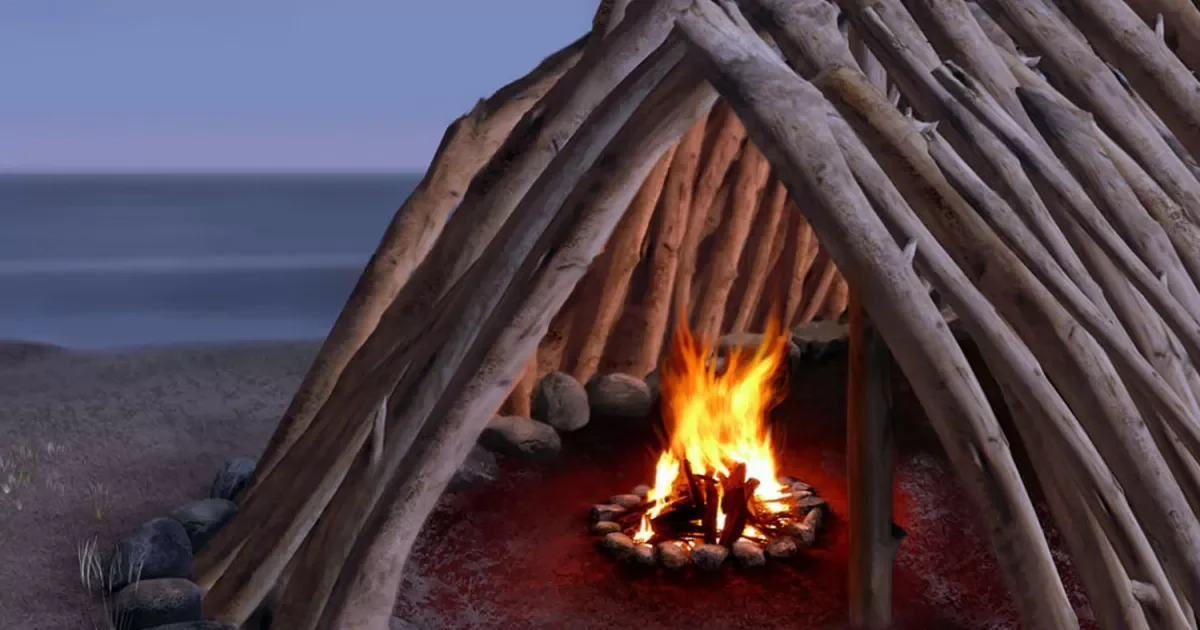
How combustion residues, hearth construction, and food remains can help researchers reconstruct prehistoric cooking practices and dietary choices.
Introduction: Food Preparation in Sheltered Spaces
Rock shelters and shallow caves have preserved evidence of human activity across many prehistoric periods. Their overhangs offer protection from rainfall and wind, while their floors can accumulate layers of charcoal, ash, food remains, and discarded tools.
Among the most informative features are hearths. These fire installations could be used for warmth, lighting, cooking, and other activities. Their shape, location, and repeated rebuilding can reveal how people organized domestic or temporary occupation.
Soot stains and other combustion residues add another dimension to the investigation. They can help researchers reconstruct the movement of smoke, the frequency of fire use, and the relationship between hearths and shelter architecture.
However, soot does not directly reveal a person's diet. Dietary reconstruction requires evidence from food remains, residues, botanical material, animal bones, and other indicators. The challenge is to connect hearth evidence with food preparation without assuming that every fire was used for cooking.
Hearth Architecture and the Organization of Fire
Prehistoric hearths vary from simple concentrations of ash and charcoal to carefully prepared features lined with stones or cut into the ground. Their design depends on the activity, available materials, and the length of time a place was occupied.
Researchers examine the shape, dimensions, depth, and construction of each hearth. Stone arrangements may help retain heat, while shallow depressions can contain fuel and ash. Some features were repeatedly cleaned and reused, producing distinct layers of combustion material.
The location of a hearth can reveal how people organized a shelter. A fire near an entrance might provide warmth and light while allowing smoke to escape. A hearth farther inside could be protected from wind but may require a different arrangement to manage ventilation.
These relationships are not universal. Airflow depends on the shelter's geometry, entrance orientation, prevailing winds, and the presence of other openings. Modern observations can help test possible ventilation patterns, but the ancient environment must be reconstructed as closely as possible.
What Soot Stains Can Tell Us
Soot forms when combustion produces fine carbon-rich particles that deposit on surfaces. In shelters, soot may accumulate on ceilings, walls, overhangs, and objects exposed to smoke.
The distribution of soot can help researchers identify likely smoke pathways and areas repeatedly exposed to fire. Thick deposits may indicate sustained or repeated combustion, although their formation also depends on fuel type, ventilation, and the distance between the fire and the surface.
Soot does not necessarily originate from a hearth located directly beneath it. Smoke can travel through a shelter, and later fires may contribute to deposits formed during earlier occupation phases.
Microscopic analysis can distinguish soot from other dark deposits, while chemical and mineral analysis may clarify the composition of the residue. Researchers must also consider modern contamination from visitors, campfires, and conservation activities.
Dating soot-covered surfaces is difficult because the residue may contain material from several episodes of burning. Secure chronology requires careful sampling and comparison with associated archaeological layers.
Animal Bones and the Reconstruction of Diet
Animal remains are among the most direct forms of evidence for prehistoric food consumption. Researchers identify species, estimate the age and size of animals, and examine the distribution of skeletal elements.
Cut marks may indicate butchery, while burning can suggest exposure to fire. However, bones can be burned accidentally after disposal, and carnivores may introduce or modify remains. Researchers must distinguish human food processing from natural accumulation.
The relative abundance of species can reveal changes in hunting or resource use. A shelter containing many small mammals, birds, or fish may reflect a different pattern of food acquisition from one dominated by large herbivores.
Yet the number of bones recovered is not a direct measure of dietary importance. Large animals produce more bone than small animals, and different skeletal elements preserve differently. Researchers use standardized quantification methods and account for fragmentation and preservation when comparing assemblages.
Plant Foods and Invisible Ingredients
Prehistoric diets included plant foods that may leave little visible evidence. Seeds, nutshells, fruit remains, starch grains, and phytoliths can survive under favorable conditions, but preservation varies considerably.
Charred plant remains can indicate that seeds or other materials were exposed to fire, although they may have been burned accidentally or introduced from fuel and bedding. Researchers examine their context to distinguish food preparation from other sources.
Starch grains recovered from grinding stones or other artifacts may provide evidence of plant processing. Residue analysis can sometimes identify the types of plants involved, but contamination and ambiguous identification remain important concerns.
Combining plant evidence with animal remains can reveal the diversity of foods available to prehistoric communities. Even so, the archaeological record rarely preserves every ingredient used in a meal, and absence of evidence should not be treated as proof that a food was not consumed.
Cooking Methods and the Chemistry of Food
Cooking can alter the physical and chemical properties of food. Direct roasting, heating in pits, boiling in containers, and other methods may leave different archaeological traces.
Researchers investigate these techniques through hearth architecture, heat-altered stones, residues on tools, pottery where available, and changes in the condition of animal and plant remains. Experimental archaeology can help determine whether particular traces are consistent with proposed cooking methods.
However, similar traces may be produced by different processes. Heat-altered stones, for example, can be associated with cooking, but they may also have been used in other heating activities. A burnt bone may have been cooked, discarded into a fire, or exposed during a later burning episode.
Chemical analysis may reveal residues associated with particular food categories, although exact recipes are rarely recoverable. The most reliable interpretations combine several indicators rather than relying on one chemical signature or burned object.
Seasonal Occupation and Changing Food Choices
Rock shelters may have been occupied briefly during hunting trips, repeatedly during particular seasons, or for longer periods. Changes in animal age profiles, plant remains, hearth construction, and sediment accumulation can help investigate these patterns.
Seasonality is difficult to establish from a single indicator. The age of a hunted animal, the availability of particular plants, or the condition of a hearth may provide clues, but each requires comparison with local ecology and other archaeological evidence.
A sequence of hearths may reveal repeated visits, while differences in food remains may suggest that people used the shelter during changing resource conditions. However, these changes could also reflect different occupants or shifts in the activities performed at the site.
Secure dating and detailed stratigraphic recording are therefore essential. Researchers need to know whether two hearths represent separate visits, successive generations, or distinct activities during one occupation.
Conclusion: From Fire Residues to Prehistoric Meals
Soot stains and hearth architecture provide important evidence for reconstructing the use of prehistoric shelters. They can reveal how fires were built, where smoke traveled, and how people organized spaces for warmth, light, and potentially cooking.
Dietary reconstruction requires additional evidence. Animal bones, plant remains, residues, and tools help identify the foods people obtained and the methods they used to process them, while careful contextual analysis distinguishes cooking from other forms of fire use.
The strongest reconstructions integrate all these sources within a secure chronology. By doing so, archaeologists can move beyond the visible traces of a hearth to investigate the practical choices that shaped prehistoric meals, seasonal routines, and the daily relationship between people and their environment.




