The Druids’ Temple in North Yorkshire: A 19th-Century Wonder
Never in my life have I seen anything like this. Julie and I were overwhelmed and mesmerized by the sheer scale of the construction. Built from the late 17th to early 1800s, all by hand with just hammers, chisels, shovels, forks, and horse-drawn carts—it’s hard to believe! The traditional narrative struggles to explain it, and in my opinion, the timeline and tools barely add up.
Early on, you’ll notice tree-ring patterns in the stone layers—an amazing detail that shows how nature and craftsmanship intersect here.
A Folly, Not a Temple
The Druids’ Temple isn’t an ancient structure. It’s a 19th-century folly created by William Danby, a wealthy landowner, around 1820. Danby built it in the style of prehistoric stone circles to provide employment during a time of high unemployment and agricultural depression. Workers were paid a shilling a day—or 5p in today’s money—to quarry, transport, and assemble massive stones, some over 10 feet high.
Despite its relatively recent origins, the temple looks ancient and evokes the feel of a magical religious site. Local legends claim it’s haunted and that the Devil was worshipped here, adding to the site’s mystique.
Construction and Features
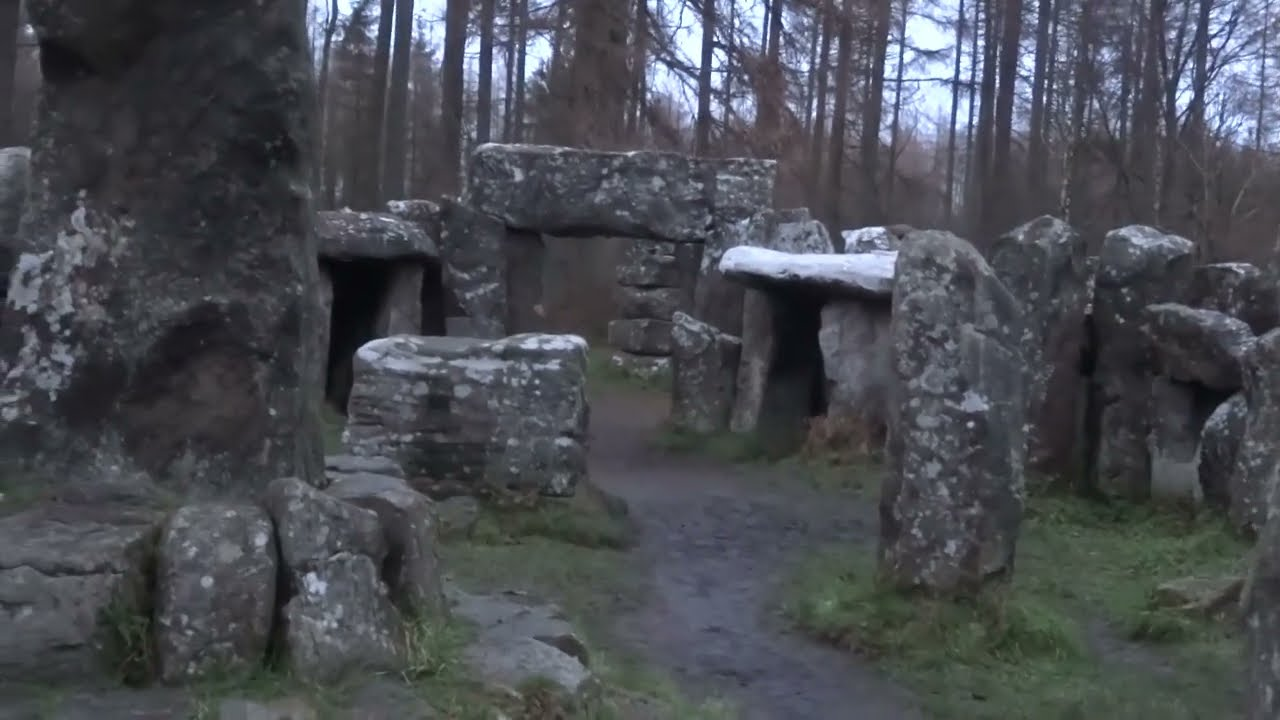
The stone circle is enormous, made up of:
Stacked stones, cairns, and obelisks
Altars, menhirs, dolmens, and sarsens
A dolmen chamber at one end, acting as a tomb
The design mimics prehistoric sites like Stonehenge and Avebury, making it easy to mistake for a millennia-old monument. Beyond the main circle, the surrounding woodland contains additional stone formations, creating a sprawling architectural marvel.
Purpose and Legacy
While it looks like a site for ancient Druidic rituals, it was purely a 19th-century project. Danby’s aim was to relieve unemployment and provide work for locals during hard times. The folly is still owned by the Swinton Estate, preserving a fascinating piece of history that bridges social welfare, eccentricity, and monumental construction.
🎥 Watch the full video below to explore the Druids’ Temple and uncover its hidden history: