• MAIN PAGE
  • LATEST NEWS
    • Lost Cities
    • Archaeology's Greatest Finds
    • Underwater Discoveries
    • Greatest Inventions
    • Studies
    • Blog
  • PHILOSOPHY
  • HISTORY
  • RELIGIONS
    • Africa
    • Anatolia
    • Arabian Peninsula
    • Balkan Region
    • China - East Asia
    • Europe
    • Eurasian Steppe
    • Levant
    • Mesopotamia
    • Oceania - SE Asia
    • Pre-Columbian Civilizations of America
    • Iranian Plateau - Central Asia
    • Indus Valley - South Asia
    • Japan
    • The Archaeologist Editor Group
    • Scientific Studies
    • Aegean Prehistory
    • Historical Period
    • Byzantine Middle Ages
    • Predynastic Period
    • Dynastic Period
    • Greco-Roman Egypt
  • Rome
  • PALEONTOLOGY
  • About us
Menu

The Archaeologist

  • MAIN PAGE
  • LATEST NEWS
  • DISCOVERIES
    • Lost Cities
    • Archaeology's Greatest Finds
    • Underwater Discoveries
    • Greatest Inventions
    • Studies
    • Blog
  • PHILOSOPHY
  • HISTORY
  • RELIGIONS
  • World Civilizations
    • Africa
    • Anatolia
    • Arabian Peninsula
    • Balkan Region
    • China - East Asia
    • Europe
    • Eurasian Steppe
    • Levant
    • Mesopotamia
    • Oceania - SE Asia
    • Pre-Columbian Civilizations of America
    • Iranian Plateau - Central Asia
    • Indus Valley - South Asia
    • Japan
    • The Archaeologist Editor Group
    • Scientific Studies
  • GREECE
    • Aegean Prehistory
    • Historical Period
    • Byzantine Middle Ages
  • Egypt
    • Predynastic Period
    • Dynastic Period
    • Greco-Roman Egypt
  • Rome
  • PALEONTOLOGY
  • About us
No results found

Dunadd: Argyll's Dal Riata Capital Rock

August 31, 2026

Dunadd is one of Scotland's most important early medieval archaeological sites.

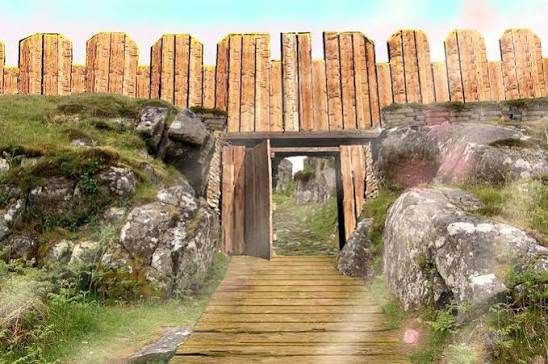
Located in Argyll, Dunadd was a major stronghold of the Gaelic kingdom of Dál Riata and is widely regarded as one of the principal royal centers of the early medieval western Scottish world.

The site provides exceptional evidence for kingship, trade, craftsmanship, warfare, and political organization.

The Kingdom of Dál Riata

Dál Riata was a Gaelic-speaking kingdom spanning parts of western Scotland and northeastern Ireland.

Its rulers controlled territories on both sides of the Irish Sea.

Dunadd's Strategic Location

Dunadd sits on an isolated rocky outcrop overlooking the surrounding landscape.

Its elevated position provided:

  • defense;

  • visibility;

  • and control over routes through Kilmartin Glen.

Royal Center

Dunadd appears to have been a high-status political center.

Kings and elites could use the site for:

  • ceremonies;

  • administration;

  • craft production;

  • feasting;

  • and political gatherings.

The Footprint

One of Dunadd's most famous features is a carved footprint in the rock.

It is traditionally interpreted as part of a royal inauguration ceremony.

The new ruler may have symbolically placed his foot into the carved footprint during a ceremony establishing his authority.

Royal Inauguration

Kingship required public recognition.

A ceremonial site such as Dunadd could provide a setting where political authority was formally expressed.

The Boar Carving

A famous carved boar is also preserved at Dunadd.

The boar may have had:

  • political;

  • symbolic;

  • or religious significance.

Its precise meaning remains uncertain.

Craft Production

Archaeological excavations have uncovered evidence of:

  • metalworking;

  • pottery;

  • glassworking;

  • and other crafts.

This indicates that Dunadd was an active production center.

Imported Goods

Objects from distant regions demonstrate long-distance connections.

The settlement participated in trade networks linking western Scotland with:

  • Ireland;

  • Britain;

  • and continental Europe.

Christianity

Christianity became increasingly important within Dál Riata.

Crosses and other Christian artifacts demonstrate the religious transformation of the kingdom.

Why Dunadd Matters

Dunadd provides an unusually detailed picture of early medieval kingship.

The combination of:

  • fortifications;

  • royal symbolism;

  • craft production;

  • imported goods;

  • and ceremonial architecture

reveals a sophisticated political center.

Conclusion

Dunadd was far more than a defensive hilltop.

It was a place where political authority, ritual, trade, craftsmanship, and cultural identity came together.

Its footprint, boar carving, imported goods, and archaeological remains make it one of the most important sites for understanding the formation of early medieval Gaelic Scotland.
← Trusty's Hill: Dumfries' Dark Age FortDunollie: Oban's Iron Age Fort →
Featured
image_2026-08-25_001355140.png
August 31, 2026
Mount Sandel: Northern Ireland's 9,000-Year Settlement
August 31, 2026
Read more →
August 31, 2026
image_2026-08-25_001215052.png
August 31, 2026
Star Carr: England's 10,700-Year Mesolithic Lakeside Camp
August 31, 2026
Read more →
August 31, 2026
image_2026-08-25_001438686.png
August 31, 2026
Staosnaig: Scotland's 6,000-Year Shell Midden
August 31, 2026
Read more →
August 31, 2026
image_2026-08-25_001541318.png
August 31, 2026
Barnhouse: Orkney's Neolithic Village and Standing Stones
August 31, 2026
Read more →
August 31, 2026
image_2026-08-25_001752145.png
August 31, 2026
Links of Noltland: Orkney's 5,000-Year Stone House
August 31, 2026
Read more →
August 31, 2026
image_2026-08-25_001848207.png
August 31, 2026
Skara Brae: Orkney's 5,100-Year Underground Village
August 31, 2026
Read more →
August 31, 2026
read more

Powered by The archaeologist