• MAIN PAGE
  • LATEST NEWS
    • Lost Cities
    • Archaeology's Greatest Finds
    • Underwater Discoveries
    • Greatest Inventions
    • Studies
    • Blog
  • PHILOSOPHY
  • HISTORY
  • RELIGIONS
    • Africa
    • Anatolia
    • Arabian Peninsula
    • Balkan Region
    • China - East Asia
    • Europe
    • Eurasian Steppe
    • Levant
    • Mesopotamia
    • Oceania - SE Asia
    • Pre-Columbian Civilizations of America
    • Iranian Plateau - Central Asia
    • Indus Valley - South Asia
    • Japan
    • The Archaeologist Editor Group
    • Scientific Studies
    • Aegean Prehistory
    • Historical Period
    • Byzantine Middle Ages
    • Predynastic Period
    • Dynastic Period
    • Greco-Roman Egypt
  • Rome
  • PALEONTOLOGY
  • About us
Menu

The Archaeologist

  • MAIN PAGE
  • LATEST NEWS
  • DISCOVERIES
    • Lost Cities
    • Archaeology's Greatest Finds
    • Underwater Discoveries
    • Greatest Inventions
    • Studies
    • Blog
  • PHILOSOPHY
  • HISTORY
  • RELIGIONS
  • World Civilizations
    • Africa
    • Anatolia
    • Arabian Peninsula
    • Balkan Region
    • China - East Asia
    • Europe
    • Eurasian Steppe
    • Levant
    • Mesopotamia
    • Oceania - SE Asia
    • Pre-Columbian Civilizations of America
    • Iranian Plateau - Central Asia
    • Indus Valley - South Asia
    • Japan
    • The Archaeologist Editor Group
    • Scientific Studies
  • GREECE
    • Aegean Prehistory
    • Historical Period
    • Byzantine Middle Ages
  • Egypt
    • Predynastic Period
    • Dynastic Period
    • Greco-Roman Egypt
  • Rome
  • PALEONTOLOGY
  • About us

Egyptian and Indus Valley civilisations ‘were in contact’

February 5, 2026

Egyptologist Compares Indus Valley and Ancient Egypt

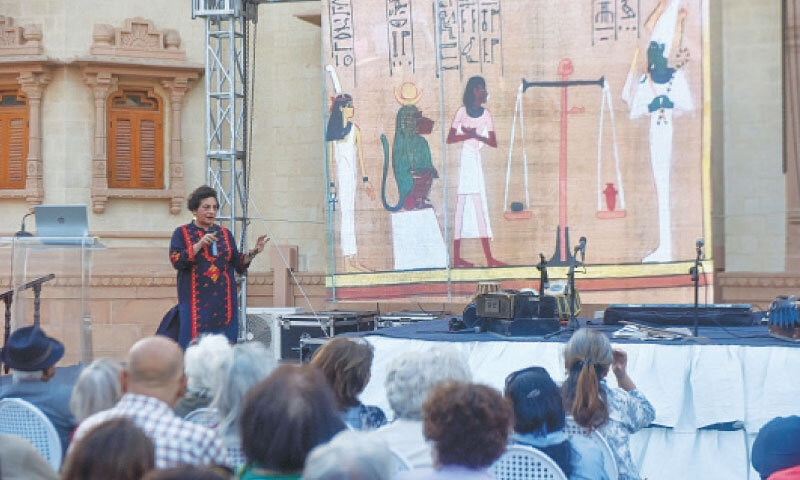
Dr. Salima Ikram, an eminent archaeologist, Egyptologist, and author, discussed the similarities and differences between the Indus Valley Civilization and ancient Egypt during her lecture “From the Indus to the Nile: Exploring Religion and History” at Karachi’s Mohatta Palace Museum.

She noted that while ancient Egyptians used art to project power, the Indus Valley Civilization did not employ its artistic creations as propaganda. Despite being over 4,000 km apart, there were occasional interactions between the two regions over time. Ikram highlighted how ancient Egypt has captivated global imagination through its architecture, art, and cultural influence, even impacting modern fashion, film, and artistic movements like Cubism. She cited examples including The Mummy films and local inspirations in Karachi, such as Pyramid Productions.

Recalling her own fascination, Ikram described receiving a book on ancient Egypt at age eight and visiting the country at nine, which cemented her lifelong passion.

Comparing the two civilizations, she acknowledged that the Indus Valley boasted advanced urban planning, sophisticated mudbrick architecture, complex water and sewage systems, and social stratification. Egyptian cities, while impressive, often emphasized grandeur, monumental architecture, and temples, reflecting kingship and the projection of power. In contrast, Indus Valley artifacts and structures were generally smaller and more miniaturized, a characteristic she found intriguing.

Ikram also explored potential connections between the two civilizations. While the Egyptian pantheon is well-documented, religious practices in the Indus Valley remain unclear due to undeciphered scripts. Both cultures, however, shared a love of jewelry, and there is evidence of trade, particularly in lapis lazuli from Afghanistan. She suggested that trade facilitated the exchange of ideas, though direct evidence of other cultural interactions is limited.

Touching on mummification, Ikram mentioned Pakistan’s so-called “Persian Princess,” which she determined to be a forgery. She also referred to Alexander the Great’s campaigns in the region, noting cultural exchanges that occurred after his conquests, including the movement of soldiers and mercenaries, though she clarified that some local groups, like the Kalash, may not fully reflect Greek traditions.

The lecture concluded with a performance of Shah jo Raag by ustads Zulfiqar, Nazar, and Mazhar from Hyderabad, organized by the Mohatta Palace Museum and the Endowment Fund Trust for Preservation of Heritage of Sindh in collaboration with the Lahore Literature Festival.

← Treasures worth thousands: homeowners discover vintage items hidden in walls during renovationBritish Museum Deletes AI-Generated Pictures After Backlash →
Featured
image_2026-02-05_125041404.png
Feb 5, 2026
Lost burial grounds rediscovered through folklore
Feb 5, 2026
Read More →
Feb 5, 2026
image_2026-02-05_124043984.png
Feb 5, 2026
Falklands’ Port Louis settlement discoveries shared with Dr. Robert Philpott
Feb 5, 2026
Read More →
Feb 5, 2026
image_2026-02-05_122201600.png
Feb 5, 2026
Treasures worth thousands: homeowners discover vintage items hidden in walls during renovation
Feb 5, 2026
Read More →
Feb 5, 2026
image_2026-02-05_121624777.png
Feb 5, 2026
Egyptian and Indus Valley civilisations ‘were in contact’
Feb 5, 2026
Read More →
Feb 5, 2026
image_2026-02-05_121035022.png
Feb 5, 2026
British Museum Deletes AI-Generated Pictures After Backlash
Feb 5, 2026
Read More →
Feb 5, 2026
image_2026-02-05_120112871.png
Feb 5, 2026
A Subterranean City Of Salt Has Been Preserved Within This Cave-Like Mine For Centuries
Feb 5, 2026
Read More →
Feb 5, 2026
read more

Powered by The archaeologist