
How Freshwater Pearls Form
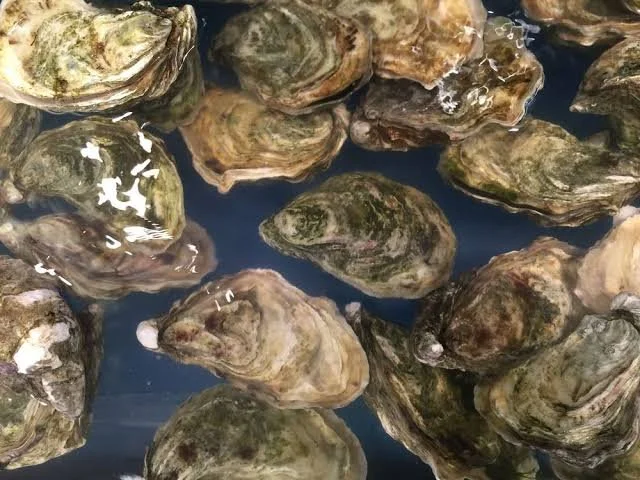
Freshwater pearls develop within certain molluscs when layers of mineral material and organic compounds accumulate around an irritant or another initiating structure. Their appearance varies according to species, biological conditions, and the circumstances of formation.
Not every freshwater mussel produces a pearl, and naturally formed pearls may differ considerably in size, shape, and luster. These characteristics help explain why pearls could be valued as unusual objects, although modern commercial grading systems should not be projected directly onto ancient societies.
Pearls are composed largely of calcium carbonate and organic material. Their preservation depends on burial chemistry, moisture, acidity, and other environmental conditions. In some archaeological settings, pearls may survive, while in others they may deteriorate or become difficult to identify.
Scientific analysis can investigate composition and structure, but determining whether a pearl came from a freshwater or marine mollusc may require careful comparison with suitable reference materials. Provenance claims should not be made solely from the pearl's appearance.
Archaeological Evidence for Harvesting
Freshwater mussel shells may accumulate at archaeological sites through food collection, tool production, bait use, or other activities. A shell midden can therefore provide evidence of freshwater resource exploitation without necessarily indicating pearl harvesting.
Researchers examine the species represented, shell size, breakage patterns, and the location of deposits relative to rivers and lakes. Evidence of deliberate opening may indicate consumption or processing, but the method of opening does not always reveal the intended product.
A stronger case for pearl collection might include securely identified pearls, concentrations of suitable mussel shells, specialized processing evidence, or historical descriptions of pearl fisheries. Even then, researchers must establish that the pearls and shell deposits belong to the same activity and period.
The absence of pearls does not prove that harvesting never occurred. Pearls may have been rare, removed from the site, traded elsewhere, or lost through poor preservation. Archaeological conclusions must account for these limitations.
Pearls, Ornamentation, and Social Identity
Pearls could have been incorporated into necklaces, pendants, clothing decorations, or other forms of personal adornment. Their visual qualities may have made them attractive for display, gifting, or ceremonial use.
However, an ornament's social meaning cannot be inferred from its material alone. Pearls might have represented wealth or prestige in some contexts, while serving as ordinary decorative objects in others. Their value depended on local traditions and access to alternative materials.
Burial evidence may provide clues about the use of pearls. A pearl recovered from a grave could have been part of a personal ornament or a deliberate funerary offering, but its original position and association with other objects must be recorded carefully.
Researchers should also consider the possibility of later disturbance. Small objects can move through soil, animal activity, or human excavation, making their association with a particular burial uncertain.
Exchange Networks and Resource Geography
Freshwater pearl sources were geographically restricted to suitable river and lake environments. If pearls moved beyond these areas, they could provide evidence of exchange between inland communities and distant consumers.
Establishing this movement is difficult. A pearl found far from a freshwater habitat may have been traded, transported by a person who migrated, or introduced through later disturbance. Its location alone does not reveal the mechanism of movement.
Researchers can compare pearl finds with other imported materials, settlement patterns, and historical records. If several types of objects connect an inland region to a distant center, the pearl may be part of a broader exchange system.
Nevertheless, the presence of a rare object does not automatically demonstrate an organized trade network. Individual gifts, personal travel, and small-scale exchange can move objects across long distances without a formal commercial system.
Harvesting, Labor, and Environmental Management
Collecting freshwater mussels can involve wading, diving, searching riverbeds, or gathering shells from exposed banks. The practical demands vary according to water depth, current, season, and the species being collected.
Pearl harvesting may require opening many molluscs to obtain a relatively small number of pearls. If undertaken intensively, it could affect local populations, although the archaeological impact would depend on harvesting pressure and the ecology of the waterway.
Researchers can investigate freshwater resource use through shell assemblages, sediment evidence, and changes in local aquatic environments. However, linking an environmental change specifically to pearl harvesting requires stronger evidence than the presence of shells alone.
Historical ecology and modern mollusc biology can help develop plausible models of harvesting, but the results should be tested against the archaeological record.
Conclusion: A Rare Resource with a Complex History
Freshwater pearls offer a potential window into ancient ornamentation, resource use, and exchange. Their rarity and geographic distribution make them interesting evidence for investigating how natural materials acquired social and economic value.
Yet freshwater mussel harvesting should not be equated automatically with pearl production. Researchers must establish whether pearls were deliberately collected, how they were used, and whether they moved beyond their source regions.
By combining mollusc studies, artifact analysis, burial context, and environmental evidence, archaeologists can develop a more nuanced understanding of freshwater resources in antiquity. The history of pearls is not simply a story of luxury; it is also a study of local knowledge, natural variability, and the social meanings people attached to rare objects.




