
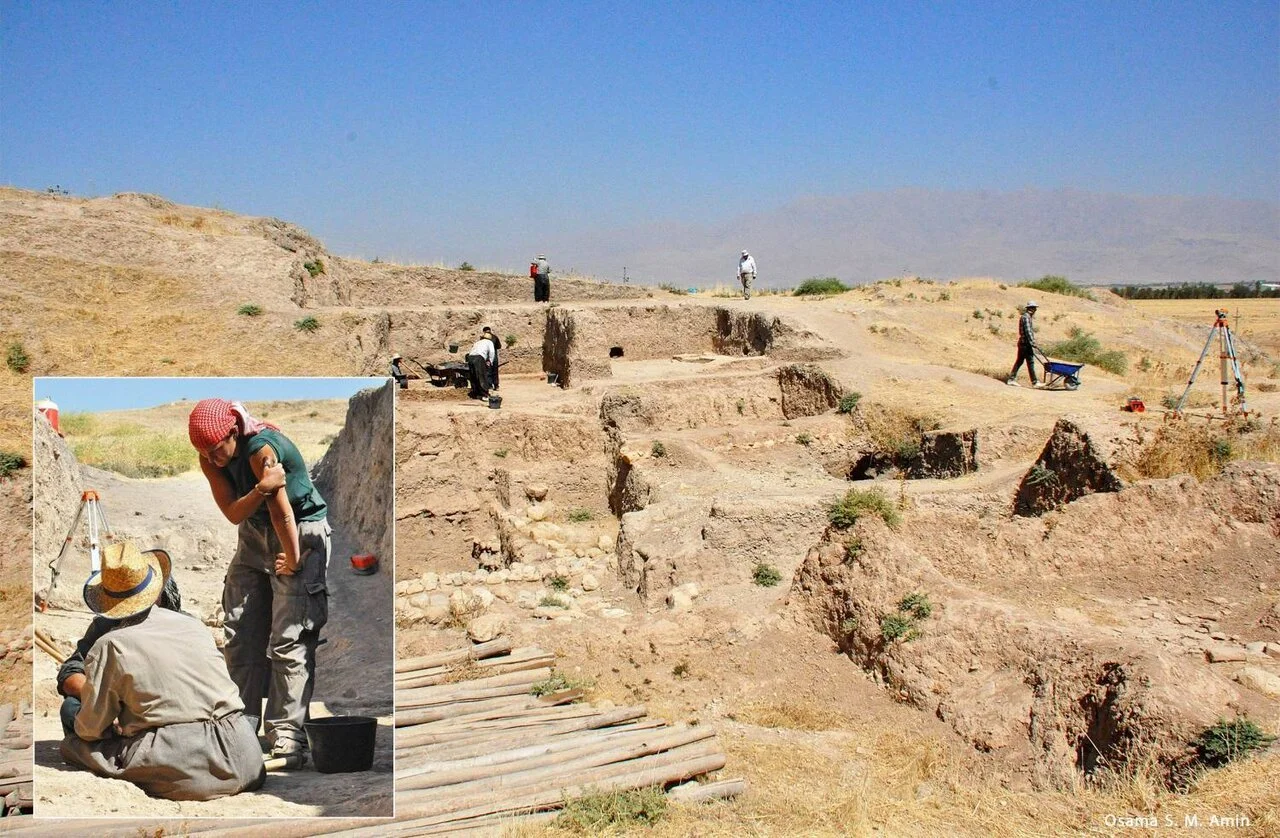
Investigating how exchange spaces, settlement growth, and specialized production may have contributed to the development of early urban communities in the Zagros region.
Introduction: Before the City Had a Market Square
The Zagros Mountains and their foothills form a geographically diverse region extending across parts of present-day western Iran and neighboring areas. Mountain valleys, upland pastures, river corridors, and adjoining plains created opportunities for different forms of agriculture, pastoralism, craft production, and exchange.
Over long periods, communities in this region developed settlements of varying sizes and degrees of social complexity. Some became connected to wider political and commercial systems, while others maintained smaller-scale economies rooted in household production and local exchange.
The concept of a proto-urban marketplace offers a way to investigate how economic activity may have become increasingly concentrated as settlements grew. Such a marketplace need not resemble a modern commercial district. It might have consisted of open spaces, clusters of workshops, storage areas, or places where people periodically gathered to exchange goods.
The central archaeological challenge is identifying organized exchange without imposing later urban institutions on earlier communities. A settlement with imported pottery or specialized production is not automatically evidence of a formal marketplace.
What Is a Proto-Urban Marketplace?
The term “proto-urban” generally describes communities exhibiting some characteristics associated with urban development before fully developed cities emerged. These characteristics may include larger populations, specialized occupations, increasingly complex settlement layouts, storage facilities, and stronger links between production and exchange.
A marketplace is more difficult to identify archaeologically than a workshop or storage building. Exchange can take place in homes, courtyards, temporary gathering places, or along routes used by merchants and pastoralists.
Researchers therefore look for combinations of evidence. Repeated concentrations of different goods, standardized measures, storage facilities, specialized production, and accessible open spaces may indicate organized exchange. Yet each feature can have alternative explanations.
The chronological relationship between these features is essential. If a settlement developed specialized production before an identifiable exchange area appeared, researchers can investigate whether increasing production encouraged more organized distribution.
The Geography of the Zagros Foothills
The foothills connected environments with different resources. Highland communities could access pasture and certain mineral resources, while lower areas supported different agricultural opportunities. Rivers and valleys provided routes through terrain that might otherwise be difficult to cross.
These environmental contrasts could encourage exchange between communities with complementary resources. However, the presence of different ecological zones does not prove that their inhabitants traded with one another. Archaeological evidence is needed to establish actual movement and interaction.
Researchers can reconstruct regional connections by examining pottery fabrics, stone materials, metals, plant remains, and other objects. Geological sourcing may help determine whether particular materials originated locally or in more distant areas.
Landscape analysis can also identify plausible movement corridors between settlements. Nevertheless, modern routes may not correspond to ancient travel patterns, and environmental changes can alter the accessibility of valleys and water sources.
Identifying Exchange Through Material Culture
Artifacts provide several ways to investigate exchange. Pottery from one region found in another may indicate the movement of finished vessels, while locally produced pottery with non-local stylistic features may suggest the adoption of external techniques or designs.
Chemical and petrographic analysis can help distinguish imported objects from locally manufactured examples. Yet the results depend on the availability of reference materials and the distinctiveness of local geological sources.
Weights, seals, tokens, or other objects may be relevant where they are securely dated and their functions can be established. However, objects used for administration, household storage, or personal display can sometimes resemble items associated with exchange.
Researchers must avoid treating any unusual artifact as proof of a market. Stronger evidence emerges when different kinds of objects occur in a spatial pattern consistent with repeated transactions or specialized distribution.
Household Production and Economic Specialization
As settlements expanded, some households may have concentrated on particular crafts or activities. Pottery production, textile manufacture, metalworking, and food processing could generate goods for exchange beyond immediate household needs.
Archaeologists investigate specialization by comparing tools, production waste, workshop layouts, and the distribution of finished products. A concentration of similar tools may indicate a specialized activity, but it could also represent shared domestic work or the accumulation of objects over time.
The presence of specialized production does not automatically imply a marketplace. Goods might have circulated through household networks, tribute systems, communal redistribution, or direct exchange between producers and consumers.
To reconstruct a market-like system, researchers must establish how production related to storage, movement, and consumption. This requires examining multiple settlement areas and comparing them across a secure chronology.
Markets, Authority, and Settlement Growth
Organized exchange can contribute to the development of larger communities by connecting producers, consumers, and people responsible for storage or distribution. Concentrated economic activity may also create opportunities for authorities to regulate goods, collect obligations, or manage access to resources.
However, marketplaces do not necessarily emerge under centralized political control. Exchange can be organized through community agreements, family networks, itinerant traders, or periodic gatherings.
Evidence for administrative oversight may include seals, storage complexes, standardized accounting materials, or buildings associated with institutional activity. Their significance depends on context; a seal or storage room alone cannot establish the existence of a market authority.
Chronology is especially important. Researchers should determine whether evidence of administration preceded, accompanied, or followed the concentration of exchange. This helps distinguish economic changes that contributed to political complexity from those that occurred after authority had already developed.
Conclusion: Reconstructing Exchange Before Full Urbanization
The archaeology of the Zagros foothills can help investigate how exchange operated as settlements became larger and more economically complex. Imported materials, specialized production, storage, and spatial organization can reveal growing connections between households and regional networks.
Yet a proto-urban marketplace should not be identified solely from the presence of foreign goods or craft production. The evidence must demonstrate a meaningful pattern of repeated exchange and establish how it related to the settlement's development.
By combining landscape archaeology, material sourcing, architectural analysis, and chronology, researchers can explore the economic foundations of early urbanization. The result may reveal that marketplaces emerged gradually from overlapping household, communal, and regional systems rather than appearing suddenly as formal commercial institutions.




