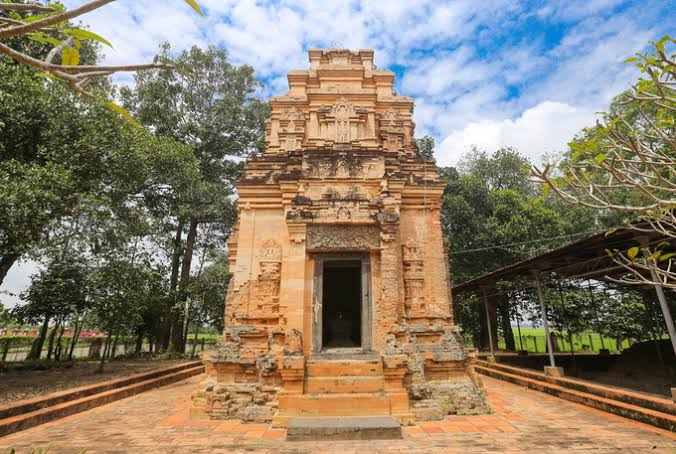
Located in the Dong Tháp Moi (Plain of Reeds) in Long An and Đồng Tháp provinces, Gò Tháp is one of the most significant archaeological complexes of the Funan Empire, dating from the 2nd to the 7th century CE.
Emerging from the low-lying, seasonally flooded wetlands of the Mekong Delta, Gò Tháp consists of ten raised earth mounds (gò) that preserved wood, brick, and stone foundations of early Hindu shrines, wooden Buddha statues, and royal burial sites.
Architectural Remains and Ritual Material Culture
Excavations at Gò Tháp have yielded unmatched evidence regarding early Funan religious architecture and material wealth:
1.Phase 1: Wooden & Brick Shrine Foundations: 2nd–4th Century CE Foundations.
Use of massive, rot-resistant ironwood (sao) posts driven into raised earthen mounds, supporting timber platforms and fired brick temple bases designed to withstand seasonal floodwaters.
2.Phase 2: Hindu Sacred Sculpture: 5th–6th Century CE Sculptural Peak.
Discovery of life-sized sandstone statues of Vishnu wearing cylindrical hair-caps (mitres), alongside massive stone yoni and linga pedestals used in ritual lustration ceremonies.
3.Phase 3: Sunken Brick Burial Vaults: Mortuary Contexts.
Uncovering of deep, brick-lined rectangular tombs containing thin, hammered gold leaf sheets engraved with symbols of lotus flowers, sacred animals, and early Brahmi inscriptions.
Key Funan Takeaway: Go Thap confirms that the Funan Empire was a pioneer in wetland engineering. By utilizing raised earth mounds and water-resistant timber-brick foundations, early Funanese builders established enduring sacred centers in challenging delta environments.
Conclusion
Gò Tháp remains a vital site for understanding the early historic landscape of the Mekong Delta. Its sacred shrines and gold artifacts illuminate the profound early impact of Hinduism and Indianized statecraft across mainland Southeast Asia.