Introduction
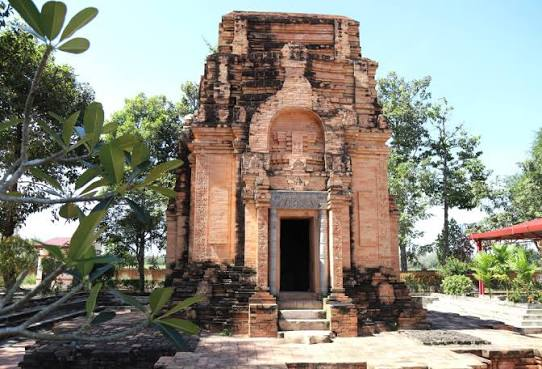
Situated in Bình Định Province, Tháp Mắm gives its name to the defining artistic and architectural style of Champa's late golden age during the 12th and 13th centuries CE. While earlier Cham art emphasized fluid, humanistic forms, the Tháp Mắm style shifted toward monumental, heavily ornamented brick temples adorned with dramatic, fantastical stone sculptures.
This transformation reflected deep cultural exchanges with neighboring regional powers, including artistic influences tracing back to the earlier Óc Eo traditions of the Mekong Delta and contemporary Khmer Angkorian motifs.
Sculptural Iconography and Stylistic Features
The excavations at Tháp Mắm uncovered a dense assemblage of architectural sculptures carved from dark gray sandstone:
Hybrid Mythological Beasts: Prominent production of Gajasimha (creatures featuring the head of an elephant and the body of a lion) and Makaras (water monsters with gaping jaws), which served as corner acroteria on temple roofs.
Garudas & Nagas: Massive stone statues of Garuda (the divine eagle) depicted with raised arms, supporting heavy stone lintels, with multi-headed Naga snakes carved along the balustrades.
Dense Architectural Ornamentation: Surfaces became densely covered with stylized flame motifs, geometric bands, and deeply undercut reliefs, stepping away from plain brick surfaces to create intense shadow effects.
Conclusion
The Tháp Mắm brick temples and stone sculptures represent a dramatic stylistic evolution in Champa art, demonstrating how late Cham artists reinterpreted regional Southeast Asian iconographies to craft a bold, monumental identity.