
Introduction
The Iron Age transformed southern African societies through new technologies, settlement patterns, agriculture, livestock keeping, craft specialization, and expanded social networks.
The title Goodenough Shelter: South Africa's Iron Age suggests a rock shelter or archaeological location associated with Iron Age activity.
The precise identification and chronology of a particular "Goodenough Shelter" should be verified through archaeological records, but the title provides a useful entry point into the wider Iron Age history of southern Africa.
The Arrival of Ironworking
Ironworking allowed communities to manufacture durable tools and weapons.
Iron technology did not simply replace stone tools.
Different materials continued to be used according to their functions and availability.
The introduction of metallurgy nevertheless transformed production.
Farming Communities
Iron Age societies increasingly practiced agriculture.
Crops varied by region and period.
Grain production could support larger and more permanent settlements than purely mobile hunting and gathering.
Livestock also became increasingly important.
Settlement Organization
Iron Age settlements could contain:
houses,
livestock enclosures,
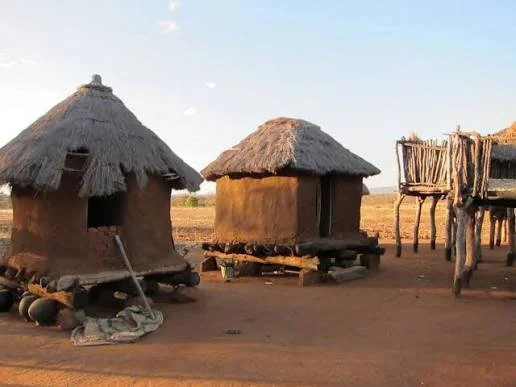
grain-storage areas,
workshops,
middens,
and communal spaces.
The arrangement of these features can reveal social organization.
Pottery
Pottery is one of the most important archaeological indicators of Iron Age settlements.
Ceramic styles can help establish chronology and cultural relationships.
Researchers examine:
vessel shapes,
decoration,
manufacturing techniques,
clay composition,
and distribution.
Metalworking
Evidence for ironworking may include:
furnaces,
slag,
tuyères,
hammering areas,
and metal objects.
Smelting requires substantial knowledge of temperature control and raw-material selection.
Trade and Exchange
Iron Age communities participated in regional exchange.
Metals, beads, ceramics, agricultural products, livestock, and other goods could move between settlements.
Coastal and inland communities were connected through long-distance networks.
Rock Shelters and Iron Age Communities
A rock shelter could serve as a temporary camp, specialized activity location, or part of a larger settlement system.
The presence of Iron Age material does not necessarily mean that the shelter was a permanent village.
Context is essential.
Social Transformation
Iron Age societies became increasingly socially differentiated in many regions.
Some communities developed powerful chiefs and centralized political structures.
Others remained relatively decentralized.
Archaeology helps reveal these differences.
Conclusion
Goodenough Shelter: South Africa's Iron Age provides a useful lens through which to examine technological and social change in southern Africa.
A specific site's chronology must be established through excavation and dating.
Nevertheless, the broader Iron Age record demonstrates that southern African communities developed complex agricultural, pastoral, metallurgical, and exchange systems long before the colonial period.





