
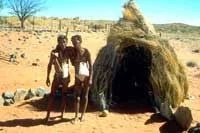
Introduction
The history of hunter-gatherer communities in southern Africa extends over an extraordinary span of time.
The title Collingham Shelter: South Africa's Hunter-Gatherer evokes a rock shelter associated with these communities and their distinctive archaeological traditions.
Rock shelters are particularly valuable because they can preserve evidence of activities that would otherwise disappear.
Hunter-Gatherer Lifeways
Hunter-gatherer societies were highly adaptive.
They relied on combinations of hunting, fishing, gathering plants, trapping small animals, and collecting other resources.
The balance changed according to season and environment.
Mobility
Mobility was an important strategy.
People could move between locations according to water availability, animal movements, plant seasons, and social requirements.
This does not mean that hunter-gatherers constantly wandered.
Many communities returned repeatedly to favored places.
Rock Shelters as Seasonal Homes
A shelter could be used repeatedly over generations.
Different occupations might leave separate layers.
One layer might represent a short hunting camp.
Another could represent a longer residential occupation.
This makes stratigraphy particularly important.
Stone Technology
Hunter-gatherers produced stone tools suited to different activities.
These could include:
scrapers,
points,
blades,
flakes,
cores,
and composite-tool components.
Tool assemblages provide clues about activities performed at the site.
Organic Materials
Bone tools, shell beads, ostrich eggshell beads, and other organic artifacts can provide additional evidence.
Some materials reveal technological knowledge.
Others reveal personal adornment and social identity.
Rock Art
Hunter-gatherer archaeology is closely connected with southern African rock art.
Paintings and engravings provide evidence for symbolic systems.
Researchers have connected some images with hunting, ritual, trance experiences, social identity, and relationships with animals.
Interpretations must remain sensitive to the complexity of the evidence.
Climate and Adaptation
Southern Africa experienced significant environmental changes during the Late Pleistocene and Holocene.
Hunter-gatherers responded through mobility, technological change, and adjustments in diet.
Archaeological deposits can reveal these adaptations.
Conclusion
Collingham Shelter: South Africa's Hunter-Gatherer represents the importance of preserving small archaeological locations alongside famous sites.
A modest shelter can contain evidence of human behavior accumulated over thousands of years.
Such sites reveal that hunter-gatherer societies were not technologically simple or environmentally passive.
They possessed detailed ecological knowledge and developed sophisticated systems for surviving and thriving in diverse landscapes.





