
Augmented Reality and Medieval Fortress Interpretation
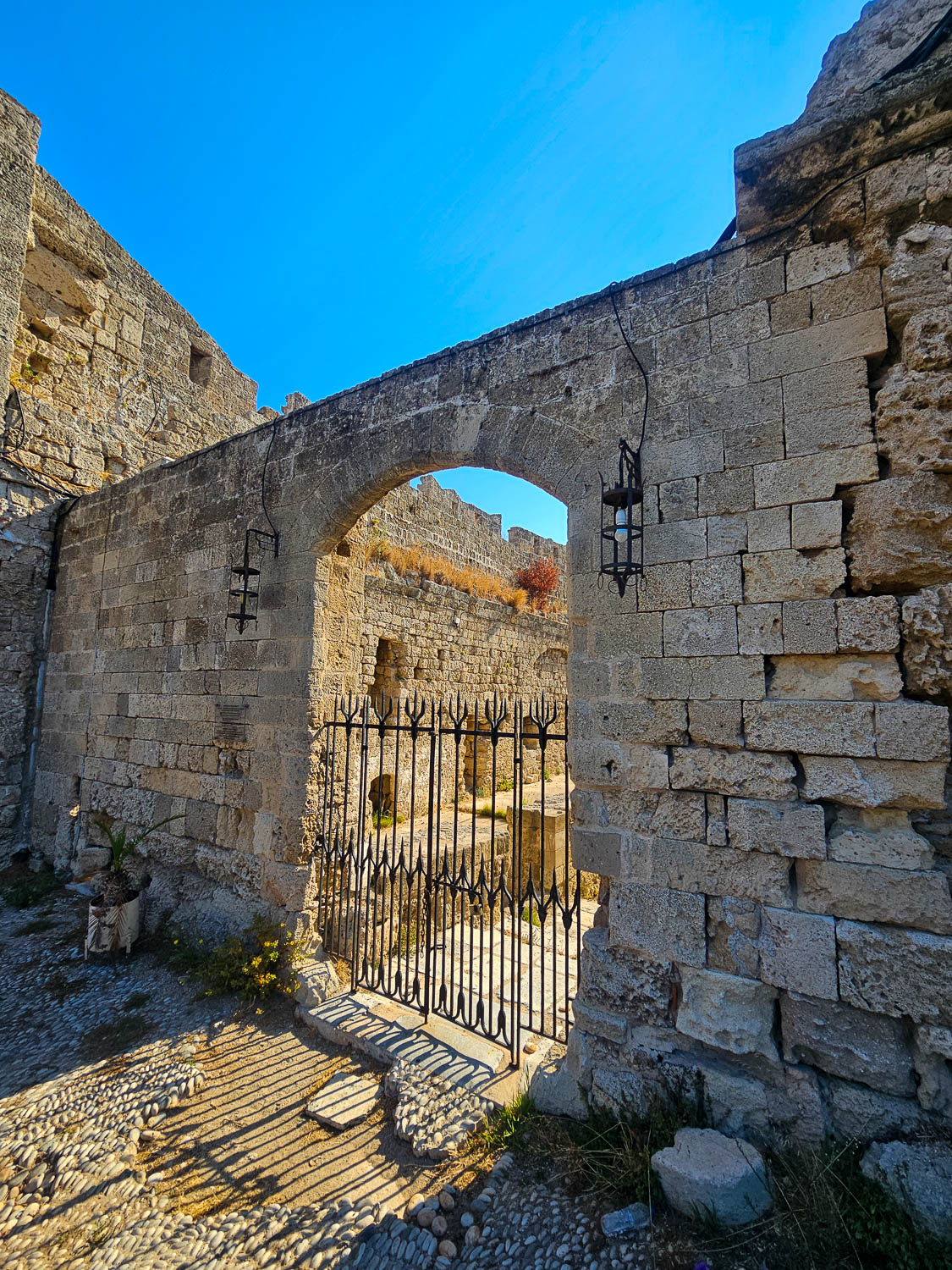
The medieval fortifications of Rhodes are among the most recognizable examples of defensive architecture in the eastern Mediterranean. Their walls, towers, gates, and military structures reflect centuries of strategic importance, particularly during the period of the Knights Hospitaller.
Augmented reality (AR) offers a way to interpret these fortifications by combining the existing physical landscape with digitally reconstructed historical elements. Although a specific hidden AR installation over a Rhodes fortress is not verified, the concept demonstrates how digital interpretation could improve the visitor experience.
Understanding the Fortress Through AR
Augmented reality overlays digital content onto the user's view of a real environment. Through a smartphone, tablet, or AR headset, visitors can see information, images, architectural reconstructions, or historical annotations positioned in relation to actual structures.
At a fortress in Rhodes, an AR application could provide reconstructed views of:
Medieval towers and defensive platforms.
Former gates and entrance systems.
Defensive machinery and weapons positions.
Historical buildings that have disappeared.
Earlier phases of construction.
Changes in fortress architecture over time.
Visitors could stand beside a surviving wall and view a digital reconstruction showing how the structure may have appeared during a particular historical period.
Reconstructing Historical Architecture
AR reconstructions require reliable historical information. Archaeologists, historians, architects, and digital artists would need to work together using existing architectural remains, historical drawings, archival photographs, excavation records, and comparative evidence.
The reconstruction process would involve determining which architectural features are confirmed, which are partially reconstructed, and which remain hypothetical.
This distinction is important because digitally reconstructed buildings can appear convincing even when their details are uncertain. A realistic visual presentation should not be mistaken for archaeological proof.
Visitor Engagement and Historical Learning
AR can provide more interactive forms of interpretation than traditional information panels. Visitors could explore the purpose of different architectural features, compare historical phases, or view a reconstructed siege scenario illustrating the use of defensive walls.
The technology may also help visitors understand spatial relationships that are difficult to explain through text. A fortress is not simply a collection of walls but a complex defensive system involving gates, passages, towers, terrain, and strategic viewpoints.
AR could demonstrate how these elements functioned together.
Accessibility and Multilingual Interpretation
Digital interpretation can support different languages, reading levels, and accessibility requirements. Visitors could select audio descriptions, simplified explanations, subtitles, historical timelines, or detailed scholarly information.
This would be particularly useful in Rhodes, where heritage sites attract international visitors with different levels of familiarity with medieval Greek and Mediterranean history.
Limitations of AR Heritage Projects
AR applications require devices, software updates, reliable digital content, and maintenance. Outdoor lighting, internet connectivity, battery limitations, and device compatibility may affect usability.
There is also a risk that digital experiences could distract visitors from the physical monument. Effective AR should encourage observation of the actual fortress rather than replace the experience of standing within its historical environment.
Conclusion
Augmented reality over a Rhodes fortress could connect surviving medieval architecture with digital historical interpretation. If carefully developed using reliable evidence, AR could improve education, accessibility, and public understanding while helping visitors appreciate the complexity of the island's fortified heritage.





