
Blockchain Technology and Museum Collections
Blockchain technology has attracted interest in digital records, data verification, ownership documentation, and the management of digital assets. Its potential application in museums has raised questions about how institutions could maintain transparent records of objects, digital reproductions, and exhibition information.
The specific blockchain exhibit described in this title is not verified as an existing Athens museum installation. It is explored as a possible museum technology project.
Understanding Blockchain in Cultural Heritage
Blockchain is a type of distributed digital ledger. Information recorded through a blockchain-based system may be linked to previous records and distributed across a network, making certain forms of unauthorized alteration more difficult.
In a museum context, the technology could be used to record:
Digital asset registration.
Records of authorized changes.
Digital exhibition histories.
Documentation of digital reproductions.
Provenance-related information.
Links to archival records and collection documentation.
However, blockchain cannot automatically guarantee that the information originally entered into the system is correct. A false claim about an artifact's origin could still be recorded permanently.
For this reason, blockchain systems must be supported by museum research, collection documentation, professional standards, and responsible data management.
Digital Exhibits and Artifact Information
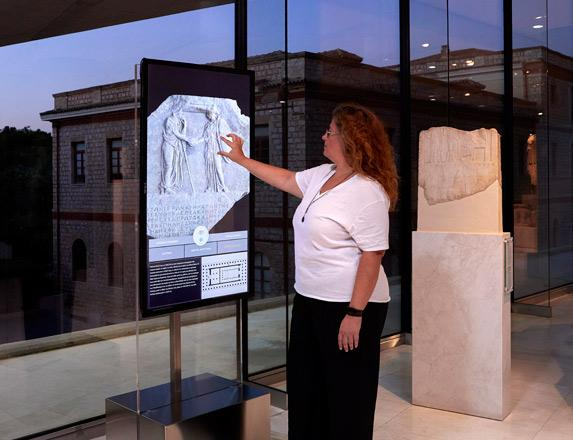
A blockchain-supported exhibit could allow visitors to explore the digital history of an artifact through a museum interface.
A visitor might scan a QR code beside an object and access a digital record containing its catalog information, conservation history, authorized photographs, historical research, and links to related collections.
Blockchain could be used to record selected updates or the history of digital files, while the museum would retain responsibility for the accuracy and interpretation of the information.
This could help distinguish between official museum documentation and unofficial digital reproductions.
Provenance and Collection Transparency
Provenance refers to the documented history of an object's ownership, custody, and movement. It is particularly important in archaeological collections because it may help researchers evaluate the legality of acquisition, historical context, and authenticity.
Blockchain systems could support the management of digital provenance records by maintaining a history of changes to selected documentation.
Nevertheless, provenance research is not simply a technological task. It requires archival investigation, historical records, legal documentation, and careful assessment of evidence.
Blockchain cannot substitute for these processes.
Digital Ownership and Ethical Concerns
Digital museum exhibits may involve questions about who controls images, scans, and digital reproductions of cultural objects.
A digital record does not necessarily grant ownership of the original artifact, nor does a blockchain entry automatically establish copyright or legal authority over an image.
Museums must consider the cultural rights of communities, access policies, intellectual property, privacy, and the possibility of commercialization.
Technology should support responsible stewardship rather than create artificial barriers to public knowledge.
Environmental and Practical Considerations
Some blockchain systems require significant computational resources, while others are designed to consume substantially less energy. Museums must consider the environmental cost, maintenance requirements, and practical benefits of adopting such systems.
A conventional database may be more efficient and appropriate for many museum operations. Blockchain should be introduced only when it provides a meaningful advantage over existing systems.
Conclusion
Blockchain exhibits in an Athens museum could demonstrate how digital recordkeeping, verification, and collection documentation might evolve. The most meaningful application would be one that strengthens transparency, provenance research, and public access without presenting blockchain as a replacement for museum expertise or ethical collection management.





